Portuguese
  Spanish


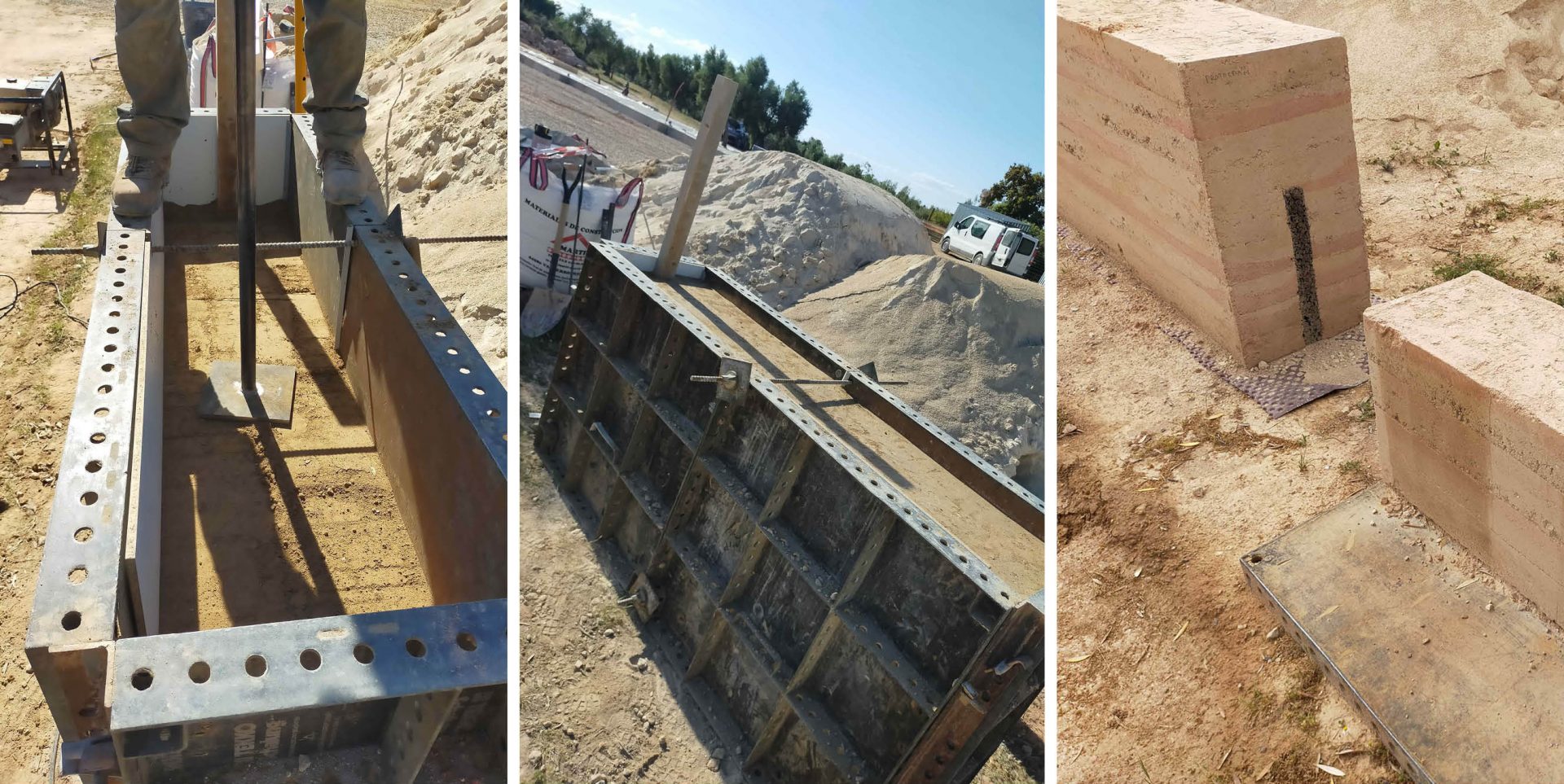


Compacted Earth Becomes Structural Wall Up to 60 Cm, 2 T/m³ and High Thermal Inertia, Reducing Cement Use and Creating Resilient and Comfortable Houses.
According to CRAterre (International Center for Earthen Construction), the technique known as rammed earth has been used for thousands of years in various regions around the world—from China, through Morocco, to parts of Europe and South America. Today, it has resurfaced as a real option in civil construction to reduce cement use and improve the thermal and acoustic performance of buildings.
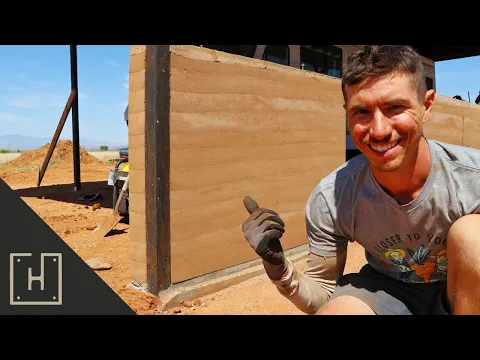
The logic is simple and physical: moist soil is compacted within forms with repeated blows (modernly with mechanical compactors), until reaching a density close to 1.7 to 2 tons per m³. The result is neither mud nor standard masonry: it is a monolithic stone-like wall, highly inertial, with thicknesses reaching 40–60 cm depending on the project.
How a Compacted Earth Wall Is Made
In practice, the modern process follows well-defined steps:
-
Simple Technique to Restore Rusty Metal Window Grilles Gains Attention for Revitalizing Old Structures Without Full Replacement

-
Couple Transforms Suffolk’s Last 1891 Windmill into Luxurious Four-Story Home with Zinc Observation Room in England

-
Father and Son Build 97 cm Thick Circular Stone House in Brazil, Inspired by Scottish Architecture, Creating a New Agrotourism Hub
-
Sweden Removes 200-Ton Concrete Gallery to Restore Pjältån River’s Natural Flow in Europe’s Largest Aquatic Restoration Project



Soil Selection:
The soil needs a balanced grain size, combining sand, silt, and clay. Soil that is too clayey cracks, while soil that is too sandy doesn’t bind.
Mixing and Moistening:
Water is added to a point called “optimal moisture,” where the soil does not turn to mud and does not crumble, allowing for efficient compaction.
Side Forms:
Wooden, metallic, or polymer panels serve as temporary molds, guiding the shape of the wall.
Compaction:
In the past, it was manual; today, it is mechanical. Compaction reduces the initial volume and drastically increases the material’s density.
Dismantling:
Soon after compacting, the forms are removed, and a monolithic block with visible layers emerges, resembling sedimentary rocks.
In many regions, stabilizers such as lime or small amounts of cement (<10%) are added only to enhance resistance to weather—though there are also projects completely without stabilizers, depending on the climate.
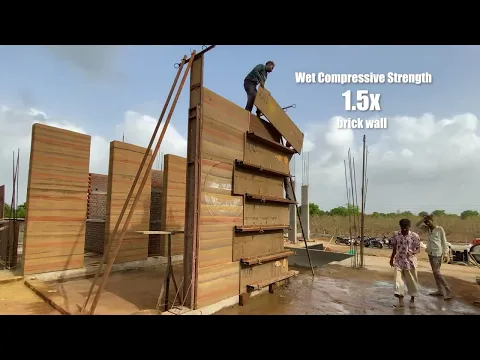

Not Mud: It’s Structure
The mechanical resistance is surprising. Laboratory tests conducted at universities in Australia and France indicate that compression can vary between 2 to 10 MPa, depending on the composition and compaction. This places it on par with some structural masonry, making it possible to use rammed earth in:
• external walls
• internal structural walls
• high-performance acoustic partitions
• decorative architectural elements
With high density, the wall functions as a huge thermal accumulator: during the day it absorbs heat, and at night it slowly releases it, creating more stable environments.
Thermal and Acoustic Performance
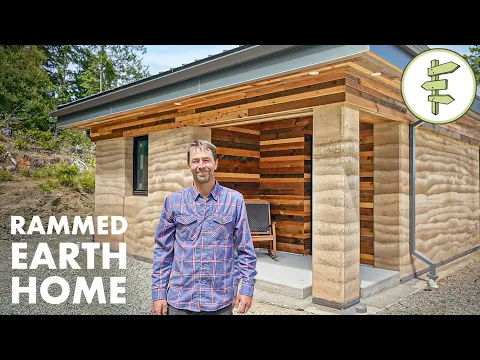
This is one of the key points that has drawn contemporary architects.
Compacted earth walls exhibit:
✓ high thermal inertia, reducing internal heat peaks
✓ low thermal transmittance due to thickness
✓ high acoustic insulation due to mass and density
In practice, this translates to cooler environments in summer and more stable ones in winter—something useful in both deserts and subtropical regions.
That’s why countries like Morocco have maintained entire historic cities made of rammed earth for centuries, living with large thermal variations.
Durability: Climate Defines the Limit
Durability heavily depends on the climate. In arid or semi-arid regions, rammed earth can last for centuries. Notable examples:
• Ancient City of Ait Ben Haddou (Morocco) — centuries of existence
• Historical Wall of Xi’an (China) — stabilized earth with lime and plant fibers
In humid regions, the use of long eaves and elevated bases is essential to protect against direct rain and splashes.
Contemporary projects in Australia, USA, and France adopt concrete foundations, hydrophobic membranes, and lime stabilization to ensure longevity, while maintaining the essence of the technique.
Real Reduction in Cement Use
Universities and research centers have highlighted the environmental value of the technique for a simple reason: it does not require cement as a structural component. Cement is one of the industrial materials with the highest CO₂ emissions in the world, accounting for about 7–8% of global emissions according to Chatham House.
When rammed earth walls replace conventional walls made of blocks + plaster + mortar + paint, there is:
– less cement
– less transportation of materials
– less embodied energy
– less waste
Even when a minimal fraction of stabilizer is used (for example, 5–7% of cement), the environmental reduction is significant because the total wall mass is local soil.
Contemporary Scale: It’s Not Just Artisanal
Many people associate rammed earth with artisanal rural construction, but the market already features large-scale projects, including:
• museums
• cultural centers
• high-end hotels
• luxury residences
• acoustic walls in schools
• corporate offices
Countries with environmental certifications (LEED, BREEAM, HQE) already recognize rammed earth walls as a low-carbon solution.
Colors and Mineral Aesthetics
A very commonly used side effect in contemporary architecture:
compacted earth comes pre-finished, without plaster, paint, or cladding. The compaction bands become part of the aesthetics, resembling rock formations or sediments.
Colors vary according to the soil:
• ochers
• reds
• browns
• grays
• light beige
These palettes are natural and do not fade since they do not rely on pigments.
Where It Makes Most Sense to Use
The technique works best where there is:
✔ dry climate or dominant dry season
✔ abundance of sandy/clayey soils
✔ high costs of industrial materials
✔ incentives for low-carbon construction
Therefore, countries with deserts, semideserts, or dry coastal plains have observed a resurgence of the technique, such as:
• Australia (Queensland, WA)
• United States (Arizona, New Mexico, California)
• Morocco
• France (southeast)
• Spain (Andalusia)
• Chile (North)
As the sector seeks to reduce CO₂ in construction, techniques like rammed earth are gaining ground. When combined with:
✓ modern foundations
✓ proper waterproofing
✓ calibrated stabilization
✓ adequate ventilation
they can integrate urban buildings with excellent thermal and acoustic performance.
What was once seen as “ancient construction” now competes with masonry, drywall, and concrete, especially in projects focused on comfort and sustainability.