






 Portuguese
  Spanish


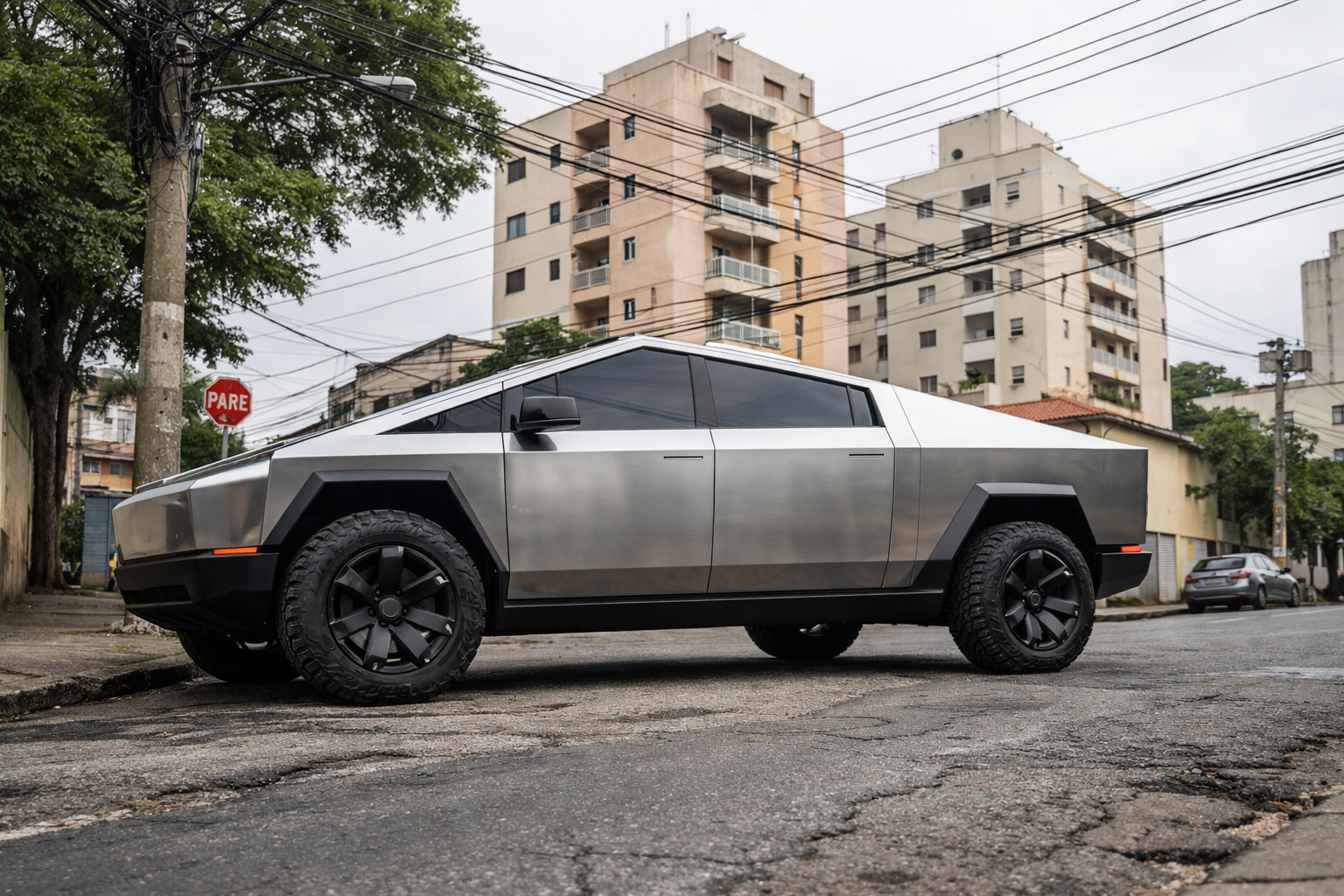


Even Without Official Operation in the Country, Tesla Models Appear on Brazilian Avenues Thanks to a Complex Process of Independent Importation Involving Federal Agencies, High Taxes, and Bureaucracy That Few Can Face
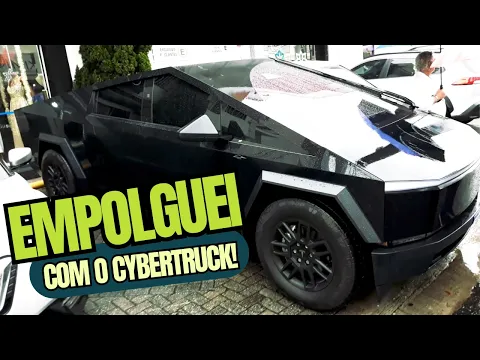
The presence of Tesla vehicles circulating on the streets of Brazil draws attention not only for their futuristic design or electric proposal but also for a curious detail: the manufacturer does not officially sell any model in the country. Nonetheless, examples like the Cybertruck have been seen in major urban centers, raising curiosity about how these cars manage to be legalized and how much it costs to bring them here.
The explanation involves a little-known route for the general public: independent importation. This is a process permitted by Brazilian legislation, but it requires patience, high purchasing power, and strict compliance with a series of technical, environmental, and fiscal requirements. According to a report published by the portal g1, this type of operation involves several agencies and can take up to three months to complete.
Currently, according to data from Fenabrave (National Federation of Motor Vehicle Distribution), there are 23 units of the Tesla Cybertruck in circulation in Brazil, reinforcing the model’s extremely exclusive nature in the country. However, reaching this result is far from simple.
-
Thinking of Installing LED Headlights? Why Replacing Halogen Bulbs is Still Banned, the Glare Risks Authorities Worry About, and How a New Proposal Could Allow Certified, Safe Installations

-
2027 Toyota Corolla Cross Unveiled: New Design, Enhanced Fuel Efficiency, Reduced Maintenance Costs, Advanced Technology, Connected Services, and Up to 10-Year Warranty

-
Fiat Cronos Precision 2018: Affordable Sedan with Spacious Trunk and Reliable Maintenance
-
Volkswagen to Cut Production by 1 Million Cars by 2030, Reducing Jobs and Platforms, Focusing on More Profitable Models





Independent Importation Allows for Bringing a Tesla to Brazil, but Requires Attention to Strict Rules
The first point to understand is that, without official representation from Tesla in Brazil, any model from the brand can only enter the country through direct importation, carried out by individuals or legal entities. This type of operation is allowed as long as the vehicle is characterized as personal use, as established by the rules of the Mover program, which organizes and regulates the importation of automobiles in the country.
After choosing the model, the buyer needs to verify whether the vehicle qualifies as new. Although the legislation does not set a fixed mileage limit, in practice, Brazilian customs accept cars with up to about 300 kilometers driven. Beyond that, the risk of being classified as used increases significantly, which could jeopardize the operation.
Moreover, there are cases where the vehicle leaves the factory already registered in the country of origin, a common practice in some markets. This condition can create additional obstacles in the importation process, requiring adjustments and extra documentation with Brazilian authorities.
Another crucial point involves income verification. The buyer must provide documents demonstrating financial compatibility with the vehicle’s value, especially when the process is conducted directly under the final consumer’s CPF. This step aims to prevent fraud and tax irregularities.
Ibama, Denatran, and Receita Federal Are Part of the Bureaucracy
Once the initial stages are overcome, the process advances to the regulatory agencies. The Ibama is responsible for issuing the Import License, evaluating whether the vehicle meets Brazilian emission and noise standards. If it does not comply, the car may be blocked at this stage.
Next, the Denatran comes into play, which must issue the Certificate of Compliance with Traffic Legislation (CAT). This document confirms that the vehicle meets the safety standards required in Brazil, allowing it to circulate on public roads.
According to Natel Valério, commercial director of the company Direct Imports, which specializes in this type of operation, no vehicle has been blocked to date due to failures in these requirements. “There are many steps and documents. That’s why customers seek our assistance and often choose to carry out the operation through our company. This speeds up the completion of the purchase,” he explains.
After that, it is still necessary to register the Declaration of Import in the Foreign Trade System, linked to the Receita Federal, compiling all the information from the customs process. According to Jair De Paula Machado Júnior, a partner in a customs advisory company, new cars typically do not encounter problems with homologation. “It’s the diesel cars that require more attention, due to emission rules,” he states.
High Taxes Make the Price of a Tesla Skyrocket in Brazil
Even after overcoming the bureaucracy, the biggest impact for those who decide to import a Tesla is financial. The average time frame between the order and the arrival of the vehicle in Brazil ranges from 60 to 90 days, provided the car is already ready in the country of origin.
Moreover, payment is usually made in full, with 50% of the amount due upon ordering and the remainder upon the vehicle’s arrival in Brazilian territory. Just in transportation and customs fees, a car valued at US$ 100,000 can generate additional costs of between R$ 80,000 and R$ 120,000, according to industry estimates.
In practice, the final price of the vehicle almost doubles after the incidence of Import Tax, IPI, ICMS, customs fees, and documentation costs. A concrete example helps illustrate: a Tesla Cybertruck sold in October 2025 for around R$ 900,000, while in the United States the top-of-the-line version costs approximately US$ 115,000, equivalent to about R$ 600,000.
Depending on the version, gearbox, and registration status, the final amount can exceed R$ 1 million, establishing the Tesla as a niche product in the Brazilian market.
Maintenance, Warranty, and Technical Limitations After Purchase
Even after being registered with the Detran, the buyer still faces additional challenges. An independently imported vehicle does not come with official manufacturer warranty in Brazil. This means that Tesla is not obligated to provide parts, technical support, or warranty coverage.
Similar situations already occur with other brands. Honda, for example, does not offer warranty for Acura models imported independently, just as Ford is not required to provide service for Mustang versions not officially sold in the country.
Thus, owners of imported Teslas often turn to specialized workshops and the direct importation of parts. According to Valério, components can arrive in Brazil in up to 30 days, depending on availability and logistical processes.
There are also important technical issues. These vehicles were not developed to run on Brazilian fuel, which contains about 30% ethanol, a more corrosive percentage that could potentially harm sensitive components. Additionally, suspension and structural adjustments are not designed to cope with the uneven asphalt and pothole-filled roads of Brazil.
Is It Worth Importing a Tesla on Your Own?
Despite all the obstacles, independent importation continues to attract a specific consumer profile: those seeking extreme exclusivity. Having a car that practically no one else owns is, for many, the main motivation.
Therefore, brands like Tesla, Cadillac, and Hummer are among the most sought after in this type of operation. Models like the Cadillac Escalade, customized versions of the Mercedes-Benz S-Class, and pickups like the Toyota Tundra also frequently appear in this market.
In all cases, the process is the same, and responsibility does not fall on the manufacturers, even when they have operations in Brazil. For most consumers, the costs, bureaucracy, and lack of official support make importation unfeasible. For a few, however, it is an extravagance worth every penny.


Se eu tivesse Dinheiro eu compraria esse carro. , não pensaria 2 vezes. 👀👍🇧🇷❤
Sempre falei que esse carro é Lindo. E a Kara do Futuro. Se eu tivesse Dinheiro a primeira coisa que eu compraria seria esse Sybertruck. 👍😃👍❤🇧🇷🇧🇷👀👍