






 Portuguese
  Spanish
  5 min of reading
  0 comments


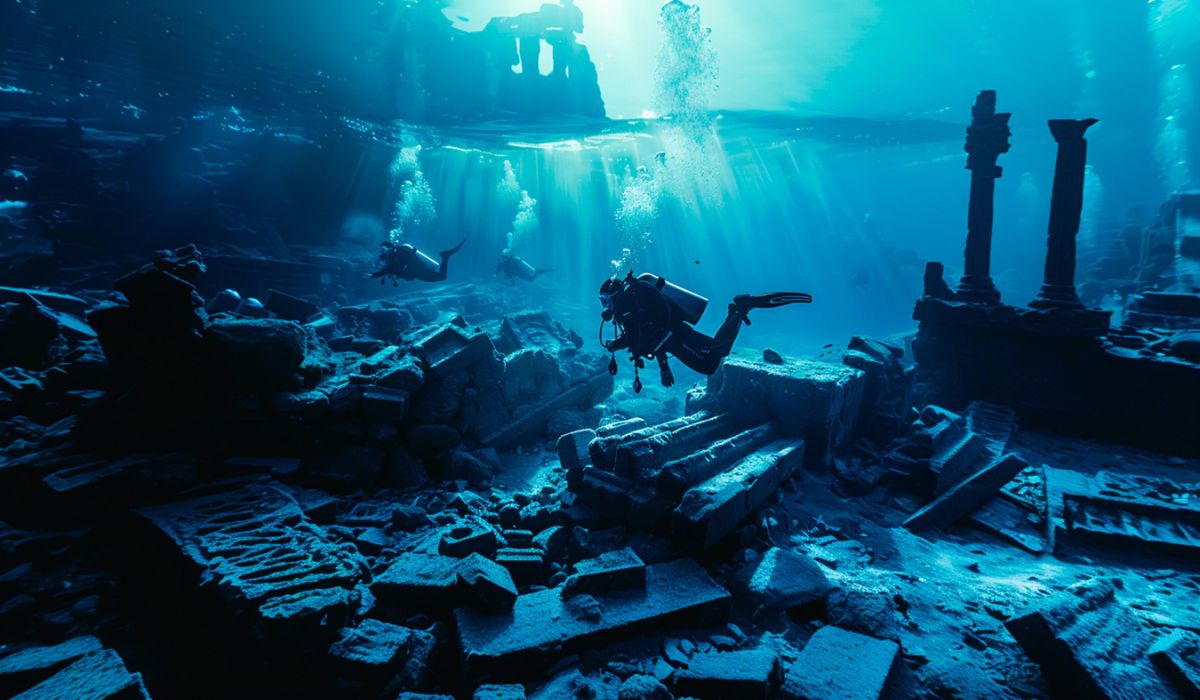
Two Ming Dynasty Shipwrecks Found 1,500 Meters Deep in the South China Sea Contained Porcelains, Coins, and Organic Materials Recovered Through Operations with Robots and Submersibles, in a Discovery that Expands the Debate on Ancient Trade Routes.
Cultural authorities in China announced the location of two shipwrecks attributed to the Ming Dynasty, about 1,500 meters deep in the South China Sea.
According to the entities responsible for heritage, the wrecks held a collection of artifacts such as porcelains, ceramics, coins, and other preserved materials on the ocean floor, and the discovery reinforces researchers’ interest in reconstructing trade routes and practices related to the ancient Maritime Silk Road.
According to official information, the archaeological sites were identified in October 2022 and were publicly presented in May 2023, when the Chinese heritage administration detailed the existence of two close shipwreck points.
-
Instead of retiring, two gentlemen defy logic and handcraft a 1,200 hp V12 engine, installed in a machine made to tear through the California desert at nearly 430 km/h in pursuit of a brutal speed record.

-
Plug the charger into the outlet first or connect it to the phone? Experts warn that a simple sequence can reduce electrical fluctuations, minimize voltage spikes, and influence the battery’s lifespan after years of continuous use.

-
Neymar focuses on Dubai and buys a penthouse worth R$ 314 million in a Bugatti building, with an elevator that takes the car inside the house, an artificial beach inspired by the French Riviera, and only 11 residential units of this type in the building.

-
Brazilian city focuses on Colombians, Peruvians, Mexicans, and Dutch in an ambitious plan supported by Embratur and Sebrae to expand international tourism, targeting 4 priority markets and foreign revenue in Goiás.




The authorities classified the find as significant for the history of navigation and trade, but have not yet released a definitive public report that confirms the exact dating of the vessels within the Ming period.
Location of the Wrecks in the South China Sea
The wrecks were mapped in an area of the continental slope, in deep water, in the northwest of the South China Sea, according to government communications.
The location itself, in a depth range little explored in previous operations in the country, has become a central element of the investigation, both for the logistical challenge and for its potential to broaden knowledge about high-seas navigation routes.
The Chinese authorities began to refer to the sites as Wreck No. 1 and Wreck No. 2.
In public presentations, they indicated that both points belong to the Ming Dynasty (1368 to 1644) and related the context of the find to maritime circulation networks connecting Chinese ports to other regions of Asia, the Middle East, and Africa.
The released documentation, however, does not detail which specific ports were involved in the route of these vessels.
Recovered Artifacts: Porcelains, Ceramics, and Coins
An official report published in June 2024 stated that 890 pieces were recovered from Wreck No. 1.
According to the authorities, most of the material includes porcelains and ceramic objects, as well as copper coins found alongside the other items.
The complete inventory has not yet been disclosed in detail, and the numbers presented thus far are described as partial, associated with stages of collection and registration.
In Wreck No. 2, the same official report recorded the removal of 38 artifacts.

Among the mentioned items are wood, ceramic and porcelain products, “turban shell” types of shells, and deer horns.
Researchers involved in the project emphasized that the presence of organic materials deserves attention in the analyses, but the communications do not currently provide a public technical description of the condition of each piece.
In previous updates, the state agency Xinhua had also reported the removal of hundreds of items from both shipwrecks, emphasizing that the operation occurs with systematic documentation, including visual recording, cataloging, and conservation procedures.
However, the authorities did not detail the complete list of what has already been removed, what remains on site, and which pieces will undergo specific laboratory analyses.
Deep Water Underwater Archaeology Technology
The depth imposed limitations that required remote operation equipment, according to scientific institutions and cultural agencies cited in official disclosures.
According to these reports, the team used submersibles and robots for inspection, filming, mapping the surroundings, and controlled collection of objects, as well as techniques for safe transportation of materials to the surface.
Authorities also associated the project with a methodological advance in Chinese underwater archaeology by broadening the reach of investigations to deep waters.
This evaluation appears in institutional materials and in reports from state media, which highlight the combination of technological exploration and archaeological research.
Nevertheless, the responsible entities have not published, in an open format, a complete operation protocol for comparison with other international missions.
Maritime Silk Road and Trade in the Ming Dynasty
The authorities related the composition of the objects to long-distance trade circuits that crossed the South China Sea.
The concentration of porcelains and ceramics in Wreck No. 1, according to this reading, corresponds to Chinese production aimed at foreign trade in different phases of the Ming Dynasty, when goods circulated through maritime routes linked to ports in Southeast Asia and broader networks.
In contrast, the variety of items mentioned in Wreck No. 2 was pointed out as indicative of a different cargo profile, although the communications do not conclude what the function of each material was on the voyage or the destination of the vessel.
Experts consulted by state media and Chinese institutions indicated that the collection could help understand transportation practices and circulation of goods, but those responsible for the project treat these interpretations as dependent on ongoing analyses.
Another open question concerns the total size of the collection still preserved.
The public disclosures use numbers of removals already carried out but do not present a consolidated estimate of what remains in the wrecks or a closed schedule for new recovery and conservation stages.
What Has Been Disclosed About the Causes of the Shipwreck
So far, the consulted materials do not provide an official conclusion about why the ships sank.
Authorities and reports linked to state sources have mentioned general hypotheses associated with sea conditions and potential structural issues, but there has been no public confirmation of a single factor, nor have any technical data been disclosed to support a specific cause.
No detailed map indicating whether the vessels were close to a final destination at the time of sinking has been presented in official communications.
What is known, based on the information disclosed, is the general location in deep water and the interpretation that the region integrates historical navigation corridors used in different eras.
With new research stages planned by Chinese institutions, the trend is that the project will advance with analyses of the origin of the materials, comparison with findings from other sites, and consolidation of a more complete inventory.




-

-

-

-

-

15 people reacted to this.