






 Portuguese
  Spanish


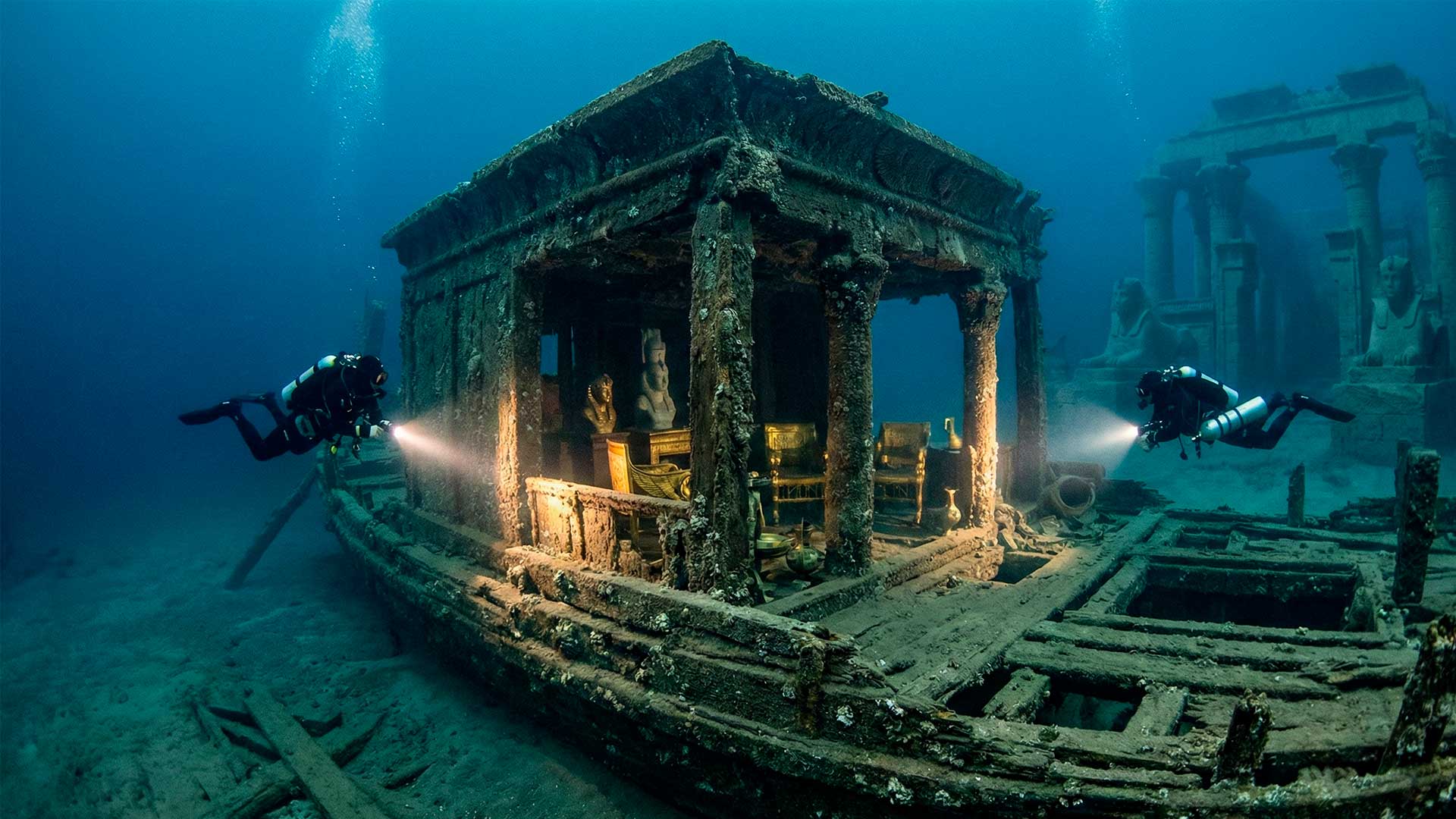


The 35-Meter Thalamagos-Type Boat Was Found in the Ancient Port of Alexandria, Near the Temple of Isis, and May Have Served Elite Parties and Sacred Rituals in First-Century Egypt
Archaeologists have just revealed a rare find in the waters of Alexandria, Egypt. It is a luxury boat approximately 2,000 years old, preserved in the ancient port of the city, now submerged. The vessel was used as a recreational barge for the elite, a kind of “superyacht” of Ancient Egypt.
The wreck was located near the submerged island of Antirhodos, an area that was part of the Portus Magnus, the great port of Alexandria during the Greco-Roman era. The discovery was made by the team of the European Institute of Underwater Archaeology (IEASM), under the direction of French archaeologist Franck Goddio, a world expert in underwater archaeology.
The boat is estimated to be about 35 meters long and 7 meters wide, following standards described in ancient sources. This type of vessel was known as “thalamagos”, mentioned by the Greek geographer Strabo, who described luxurious boats filled with musicians, dancers, and courtiers at parties that lasted day and night.
-
Rescue Teams Use Flashlights to Find 47 Dogs in Abandoned, Powerless U.S. Home, Offering Them a Fresh Start Through Responsible Adoption

-
Siblings Discover 1939 Superman Comic in Late Mother’s Attic, Sets Record at $9.12 Million Auction

-
12-Year-Old Discovers 80-Million-Year-Old Marine Tylosaurus Fossil During Kansas Field Trip
-
At 24, Beatriz Becomes First Woman from Mato Grosso to Work on Live Power Lines with Energisa, Starting as a Meter Reader in 2022



The discovery is considered historic because it is the first time a boat of this type has been found in Egypt, filling a gap between classical texts, mosaics, and reliefs and concrete material evidence. For researchers, this find opens a new window into the daily life, religion, and leisure of the elite in Roman-ruled Egypt.
Where the Luxury Boat Was Found in Ancient Alexandria

The wreck was identified in the area of the ancient port of the island of Antirhodos, now entirely submerged in the bay of Alexandria. This region concentrated palaces, temples, and structures related to the court of the Ptolemies and the period of Cleopatra VII, reinforcing the aristocratic nature of the vessel.
According to IEASM, the boat rests a few meters from the ruins of the temple of Isis, which has already been excavated in previous campaigns by the same team. The proximity to the sanctuary is one of the clues that the vessel did not serve only for luxury outings but may have been involved in religious rituals related to the goddess.
According to the British newspaper The Guardian, which interviewed researchers from Oxford University, the vessel is part of a set of finds that includes remnants of palaces and port structures that collapsed after earthquakes and tsunamis that hit the region around 50 A.D., contributing to the sinking of part of ancient Alexandria.
How the “Thalamagos”: The 35-Meter Superyacht of the Egyptian Elite Was
Preliminary studies indicate that the boat had a flat-bottom hull and a wide beam, designed to navigate calm and shallow waters, such as canals and arms of the Nile. This construction allowed for the installation of a central pavilion with a richly decorated cabin, where passengers of the highest status traveled.
The structural marks and hull design suggest that the thalamagos was powered exclusively by oars, without sails, requiring more than 20 rowers to move the vessel. For archaeologists, this reinforces the idea of a boat designed more for ostentation and comfort than for long journeys in open seas.
Parties, Rituals, and the Goddess Isis: What the Vessel Was For
Graffiti in Greek found on structural parts of the boat indicates that it was built in Alexandria in the first half of the 1st century A.D., a period when Egypt was already under Roman rule but still preserved its own religious traditions. This inscription is one of the keys to the accurate dating of the wreck.
Strabo, who visited Alexandria between 29 and 25 B.C., described cabin boats used by the court and by crowds at festivals, with people playing flutes, dancing, and celebrating without restrictions. Researchers see in the wreck a direct correspondence between this literary account and the actual boat now documented by 3D photogrammetry.

One of the strongest hypotheses is that the thalamagos was linked to the ritual of “navigium Isidis”, a naval procession in honor of the goddess Isis. In this event, a richly decorated vessel represented the solar barque of the deity and was paraded to other sanctuaries, such as that of Osiris in Canopus, following canals linked to the Nile delta.
At the same time, the location in the ancient royal district and the vessel’s dimensions allow one to imagine its use in luxury outings, floating banquets, and political events, similar to the famous boats associated with Cleopatra. Although there is no direct evidence of a connection to the queen, the find reinforces the context of naval ostentation attributed to the Ptolemaic court.
For experts consulted by outlets like Opera Mundi and Oxford University itself, the boat from Alexandria helps to understand how leisure, religion, and political power intertwined in the waters of Ancient Egypt, in ceremonies that were both sacred, festive, and highly symbolic.
What the Discovery Changes About Ancient Egypt and Tourist Interest
Until now, knowledge about this type of Egyptian luxury boat depended on accounts from classical authors and representations in works such as the Palestrina Mosaic of the Nile, in Italy. The discovery in Alexandria offers, for the first time, a complete archaeological example of this type of vessel, allowing for testing and correcting old hypotheses.
According to the director of the Oxford Centre for Maritime Archaeology, quoted by the British press, it is a type of ship that had never been found in previous excavations. The wreck acts as the missing piece to link art, historical texts, and material remains, allowing for more detailed research on naval techniques, decoration, and daily use of these barges.
For conservation reasons and following UNESCO guidelines, the boat will remain on the seafloor, where conditions are considered more stable for its long-term preservation. The researchers’ idea is to continue documenting the site with technologies like 3D photogrammetry and, in the future, create virtual exhibitions and models in museums accessible to the public.


