






 Portuguese
  Spanish


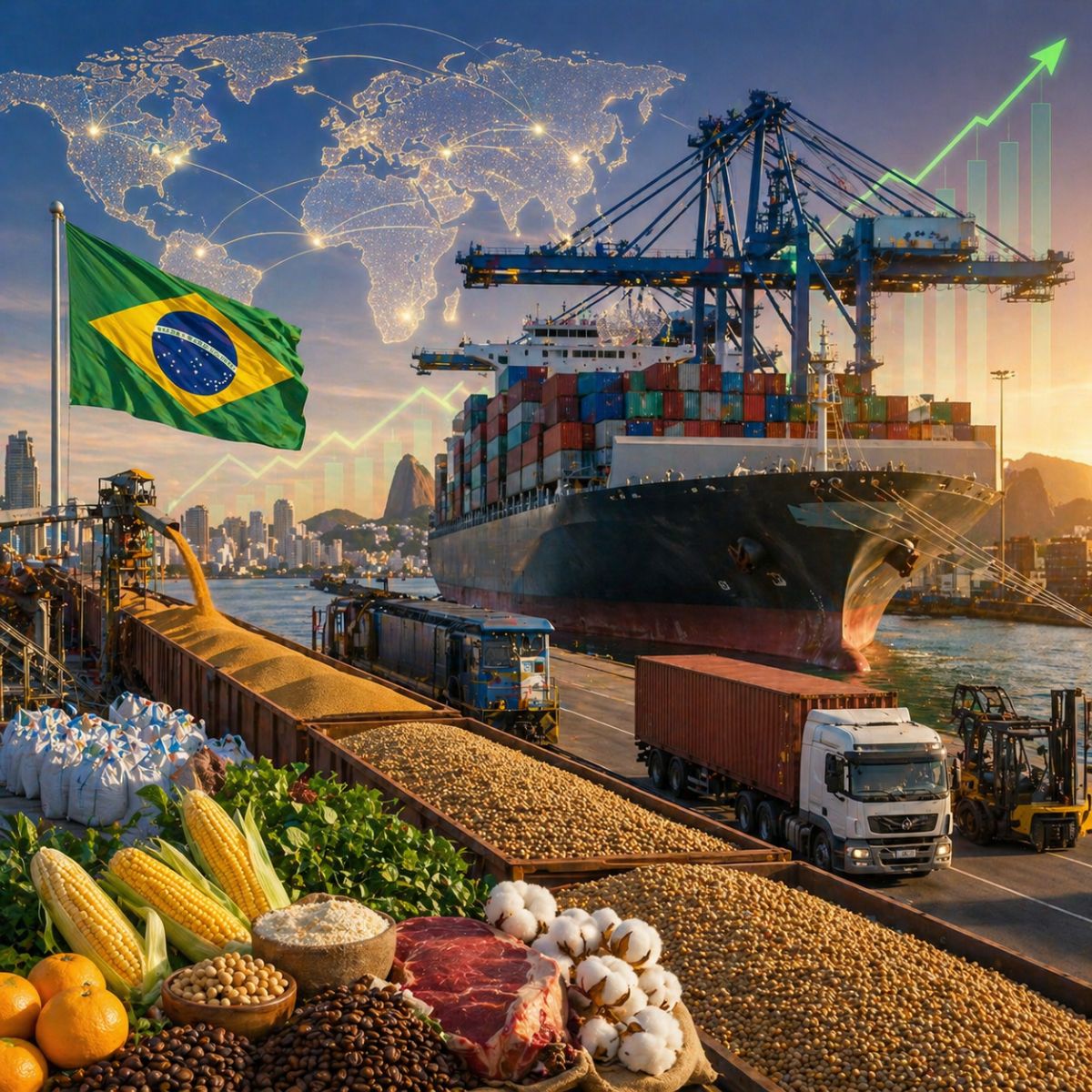

Brazil exported US$ 82.3 billion in the first quarter of 2026, an increase of 7.1% compared to the same period of the previous year, with a trade surplus of US$ 14.1 billion. China led the expansion with a 21.7% growth in imports of Brazilian products, totaling US$ 23.9 billion. The European Union increased its purchases by 9.7%, reaching US$ 12.2 billion. To meet the demand, Brazilian ports received R$ 7.8 billion in investments just in 2025.
Brazil is experiencing a moment where its export machine is operating at full capacity, and the numbers confirm the magnitude of the phenomenon. Foreign trade totaled US$ 82.3 billion in exports in the first quarter of 2026, with a surplus of US$ 14.1 billion, representing an expansion of 47.6% compared to the same period of the previous year. The main driver of this surge continues to be China, Brazil’s largest trading partner and BRICS member, whose imports of Brazilian products grew by 21.7% in the quarter.
The growth does not depend on a single buyer. While China accounts for the most significant share with US$ 23.9 billion in purchases, the European Union also increased its imports by 9.7%, totaling US$ 12.2 billion in the first three months of the year. The diversification of destinations is what makes Brazil’s performance robust and less vulnerable to crises in a single market, and the investments of R$ 7.8 billion in ports ensure that the infrastructure keeps pace with the demand without collapsing.
What Brazil sells and who buys more

According to Revista Fórum, the Brazilian export agenda is dominated by commodities from the primary sector that China uses to sustain its industrial base. Soy and derivatives, iron ore, and crude oil are the three pillars of exports to the Chinese market, products that Brazil offers on a scale and competitiveness that few countries can match. The US$ 23.9 billion exported to China in the quarter represents almost 30% of all Brazilian foreign trade in the period.
-
Small Farm in Brazil’s Minas Gerais Produces 403 Liters of Milk Daily, Sets Benchmark for Rural Producers

-
Man Revives 1930s Abandoned Trout Farm, Learns from Scratch, and Earns $1.1 Million Annually Selling Fish to Michelin-Starred Restaurants

-
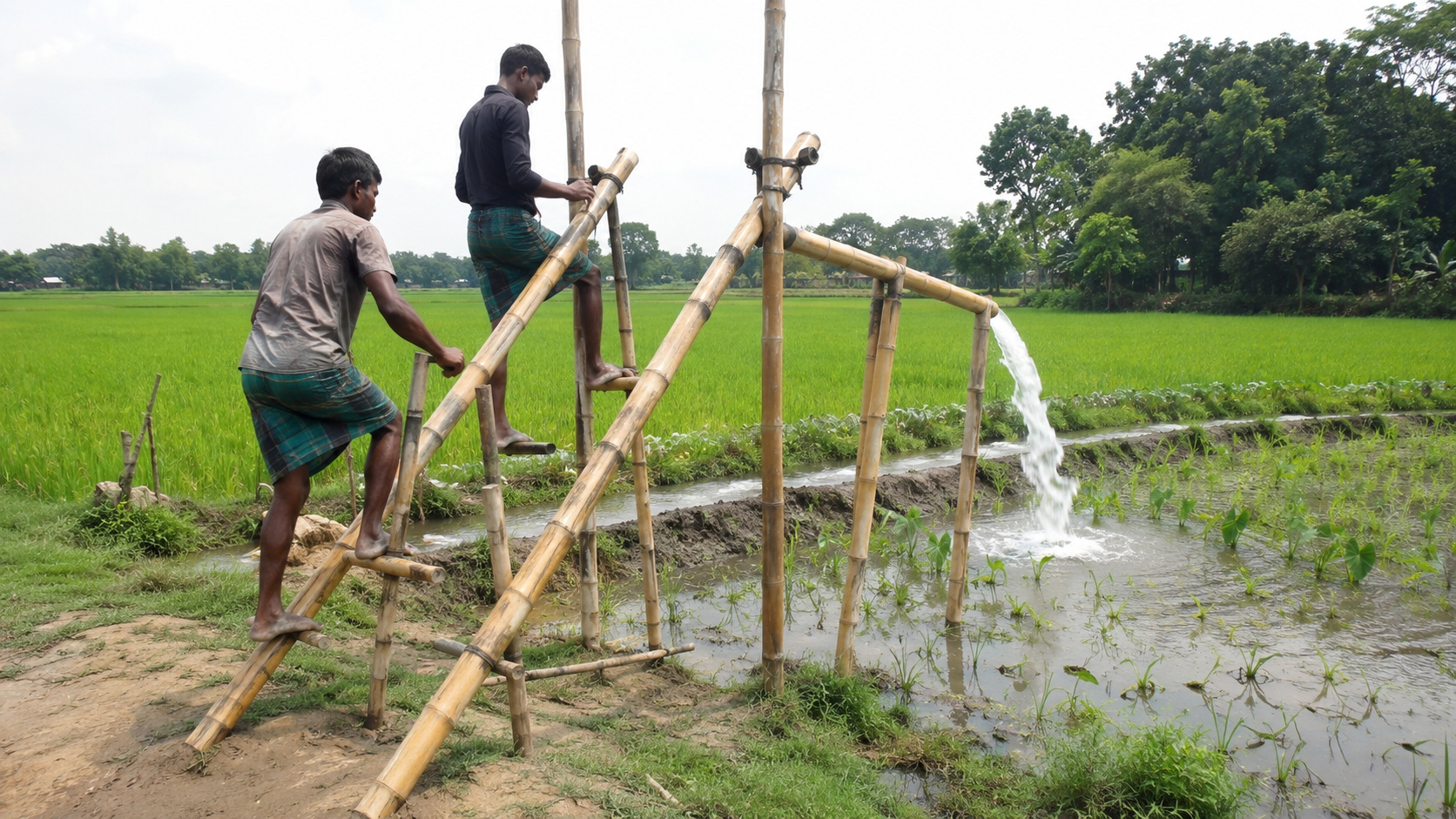
Bangladeshi Farmers Use Bamboo Levers to Pump Thousands of Liters of Water Daily Without Engines or Electricity
-
Brazilian Forests Could Expand by an Area Twice the Size of Switzerland by 2035, but Agricultural Sector Holds the Key, Study Finds




The European Union buys a different profile of products. The bloc imports cellulose, intermediate manufactures, and processed foods, items of higher added value that diversify the agenda and generate more distributed revenue among sectors of the Brazilian economy. The 9.7% growth in exports to Europe indicates that Brazil is not just a supplier of raw materials but also of products that undergo some degree of industrialization before shipping.
The US$ 82.3 billion in exports and the record surplus
The volume of US$ 82.3 billion in exports in the first quarter is significant in itself, but the most relevant data is the trade surplus of US$ 14.1 billion, an increase of 47.6% compared to the same period in 2025. The surplus indicates that Brazil is selling much more than it is buying, generating a net inflow of dollars that strengthens international reserves and contributes to exchange rate stability.
The 7.1% increase in exports shows that the growth is not sporadic but a consolidated trend. Brazil benefits from a combination of factors that include record harvests of soy and corn, favorable international prices for iron ore and oil, and trade agreements that facilitate access to markets like China and Europe. The challenge is to maintain this pace in a global scenario where geopolitical tensions and trade wars can alter commercial flows at any moment.
The R$ 7.8 billion in ports to avoid collapse in the face of demand
More than 95% of all Brazilian exports are shipped through ports, making port infrastructure the most critical bottleneck in the export chain. Investments of R$ 7.8 billion in port authorizations and contracts in 2025 alone represent a 400% growth compared to the period between 2019 and 2022, signaling that the government recognizes that without efficient ports, export records turn into ship queues, delays, and loss of competitiveness.
The Minister of Ports and Airports highlighted that the change in approach to logistics infrastructure plays a central role in economic policy and increases the efficiency of production chains. In practice, investments include the expansion of berthing berths, modernization of bulk terminals, and automation of operations that reduce ship turnaround times and increase cargo handling capacity without the need to build entirely new ports.
China as a driver and the risk of dependence
China accounts for almost 30% of Brazilian exports, a position that is both a strength and a vulnerability. The 21.7% increase in Chinese imports of Brazilian products confirms that Asian demand remains insatiable, especially for soybeans, iron ore, and oil that fuel the industrialization and consumption of 1.4 billion people. For Brazil, China is the buyer that no other country can replace in volume.
The risk is concentration. If the Chinese economy slows down or if geopolitical tensions interrupt trade flow, Brazil would feel the impact disproportionately because there is no alternative market capable of absorbing the volume that China buys. Diversification to Europe, which grew by 9.7%, and the search for new partners in BRICS and the Global South are strategies that reduce this vulnerability, but they have not yet changed the reality that China is, by far, the most important client for Brazilian foreign trade.
What the numbers mean for the economy of the common Brazilian
Export records and the trade surplus may seem distant from everyday life, but their effects are concrete. The inflow of dollars into the country puts downward pressure on the exchange rate, which cheapens imports of electronics, industrial inputs, and fuels, items that directly impact the cost of living. When Brazil exports more than it imports, the tendency is for the real to appreciate, reducing the price of imported products on the shelves.
Investments in ports generate direct and indirect jobs in coastal cities and strengthen logistics chains that employ everyone from truck drivers to crane operators. The agribusiness that supplies exports sustains entire municipalities in the interior of Brazil, and the increase in Chinese and European demand translates into more planting, more harvesting, and more income circulating in regions that depend on export activity to survive.
Do you feel the effects of export records in your daily life, or do you think the billions are concentrated in the hands of a few? Tell us in the comments if you believe Brazil should invest more in industrializing what it exports or if selling commodities is already enough.







