Portuguese
  Spanish


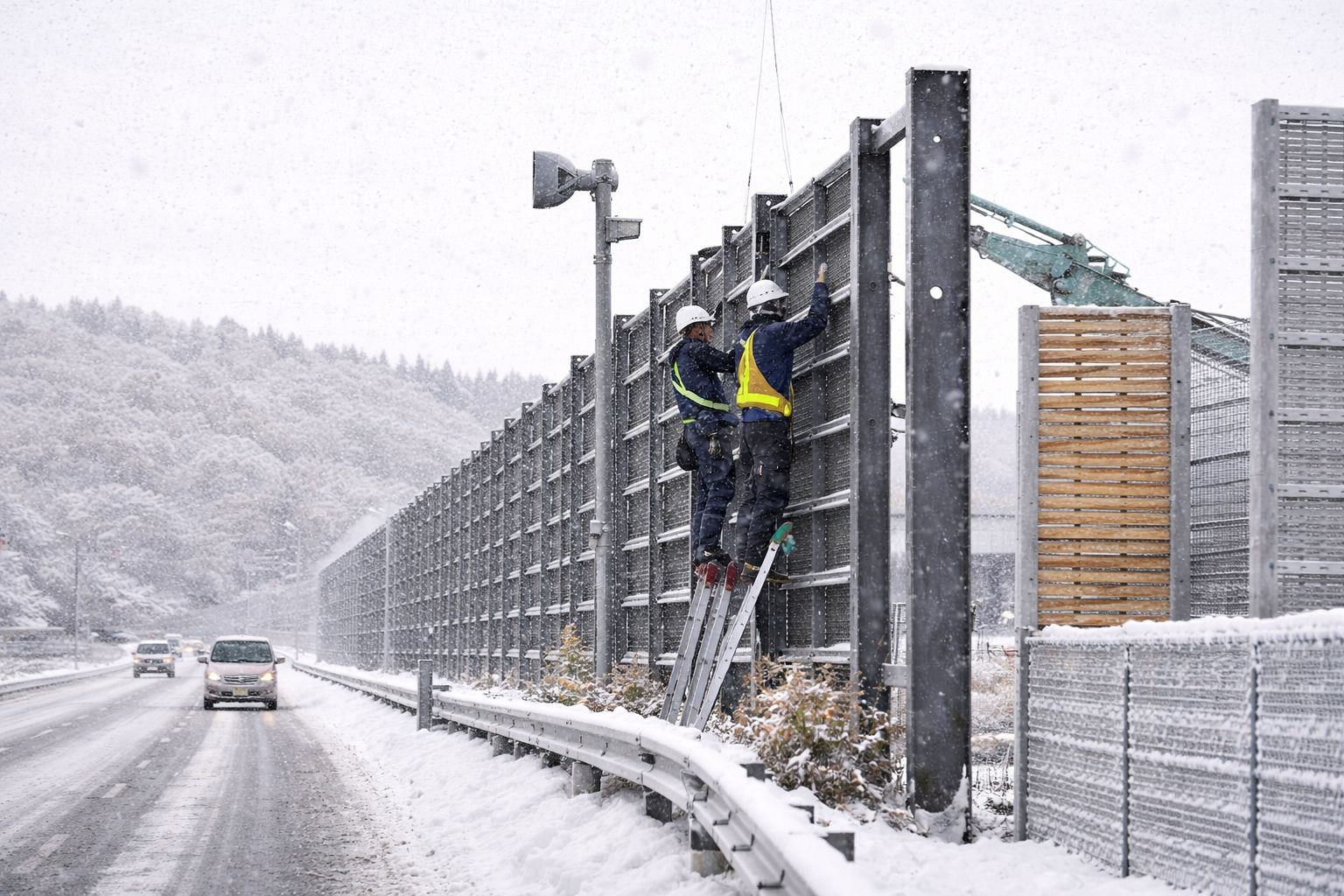

A Japanese company with six decades of operation has developed more than 170 models of snow barriers that already protect 1,700 kilometers of roads in Japan. The company is now planning to expand to Central Asia and other global markets, bringing road protection technology tested in one of the countries with the most severe winters on the planet.
A Japanese company with 60 years of experience in road protection engineering produces more than 170 different types of snow barriers that already protect about 1,700 kilometers of roads throughout Japan. The number impresses both by variety and scale: these are barriers designed for different wind conditions, snow volumes, terrain types, and highway configurations, developed over decades of trial, error, and refinement in one of the countries that suffers the most from snowstorms in the world. Now, the company wants to take this technology beyond Japanese borders, targeting Central Asia and other global markets where severe winters block roads, paralyze economies, and put lives at risk.
The decision to expand internationally is not random. Central Asian countries, such as Kazakhstan, Kyrgyzstan, and Uzbekistan, face long and intense winters that close roads for weeks, isolate rural communities, and increase the cost of transporting goods. The experience accumulated by Japan over six decades of combating snow on roads is an asset that few competitors can match, and Japanese snow barriers represent a tested solution in extreme conditions that can be adapted to climates and topographies different from those found in the archipelago.
What are snow barriers and how do they work

According to information from the channel NHK WORLD-JAPAN, snow barriers are structures installed along roads to prevent wind-blown snow from accumulating on the roadway. The principle is to interfere with the airflow that carries the snowflakes, redirecting them or causing them to settle before reaching the highway. Depending on the model, snow barriers can function as fences that reduce wind speed, panels that divert airflow, or structures that create controlled deposition zones where snow accumulates off the road.
-
New York removed the tracks from over 2,500 subway cars and dumped everything at the bottom of the Atlantic, and what seemed like trash turned into an artificial reef teeming with fish and divers.

-
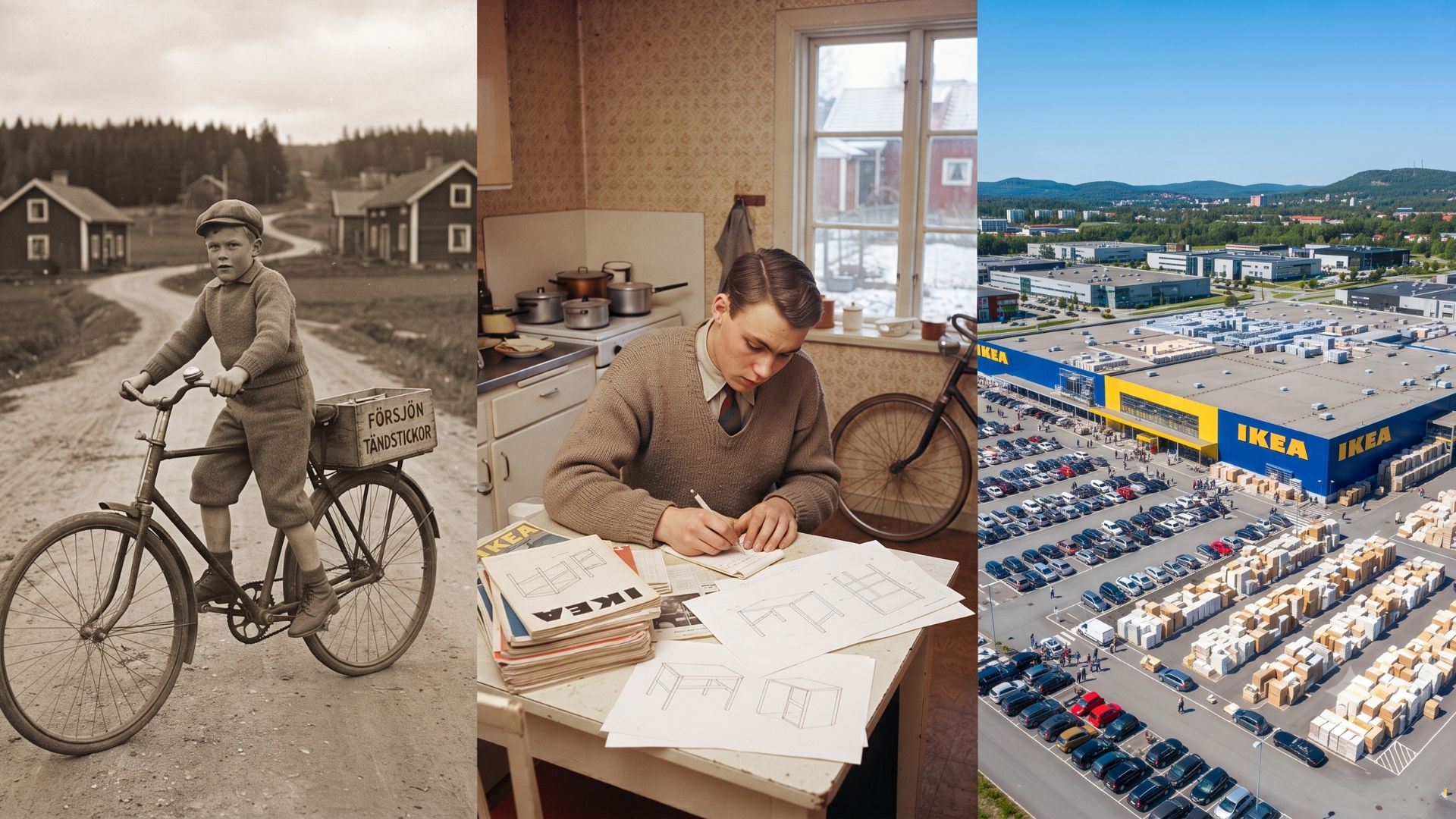
From matches sold by bicycle at age 5 to a global furniture empire: the lumberjack’s son founded IKEA at 17 in his uncle’s kitchen and transformed a small company into the largest furniture retailer on the planet.
-
The mansion in Flamengo, built in 1865 for the Baron of São Clemente and closed for 20 years, has become a spa, event hall, and gym for “Symphony,” a luxury condominium that sold 70% of its gross development value in the first month on the R$ 60 million land of the former Bennett College.

-
The Ipiranga convent, a 1924 building adjacent to the Museum that remained vacant for a decade and became home to dozens of cats, is reborn as “Alma Mater,” a luxury development worth R$ 130 million with a pool in the courtyard and a clubhouse in the former nuns’ chapel.




The Japanese company has developed more than 170 variations of these structures precisely because there is no one-size-fits-all solution. The behavior of wind-driven snow varies according to wind speed, air humidity, temperature, terrain topography, and highway configuration, which means that snow barriers that work perfectly in an open plain may be ineffective in a narrow valley or on a mountain curve. The diversity of models reflects the diversity of conditions that Japanese roads face, from the plains of Hokkaido to the mountains of the Japanese Alps.
How Japan Became a Global Reference in Snow Barriers
Japan receives some of the largest volumes of snow in the world in populated areas. Cities like Sapporo in Hokkaido and regions along the coast of the Sea of Japan face snowstorms that can accumulate meters of snow in just a few days, closing roads and railways and paralyzing economic activity. This reality has forced the country to develop, over decades, an arsenal of technologies to maintain mobility during winter, including hot water spraying systems (shosetsu), snow-clearing trains, and, of course, snow barriers.
The company that is now seeking international markets began manufacturing snow barriers 60 years ago, at a time when Japan was heavily investing in road infrastructure. The 1,700 kilometers of roads protected by its products represent a significant portion of the Japanese road network subject to snow accumulation, and each kilometer installed has generated data on performance, durability, and maintenance needs that have informed the development of new models. It is this combination of scale and experience that gives the company a competitive advantage that is hard to replicate.
Why Central Asia is the Next Market for Snow Barriers
The choice of Central Asia as an expansion destination makes strategic and climatic sense. The region has vast expanses of steppes and plains where the wind carries snow for kilometers without obstacles, creating conditions that quickly and frequently block roads. Countries like Kazakhstan, which has one of the largest road networks in Central Asia, face enormous costs to keep roads open during the winter months, and snow barrier technology can significantly reduce the need for constant mechanical removal operations.
In addition to the climate, there is an economic factor. Central Asia is in a cycle of infrastructure investment driven by connectivity projects like the New Silk Road, and the modernization of highways cutting through regions subject to heavy snow requires protective solutions that are not yet available locally. For the Japanese company, offering more than 170 models of snow barriers adaptable to different conditions allows it to meet specific demands that competitors with smaller portfolios cannot cover.
What Japanese snow barriers could mean for the rest of the world
The ambition to take snow barriers beyond Central Asia indicates that the Japanese company sees an underserved global market. Countries like Canada, Russia, Norway, Sweden, and even mountainous regions of South America face similar problems of snow accumulation on roads, and many use less sophisticated solutions or rely solely on mechanical removal, which is expensive, time-consuming, and needs to be repeated after each snowfall.
The advantage of snow barriers is that they are passive structures: once installed, they operate without energy, without constant maintenance, and without operators. Compared to mechanical removal, which requires heavy machinery, fuel, and teams working overnight, snow barriers reduce the volume of snow that reaches the road before removal is necessary, acting as a first line of defense that makes subsequent operations faster and cheaper. With 60 years of performance data and 170 models for different scenarios, the Japanese company brings to the global market a product that few can offer with the same level of expertise.
The future of Japanese snow road protection technology
International expansion is the next chapter of a story that began on the snowy roads of Japan in the 1960s. If the company can adapt its more than 170 models of snow barriers to the specific conditions of Central Asia and other markets, Japan could establish itself as the global benchmark supplier in snow road protection, just as it is already a reference in high-speed trains, earthquake-resistant construction, and tsunami warning systems.
For countries facing severe winters and snow-blocked roads, the offering from a company with 1,700 kilometers of proven installations and six decades of experience is hard to refuse. Snow will continue to fall. The difference lies in who can keep the roads open while it falls. And in this, Japan has been teaching for 60 years.
A Japanese company with 60 years of experience wants to take its snow barriers to the world. Did you know there are over 170 different types? Would this technology work in cold regions of Brazil, like Serra Gaúcha? Leave your opinion in the comments.