






 Portuguese
  Spanish
  4 min of reading
  0 comments


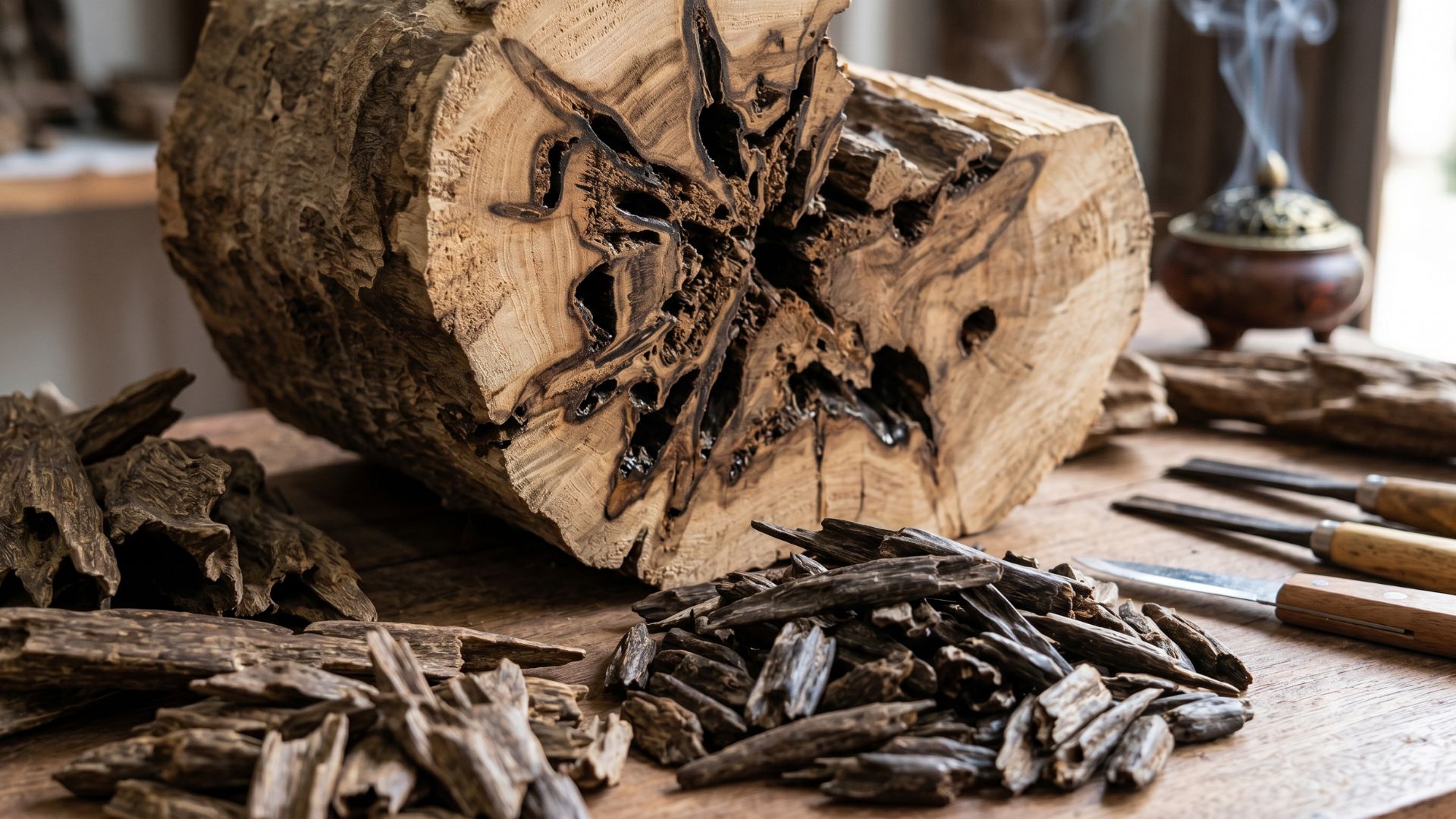
Known as oud or agarwood, the material can reach US$ 100,000 per kilo and drives a billion-dollar global market for perfumes and incense.
For centuries, kings, sultans, traders, and perfume makers have competed for one of the rarest natural materials ever produced by a tree. Internationally known as agarwood, oud, gaharu, or eaglewood, the product does not occur commonly. It arises when certain trees of the genus Aquilaria suffer injuries and begin to produce an extremely valuable aromatic resin as a defense mechanism.
The result of this process is a dark, fragrant wood that has become one of the most expensive raw materials in the world. According to a report produced by the International Tropical Timber Organization (ITTO) and the Convention on International Trade in Endangered Species of Wild Fauna and Flora (CITES), exceptional quality agarwood specimens have already reached values of up to US$ 100,000 per kilogram, driving decades of intense exploitation and putting various species under increasing environmental pressure.
How a common tree produces one of the most expensive woods on the planet
Unlike other noble woods, the value of agarwood is not in the wood itself, but in the resin that forms inside it.
-
Scientists unveil the mystery behind the island where dark-skinned inhabitants are born with naturally blonde hair due to a rare genetic mutation.

-
At 25 years old, Vini Jr chose a ‘castle’ worth R$ 55 million, with a daily rate that can exceed R$ 78,000, to host his mother, father, and three siblings while he competes in the World Cup in the United States.

-
12-year-old prodigy graduates from school and college in the same week in the USA, delivers the valedictorian speech, and still finds time to play with Lego.
-
As historic droughts threaten crops and cities, Morocco accelerates a billion-dollar plan to transform ocean water into drinking water, build Africa’s largest desalination plant, and supply millions by 2030.






Researchers explain that trees of the genera Aquilaria and Gyrinops begin to produce this substance when they suffer some type of physical damage or fungal infection. As a response to biological stress, the plant starts to generate a dark and highly aromatic resin that permeates part of the trunk and branches. Over the years, this region transforms into the material known as agarwood.
The phenomenon is relatively rare in nature. Technical sources cited by specialized literature indicate that only a small portion of trees naturally develop significant quantities of the resin, which helps to explain its scarcity and international value.
The perfume that conquered palaces, mosques, and luxury brands
The fame of agarwood is mainly linked to its aroma. According to ITTO and CITES, the resin has been used for centuries in the production of incense, perfumes, aromatic oils, and ceremonial products in various regions of Asia and the Middle East. In many Arab countries, oud is considered a symbol of social prestige and continues to be used in celebrations, family events, and religious ceremonies.
The oil extracted from the resinous wood is one of the most valued ingredients in luxury perfumery. International brands invest large amounts of resources to obtain high-quality batches, while collectors and enthusiasts are willing to pay extraordinary amounts for rare pieces of natural agarwood.
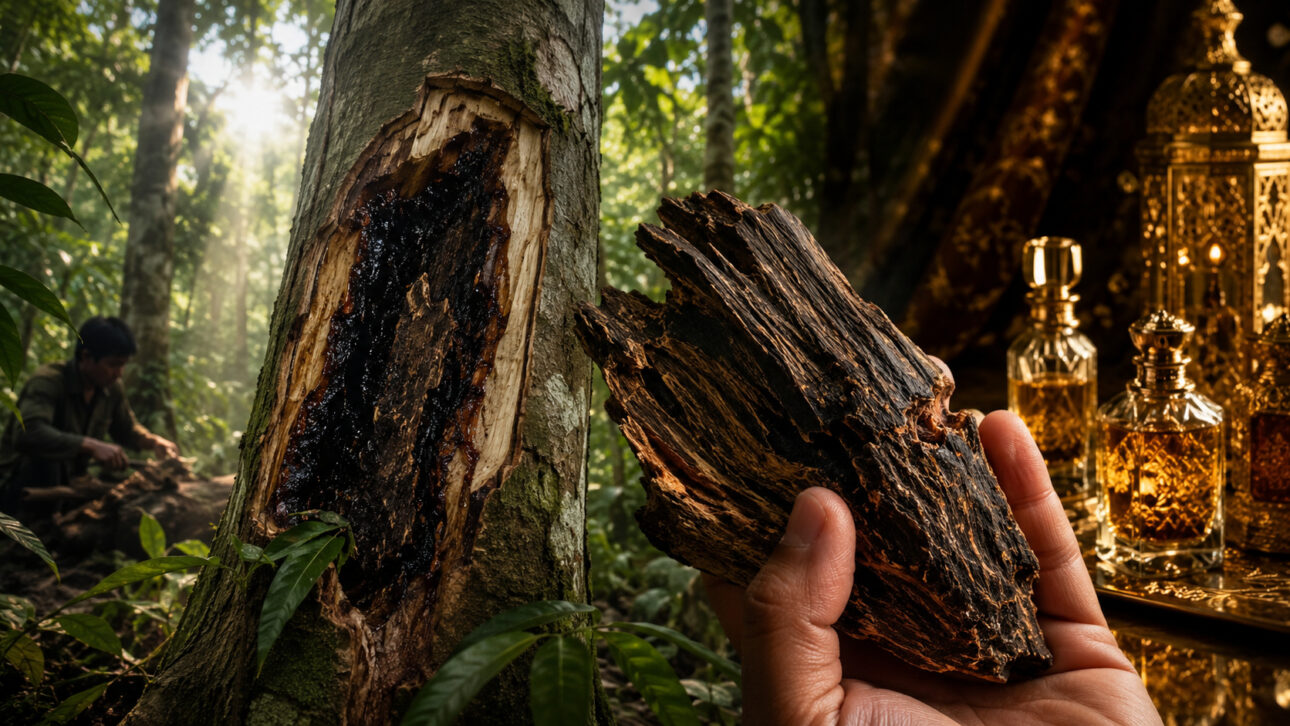
The market has become so lucrative that studies cited by CITES classify agarwood as one of the most valuable non-timber forest products in international trade.
The pursuit of profit has put entire species under pressure
The extreme valuation has had direct consequences for the tropical forests of Asia. According to the technical review “Expensive, Exploited and Endangered”, published by ITTO in partnership with CITES, international demand has led to the excessive extraction of agarwood-producing trees in various Asian countries. The report highlights that exceptional prices have encouraged levels of exploitation considered unsustainable in several regions.
As a response, all species of the genera Aquilaria and Gyrinops have been protected by CITES. International trade has come under monitoring to prevent exploitation from compromising the survival of natural populations.
Recent reports also indicate that a significant part of the global trade still depends on trees found in natural forests, which continues to concern conservationists and environmental authorities.
Plantations attempt to replace forest exploitation
To reduce pressure on wild populations, several countries have started investing in commercial plantations.
In these systems, trees are cultivated in a controlled manner and later artificially inoculated to stimulate the production of aromatic resin. The technique allows for the production of agarwood without relying exclusively on harvesting from native forests.
Despite the advancement of these initiatives, experts observe that naturally formed specimens in forest environments continue to be the most valued by the market, especially among collectors and traditional oud consumers. This difference helps to keep the prices of materials considered exceptional high.
A market built on a survival reaction
The most curious aspect of agarwood is that all its richness arises from the tree’s own defense mechanism.
Without injuries, biological attacks, or other stress factors, the resin simply does not form. The material that drives a global market worth billions of dollars is, in practice, the result of the plant’s attempt to survive damage and infections.

Today, agarwood remains one of the most impressive examples of the appreciation of natural resources. A substance produced by wounded trees has become an ingredient in luxury perfumes, an object of international trade, and a status symbol in various cultures.
At the same time, it has become a reminder of how global demand for rare products can put entire species at risk when exploitation exceeds the forests’ capacity for regeneration.







Be the first to react!