Portuguese
  Spanish


New logistics structure of Mercadona shows how technology, delivery, and order preparation have come to occupy a central place in the online supermarket competition, with changes that appear far from traditional aisles.
Mercadona launched its first semi-automated hive for online orders on June 12, 2026.
The center is located in the La Atalayuela industrial area, in the district of Villa de Vallecas, in Madrid, and has the capacity to prepare up to 5,000 purchases per day, supported by 70 robots and a team of 700 workers, according to information released by the company and published by Spanish media.
The investment reported by the Spanish network was 54 million euros.
-
In Andradina, in the interior of SP, a tannery transformed tilapia skin that slaughterhouses used to throw away into exotic leather for bags, shoes, and even wedding dresses, producing about 2,000 pieces per month and exporting to seven countries, proving that fish waste has become high-value fashion.

-
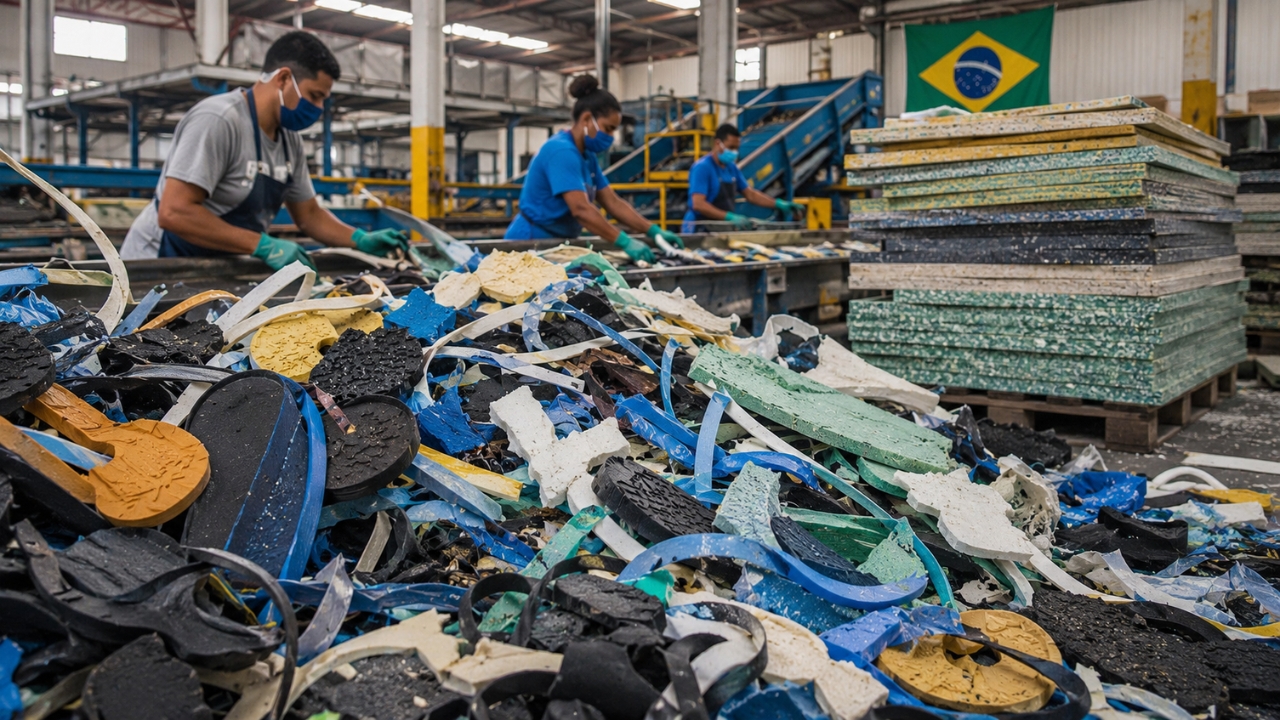
The industrial waste that even recyclers didn’t want has gained value in the interior of Bahia: two entrepreneurs invested R$ 2.8 million to transform 350 tons per year of foam, rubber, and plastic into boards that can replace wood and MDF.

-
What is a red flashlight used for, after all? See why it is so commonly used at night.

-
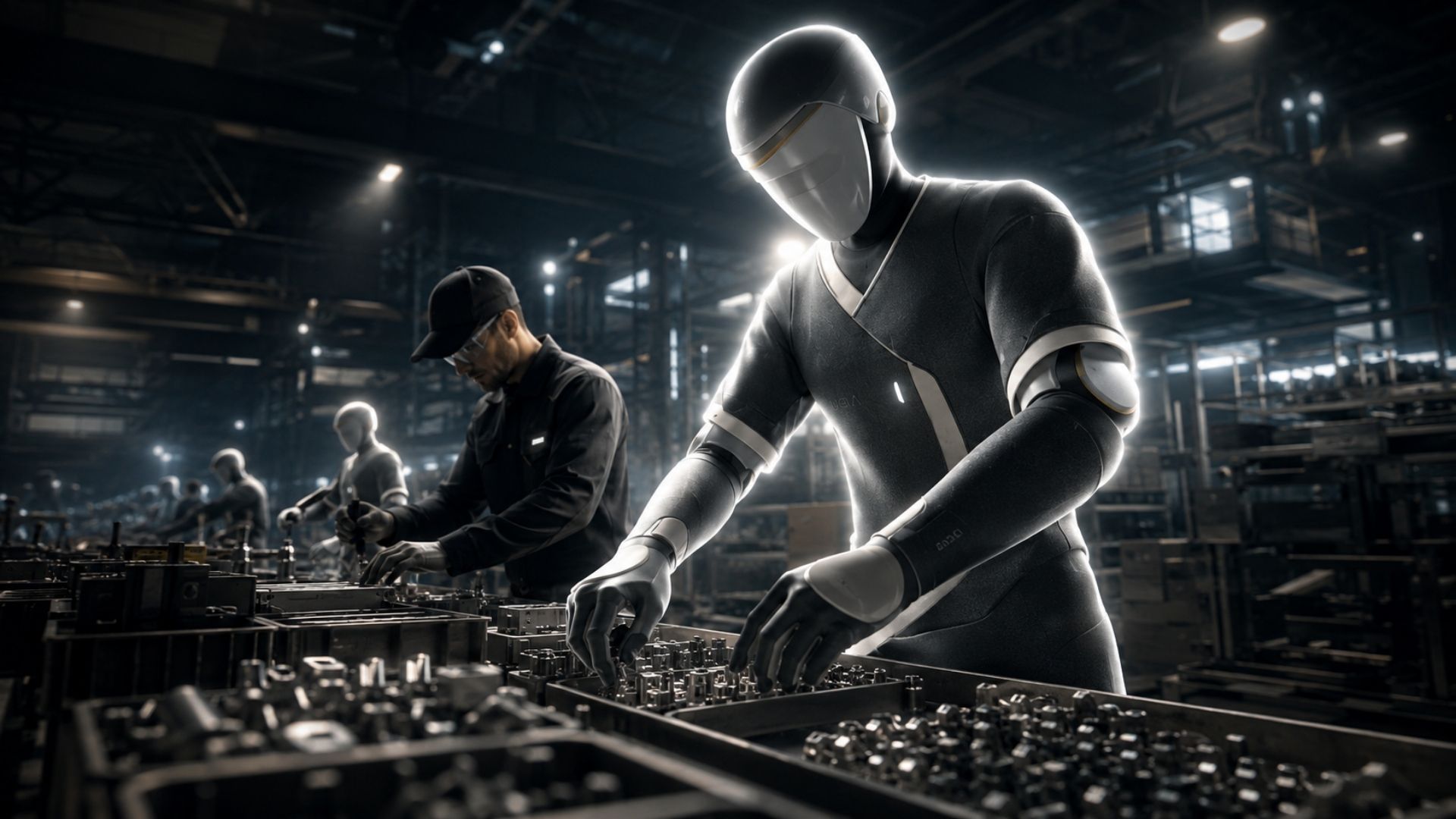
He has never read a line of code, but he already knows how to work: the French company UMA presented in Paris the Northstar, its first AI-powered humanoid robot designed for factories and warehouses, capable of copying tasks just by observing an employee in action.


The facility covers 32,000 square meters and automates part of the processing of more than 2,700 references of the dry assortment, such as packaged foods, non-perishable products, and cleaning items.
According to the company, the change alters the dynamics of order separation: the worker no longer walks through aisles to locate all items, while part of the products is brought to the preparation station.
The new unit integrates Mercadona’s digital operation in the Community of Madrid.
The Vallecas hive is the company’s third in the region, after the units in Getafe and Boadilla del Monte, and the seventh in operation in Spain, where the network also maintains similar structures in Valencia, Barcelona, Alicante, and Seville.
How Mercadona’s semi-automated hive works
Mercadona uses the term “hive” for its logistics centers exclusively dedicated to preparing purchases made online.
Unlike a common store, this type of facility does not receive consumers in the aisles.
The space is organized to separate, check, and dispatch orders made via the website or app.
In Vallecas, partial automation focuses on the dry goods area.
The 70 robots are involved in the movement and organization of part of the items, which reduces the need for internal walking during preparation.
The operation, however, continues with employee participation in stages such as replenishment, checking, final assembly, quality control, and dispatch.
This combination of machines and human team was presented by the company as a way to reduce physical effort and expand the capacity of the online channel service.
With the separation done in a dedicated center, physical stores become less dependent on preparing digital orders in their own aisles.
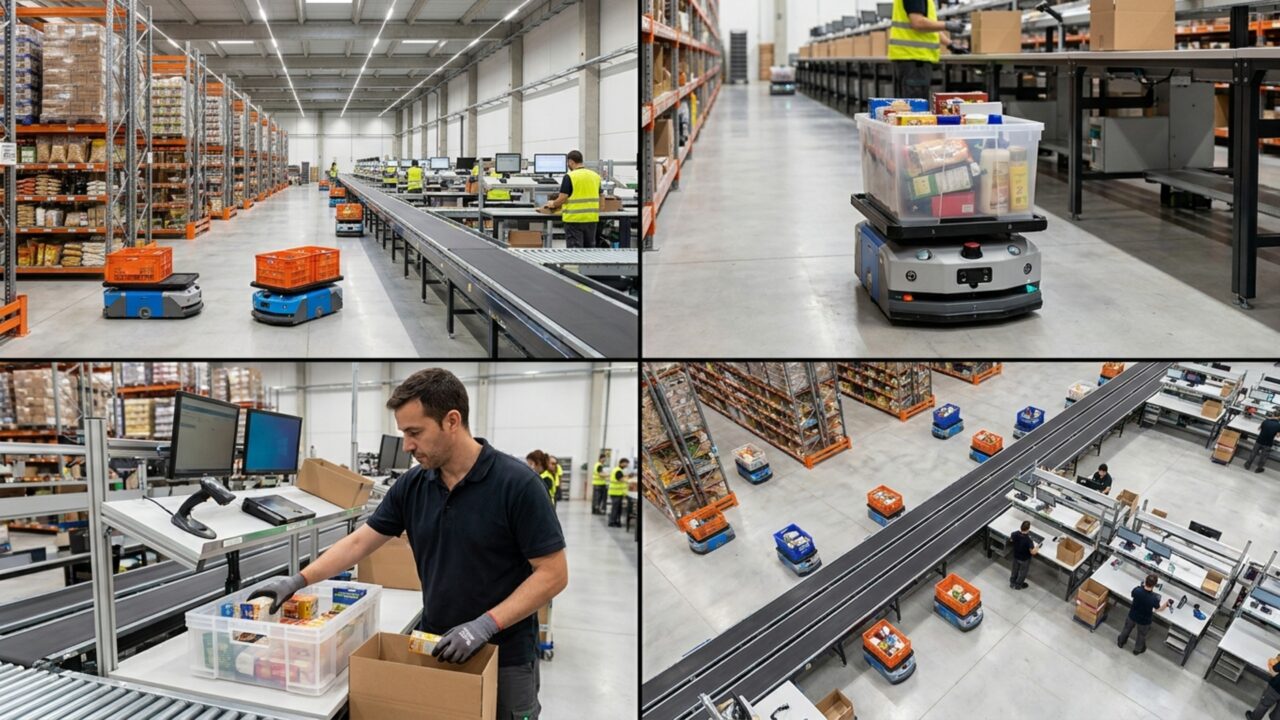
Robots operate only in part of the online operation
The presence of robots does not make the warehouse fully autonomous.
Mercadona reported that 700 people will work in the new facilities, in roles related to preparation, operational management, and order distribution.
Automation is mainly involved in the more repetitive activities related to dry products.
Fresh, refrigerated, and frozen items still require specific controls for storage, temperature, and transport.
Therefore, the consumer experience does not rely solely on the speed within the warehouse.
The order needs to be correctly separated, maintain the cold chain when necessary, and arrive within the defined delivery window.
The Vallecas hive will also have 175 ECO vans for deliveries.
These vehicles add to the fleets of Getafe and Boadilla del Monte, raising the number of Mercadona vans in the Community of Madrid to over 300, all adapted to preserve products that depend on controlled temperature, according to the company.
What changes for online supermarket shopping
For the consumer, the change tends to be perceived through the service, not necessarily by the technology installed in the warehouse.
The structure increases the preparation capacity and allows the company to reorganize the online operation without relying solely on physical stores.
Mercadona reported that, with the Vallecas unit, it intends to reach the end of 2026 serving 95% of the localities in the Community of Madrid.
The company also declared that the online channel exceeded 1 billion euros in revenue in 2025, with an increase of 26% compared to the previous year.
Even with internal automation, the digital operation remains subject to external stages outside the warehouse.
Traffic, product availability, item replacement, temperature control, and meeting delivery schedules remain relevant factors for the online supermarket service.
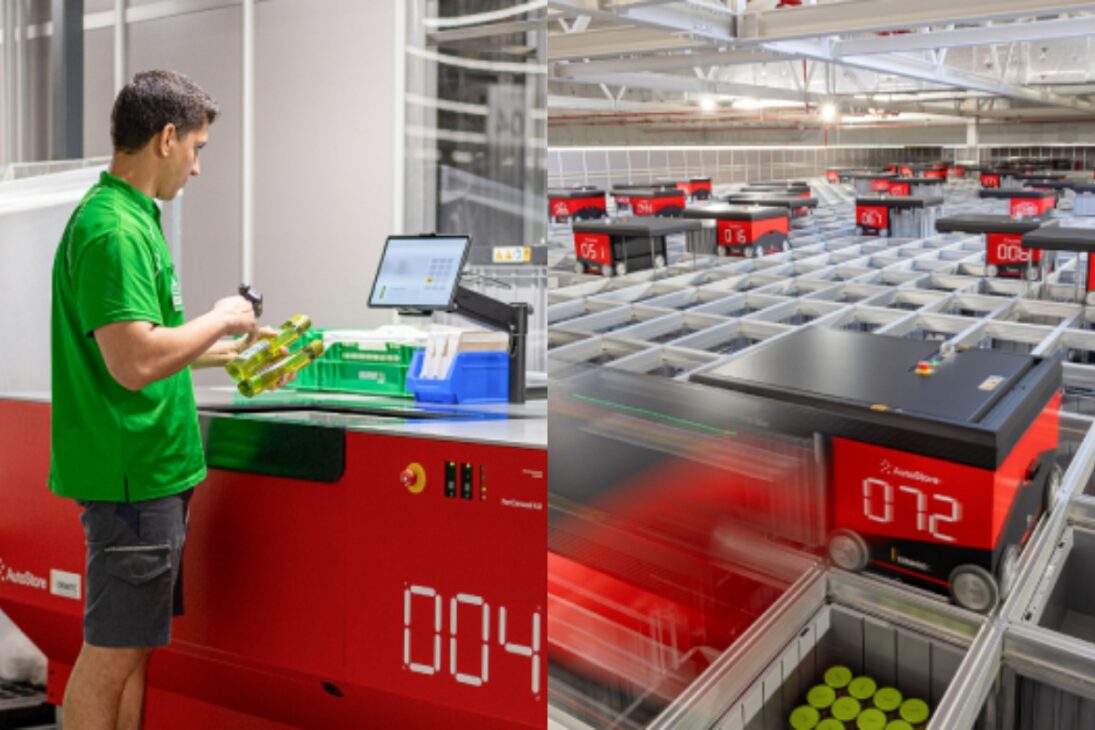
Why the inauguration weighs on the food retail sector
The Vallecas center marks an operational change in how Mercadona structures online supermarket sales.
Instead of concentrating the separation of digital purchases within stores, the company uses dedicated centers to prepare orders in areas organized for logistics.
Madrid is a relevant market for this type of operation because it has a high population concentration and a large potential delivery volume.
With the new hive, Mercadona’s daily capacity in the Community of Madrid increases from 3,000 to up to 8,000 orders, combining Vallecas, Getafe, and Boadilla del Monte.
The chain also maintains a leading position in the Spanish supermarket market.
Data from Kantar pointed to Mercadona as the leader in spending on high-frequency consumer goods in Spain in 2023, with 26.2% market share, while sector surveys released in 2026 indicated the company’s growth to 29.5% share in 2025.
Technology stays behind the scenes of the online supermarket
The semi-automated hive in Vallecas shows how part of the competition in the online supermarket occurs outside the sales areas.
Warehouses, routes, sorting systems, adapted vehicles, and temperature control influence the ability to deliver complete purchases within the timeframe informed to the customer.
In the strategy adopted by Mercadona, stores remain focused on in-person service, while dedicated centers take on part of the digital demand.
The model separates two different routines: the purchase made at the physical point and the order prepared for home delivery.
Technology appears, in this case, in a stage not very visible to the consumer.
Robots organize part of the dry products, workers do the preparation, and adapted vehicles take the orders to their destination.