Portuguese
  Spanish


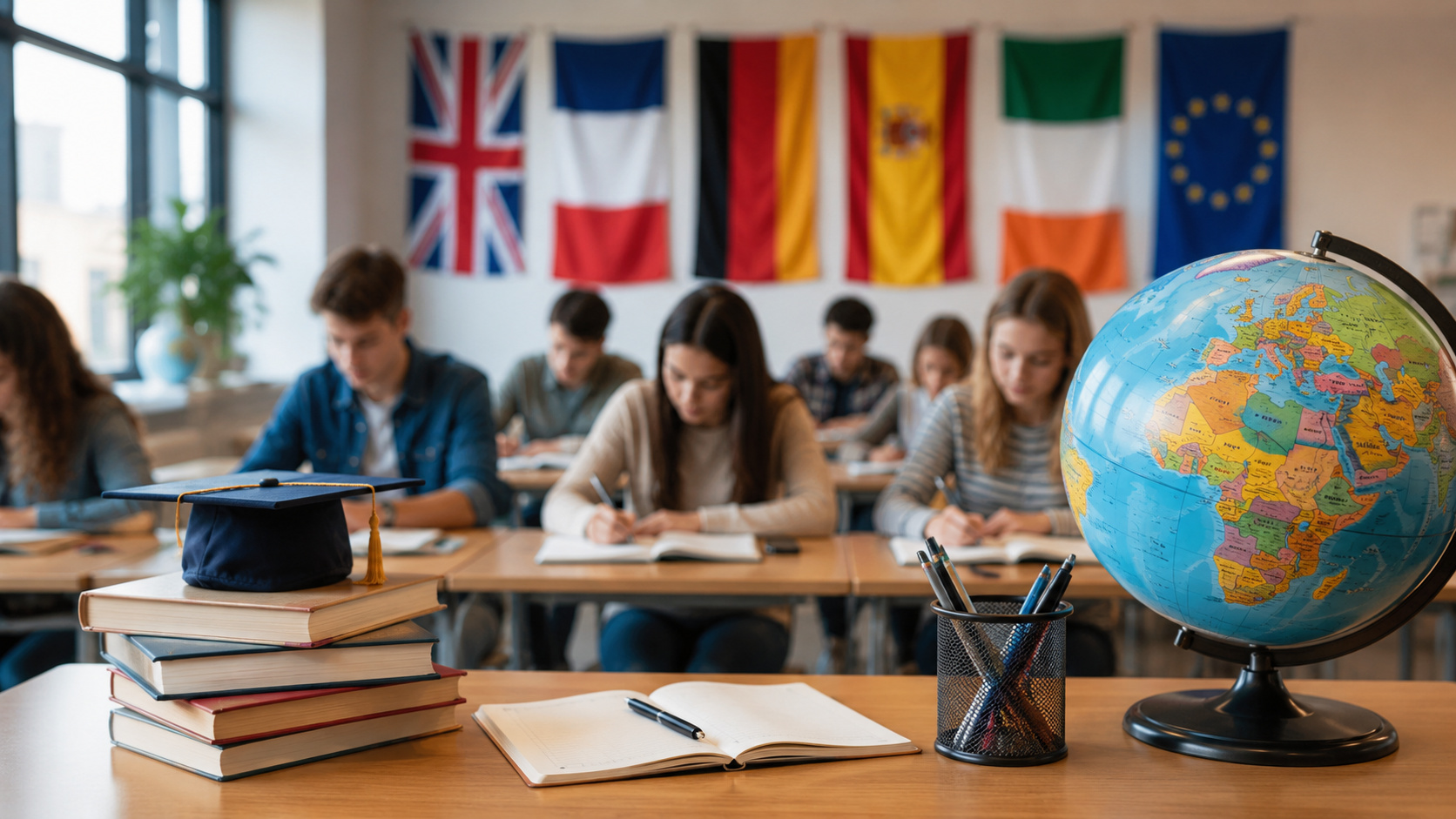

Europe continues to be one of the regions with the highest education levels on the planet. Data from the Education at a Glance report, published annually by the Organisation for Economic Co-operation and Development (OECD), shows that countries like Ireland, Luxembourg, Switzerland, and the Nordic nations rank among the European leaders in the proportion of adults with complete higher education.
Furthermore, the data shows that access to higher education and efficient educational policies have been key factors behind economic growth and innovation in various countries on the continent.
Ireland leads among the most educated
According to the Education at a Glance 2025 report by the Organisation for Economic Co-operation and Development (OECD), Ireland ranks among the European leaders in education. Data for 2024 shows that about 52% of adults aged 25 to 64 had completed higher education, one of the highest rates on the continent.
Moreover, Ireland has internationally recognized universities and a favorable environment for technology and innovation companies. As a result, the country attracts qualified professionals from various parts of the world.
-
Creative Uses for Toilet Paper Rolls That Will Change Your Perspective

-
Crab Trapped in Plastic Bottle for 62 Days Near Okinawa Highlights Little-Known Impact of Marine Pollution on Small Animals
-
Esperanza’s Bamboo Barrier in Oaxaca Redirects River and Reduces Erosion by 85% in Five Years

-
Family Builds Homemade Wind Turbine to Power Off-Grid Home, Video Reaches 555,000 Views on Ngô Thị Huyền’s Channel



Luxembourg and Switzerland also stand out
Another country that stands out in the ranking is Luxembourg, known for its high standard of living and an educational system strongly connected to the labor market.
Similarly, Switzerland ranks among the top nations. The country combines excellent academic education with highly valued technical programs, creating a workforce prepared for strategic sectors of the economy.
Additionally, Swiss education is often cited as an international reference due to the strong integration between schools, universities, and companies.
Nordic countries maintain a tradition of excellence
The countries of Northern Europe continue to be among the best-rated when it comes to education.
Finland, Norway, Sweden, and Denmark frequently appear in international rankings thanks to continuous investments in quality public education.
Moreover, these nations prioritize teacher training, educational inclusion, and the development of practical skills from the early school years.
Therefore, their students tend to achieve above-average results in international assessments.
Education drives innovation and economic growth
According to data from the “Population with tertiary education” indicator, compiled by the Organisation for Economic Co-operation and Development (OECD) in the report Education at a Glance 2025 and by the European statistical agency Eurostat, Ireland is among the European countries with the highest proportion of adults aged 25 to 64 with completed higher education. The most recent data available indicate percentages exceeding 50% of the population in this age group, a rate also observed in countries like Luxembourg and Switzerland. The indicator considers people who have completed tertiary education courses, a category that includes university degrees and internationally recognized equivalent qualifications.
When more people have access to higher education and professional qualification, the capacity for innovation increases. Additionally, companies find professionals better prepared to work in high-tech sectors and specialized services.
Consequently, countries with high education levels tend to record higher productivity, higher average income, and better social indicators.


Higher education continues to expand
In recent years, the number of people with university degrees has increased in much of Europe.
Furthermore, governments have expanded programs for access to higher education, scholarships, and initiatives aimed at technical training. In this way, more young people can enter universities and vocational training institutions.
At the same time, continuing education has gained ground, allowing professionals to update their skills throughout their careers.
European countries with the highest percentage of adults (25 to 64 years) with completed higher education
- Ireland: about 52%
- Luxembourg: about 51%
- Switzerland: about 48%
- Norway: about 47%
- Sweden: about 46%
- Finland: about 45%
- Denmark: about 44%
The indicator considers the proportion of adults aged 25 to 64 who have completed tertiary education (university or equivalent), a methodology adopted by the OECD and Eurostat to compare education levels between countries.
Technology transforms the way of learning
Another factor contributing to good educational outcomes is the increasing use of technology.
Digital platforms, online courses, and artificial intelligence tools have started to complement traditional teaching methods. Additionally, many European institutions invest in modern laboratories and more dynamic learning environments.
As a result, students have access to training increasingly aligned with labor market demands.

Europe remains a global reference
Although each country has its own characteristics, the ranking highlights a common trend: consistent investment in education generates long-lasting benefits for society.
Moreover, the top-ranked nations demonstrate that long-term educational policies can strengthen the economy, stimulate innovation, and improve the quality of life for the population.
For this reason, Europe continues to be seen as one of the main global references in academic training and knowledge development.
What do the leading countries have in common?
Despite cultural and economic differences, the most educated countries on the continent share some important characteristics:
- Strong investment in public education;
- High rate of access to higher education;
- Valuing the teaching career;
- Integration between education and the job market;
- Encouragement of research and innovation;
- Continuous professional qualification programs.
In this way, these countries manage to maintain high levels of education and prepare their populations for the challenges of an economy increasingly based on knowledge and technology.
As the global market becomes more competitive, education remains one of the main differentiators for economic and social development. Therefore, the countries leading this ranking continue to serve as examples for governments and institutions around the world.