Portuguese
  Spanish


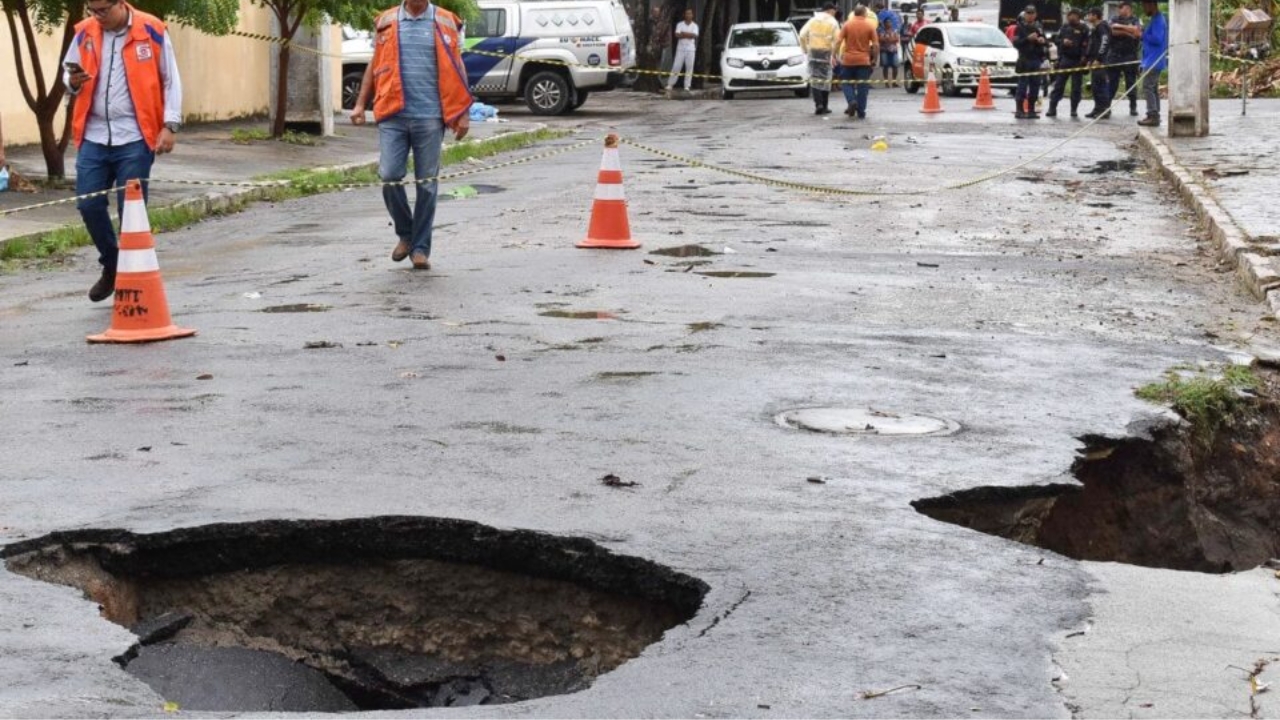
The urban tragedy in Maceió changed the lives of families who lost homes, neighbors, businesses, and routine after the ground subsidence linked to rock salt mining, in a case that still involves technical studies, agreements, and disputes for compensation.
In Maceió, an urban tragedy turned part of the city into an area of abandonment. Neighborhoods like Pinheiro, Mutange, Bebedouro, Bom Parto, and part of Farol were affected by cracks, ground subsidence, and relocations after decades of underground rock salt mining linked to Braskem.
The harshest number appears in official and journalistic sources: more than 60,000 people had to leave their homes. According to Agência Brasil, the disaster accumulated human dramas on streets where properties were closed, businesses disappeared, and the neighborhood routine was replaced by walls, surveillance, and silence.
The neighborhood didn’t end all at once, it was gradually emptied
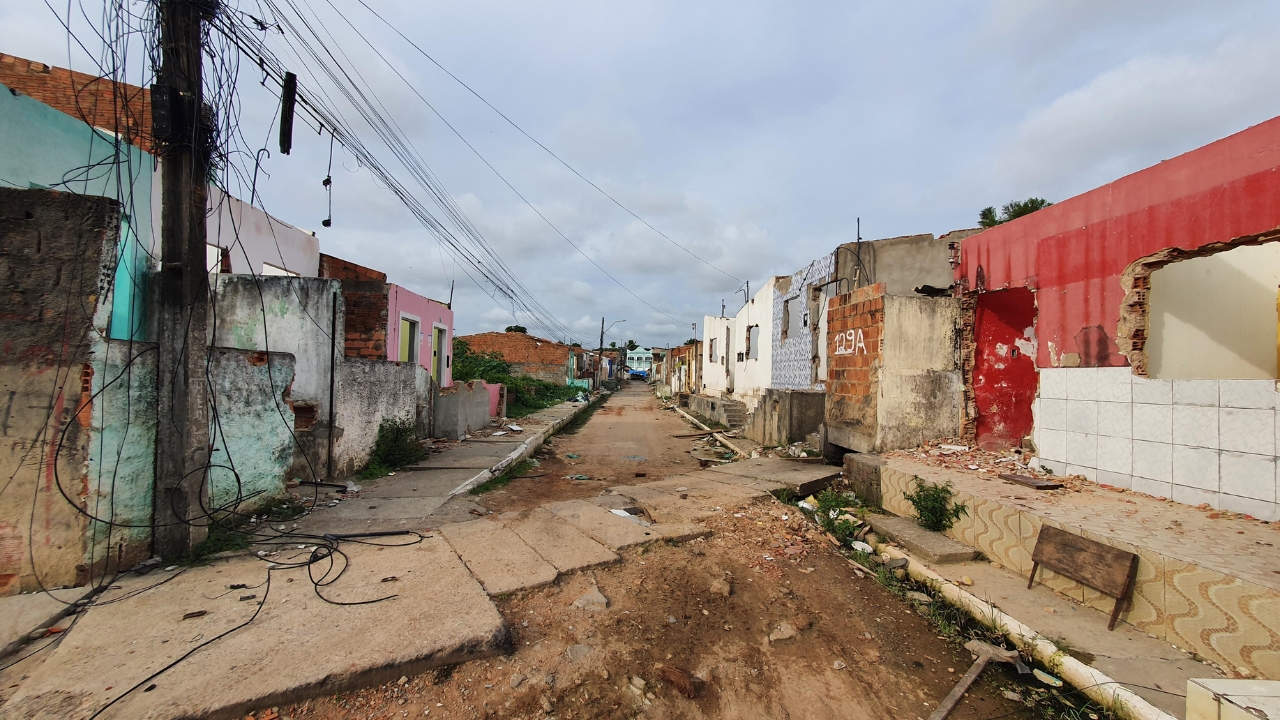
The strongest image of the crisis is not just in the cracks. It’s in the houses that remain standing but without residents. Doors and windows were sealed with brick and cement, while streets that were once common now resemble a ghost town scenario.
-
Brazil Sets Record with 9.3 Million Foreign Tourists in 2025, a 37% Increase

-
Brazil’s Grupo Boticário Earned $7.5 Billion in 2025, Now World’s Largest Beauty Retail Network

-
Scientists Warn Extraterrestrial Life May Have Left Clues on Other Planets, But Humans Might Be Missing Them in Space Missions

-
Brazil Uses Four Times More Bio-inputs Than the Global Average, Market Surpasses $1 Billion


According to Agência Brasil, more than 15,000 properties were abandoned under private surveillance. Behind this number were families who lost not only a property but also the street where they grew up, the business that supported the home, the children’s school, and the network of neighbors that gave meaning to the neighborhood.
This emptying created an urban wound difficult to measure only in compensations. Instead of a tragedy concentrated on a single day, Maceió began to live with a prolonged loss, spread by forced changes, legal uncertainty, and interrupted memory.
The 35 mines underground changed the history of Maceió
The technical origin of the problem was associated with the exploitation of 35 rock salt mines. The Geological Service of Brazil concluded in 2019 that the destabilization of underground cavities caused subsidence, surface deformations, and reactivation of preexisting geological structures.
The extraction of rock salt operated with deep wells. Water was injected underground to dissolve the mineral layer, forming brine, which was then extracted for industrial use. The risk appeared when the cavities left by this process lost stability.
The Geological Service of Brazil itself recorded accelerated movement between 2016 and 2018, with radial deformation and subsidence reaching 40 centimeters in the center of the analyzed area. It was from this evidence that the crisis ceased to be treated as an isolated problem of cracks and began to be recognized as a disaster of geological and mining origin.
Mining stopped, but the impact continued on the streets
After the technical conclusion, rock salt mining was halted. The Environmental Institute of Alagoas reported that it suspended and canceled the environmental license for the activity, while the National Mining Agency also suspended the extraction license.
Even so, the lives of the residents had already been dismantled. The risk map advanced, areas were emptied, and the Civil Defense of Maceió began to monitor the ground with equipment capable of identifying millimetric movements.
In 2023, mine 18, in Mutange, became a symbol of tension. The risk of collapse led the city to a new alert, but the Civil Defense of Maceió itself corrected exaggerated comparisons with Maracanã and reported that the cavity had a volume of 116 thousand cubic meters, 27 times smaller than the stadium.
Agreements, compensations, and disputes remain at the center of the case
In terms of compensations, Braskem maintains an official page about the Financial Compensation and Relocation Support Program, where it presents its own reports on proposals, adhesions, and payments made to affected residents and merchants. These numbers, however, are data declared by the company and do not eliminate the criticisms about reparations, which remain present in sources like the Braskem CPI in the Senate and the Public Defender’s Office of Alagoas.
The company also signed a socio-environmental agreement with the Federal Public Ministry, with the participation of the Public Ministry of Alagoas and the adhesion of the Municipality of Maceió, to repair, mitigate, or compensate for impacts in the affected neighborhoods.
Even so, the discussion did not end. The Braskem CPI in the Senate pointed to the mining company’s responsibility, cited monitoring failures, and advocated for the revision of agreements and compensations. The Public Defender’s Office of Alagoas also highlighted the situation of the Flexais de Bebedouro, where residents report social and economic isolation after the evacuation of neighboring areas.
The case became an urban tragedy with no simple return


In 2024, a Dutch court ordered Braskem to compensate victims of the ground subsidence in Maceió. In 2025, the Federal Public Ministry followed the presentation of a new technical study on subsidence in five neighborhoods of the Alagoas capital.
The sequence shows that the disaster was not confined to the moment of evacuation. It came to occupy courts, technical reports, reparation negotiations, scientific studies, and the lives of those who had to rebuild their routines away from home.
The case of Maceió goes beyond cracks opened in the asphalt. It shows how an underground activity, maintained for decades, can alter the surface of an entire city and transform vibrant neighborhoods into territories of absence. In the end, the Braskem tragedy did not leave just empty properties. It left a public question about how much it truly costs to lose the ground where a life was built.