






 Portuguese
  Spanish


At Estância São Francisco, bananas started with 50 seedlings in 2017 and expanded to about 15,000 plants over 9 hectares. With irrigation, solar energy, ATeG from Senar Mato Grosso, and sales at R$ 5 per kilo, production maintains weekly harvests even during the drought in the Mato Grosso region.
The banana was initially introduced as a test in an area that had previously been leased for soybeans in Tangará da Serra, Mato Grosso. The producer at Estância São Francisco planted about 50 seedlings in 2017 to observe the crop’s performance and decided to expand the banana plantation after the initial results.
Today, the property has about 9 hectares cultivated with bananas and approximately 15,000 plants, according to a report presented on the Senar Transforma program. The production is irrigated, uses solar energy to reduce expenses, and maintains weekly harvests, even during the dry season.
Test with 50 seedlings opened space for fruit growing
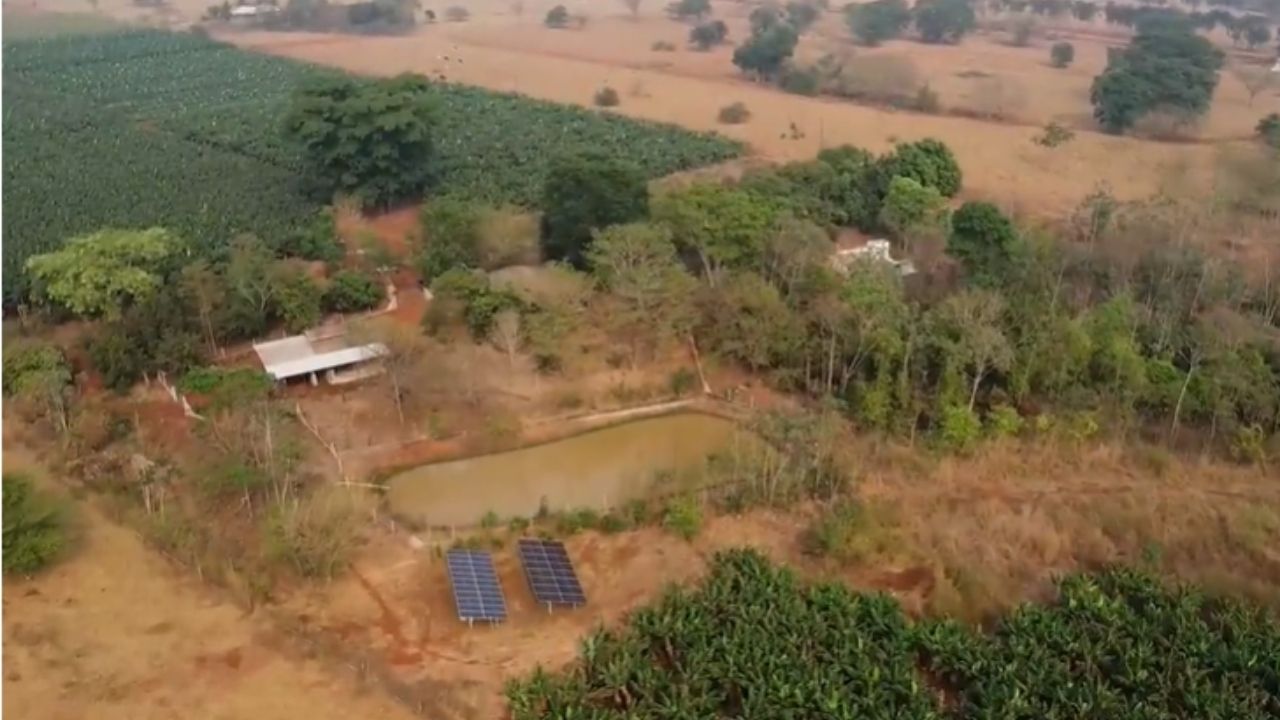
The implementation began experimentally. The producer planted about 50 banana seedlings in a part of the property to assess whether the crop would have good commercial output and adaptation to local conditions. The initial response was positive, especially because the plants withstood the dry season well when they received irrigation.
-
Canadian Entrepreneur Sells Company to Build Community with 99 Tiny Homes for the Homeless, Offering Jobs and Solar-Powered Amenities

-
Isolated Residents in Brazil’s Pantanal Create 8 km Road After Waterway Blocked by Aquatic Vegetation

-
Over 60,000 People Displaced in Brazil’s Maceió After Sinkholes Expose 35 Underground Salt Mines Linked to Braskem Disaster
-
Brazil Sets Record with 9.3 Million Foreign Tourists in 2025, a 37% Increase


The choice of bananas was not only based on market observation but also on a family recommendation. The producer reported that an uncle was already cultivating the variety and faced difficulties precisely during the dry season when there was not enough water for irrigation, and the plant became weakened.
The economic insight was in the detail of the drought: when there is less product available, bananas tend to gain more value. Therefore, the decision was not just to plant, but to plant with irrigation, to maintain supply at a time of lower regional availability.
The property had been leased for soybeans in the first years after purchase. As the banana test progressed, parts of the area were withdrawn from the lease and incorporated into the banana plantation, until Estância São Francisco became exclusively focused on banana production.
Small area required more precise technical decision
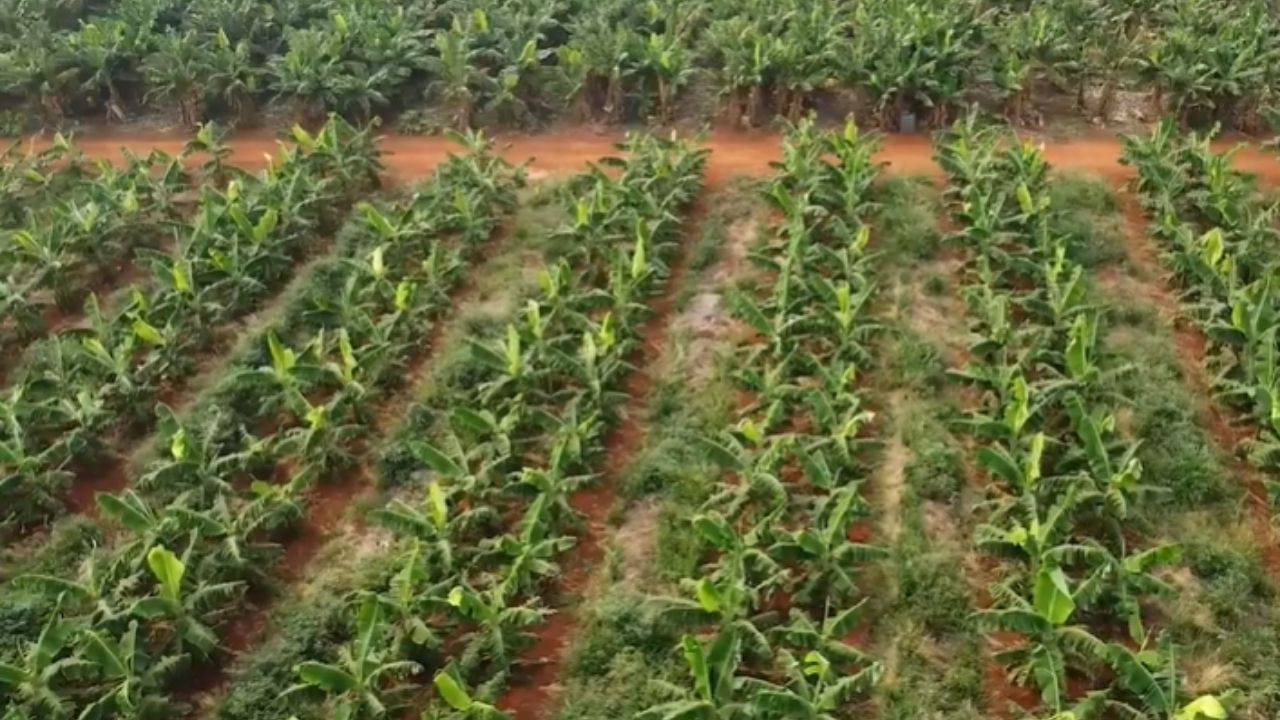
Estância São Francisco has a total of 17 hectares. Discounting reserve areas, stream, house, and other spaces, the usable area is around 15 hectares. This size makes each decision on planting, irrigation, and management more important for the profitability of the property.
Currently, about 9 hectares are occupied with bananas. The plan mentioned in the program is to expand cultivation to another 4 hectares, reaching approximately 13 hectares planted and around 20 thousand pits, if the expansion is completed.
On a small property, the result depends less on extensive area and more on correct management. Spacing, cultivar, irrigation, fertilization, pest control, and harvest organization need to work together for the crop to sustain income.
The experience shows a different route for regions traditionally associated with grains. In the so-called “soybean land,” fruit farming emerged as an alternative to better utilize a smaller area, with recurring production and weekly sales.
Technical assistance helped reorganize the banana plantation


The productive turnaround was reinforced with Technical and Managerial Assistance, the ATeG, from Senar Mato Grosso. The service on the property began around 2019 with a technician named Leandro and later came to be accompanied by Eduardo, an agronomist and the producer’s son.
According to the transcript, Eduardo serves another 29 producers in ATeG Fruit Farming and conducts monthly visits, developing strategies according to the profile and reality of each property. In the case of Estância São Francisco, one of the main recommendations was to adjust the spacing between the plants.
Initially, planting was manual and in a single row, with spacings like 2 by 2 meters or 3 by 2 meters. With mechanization and the purchase of tractors, the property adopted double rows, with a 4-meter gap, 2 meters of street, and 2 meters between pits, reaching about 1,666 plants per hectare.
The change in spacing shows how bananas went from being a test to becoming a planned crop. The planting design was adjusted to the reality of the property, the use of machines, and the goal of improving productivity.
Staggered planting ensures weekly harvest
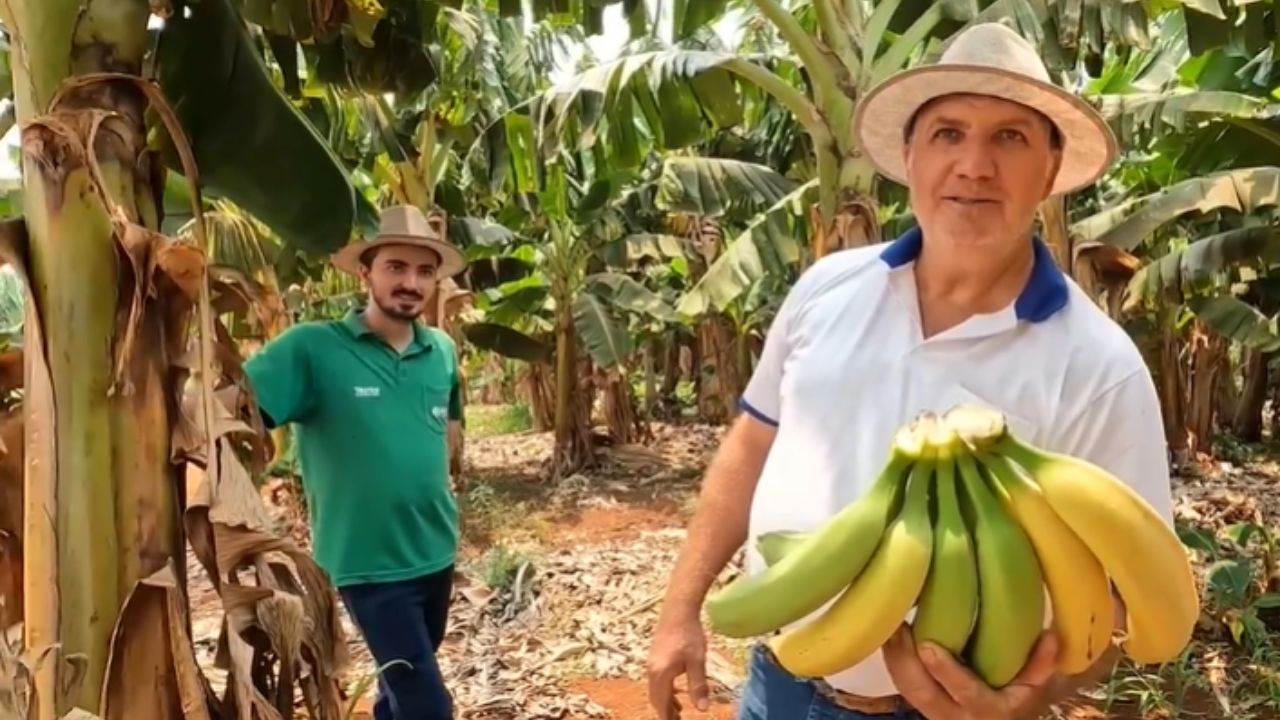
One of the strategies adopted was staggered planting. Instead of keeping all plots at the same age, the property works with areas in different phases: plot harvesting, plot with sprouting seedlings, area with 4 or 5 months, and plants in the bunch formation phase.
This organization allows for production throughout the year. According to Eduardo, the property can harvest bananas every week, which helps maintain a more stable relationship with buyers and reduces dependence on a single marketing window.
Weekly harvesting changes the business logic because it transforms production into a continuous flow. For a small property, selling regularly can be as important as achieving a large harvest at a single moment.
The harvest routine is manual and occurs once or twice a week. The bunches are transported by tractor to the shed, where they undergo separation, cleaning, and packing in boxes to go to market.
BRS Terra Anã came to dominate the planting
The property started with the Farta Velhaco cultivar but began to seek a lower-growing variety better adapted to local conditions. In 2021, there was contact with Embrapa Fruticultura and a research partnership to evaluate banana genotypes suitable for the region.
Among the materials evaluated, genotype 88 stood out and was registered as BRS Terra Anã. Today, according to the transcript, this cultivar completely predominates in the area of Estância São Francisco.
The choice is related to productive and agronomic characteristics. BRS Terra Anã has a height of around 3 to 3.5 meters, which helps in a region with strong winds. It was also cited as resistant to Yellow Sigatoka and Panama Disease in the Fusarium races present in Brazil.
The cultivar was also identified as up to two or three times more productive than Farta Velhaco under certain conditions. The transcript states, however, that it is susceptible to Black Sigatoka and can still suffer from banana weevil attacks, requiring monitoring and control.
Irrigation and solar energy sustain production during drought
Irrigation is the central piece of the system. Since the first test with the 50 seedlings, the producer noticed that the banana responded well when it received water during the drought. With the expansion of the banana plantation, the irrigation structure was also expanded.
The water requirement of the BRS Terra Anã was presented in the range of 15 to 30 liters of water per day, depending on the size of the plant. The technician explained that the producer might need to provide a larger volume than the theoretical requirement, considering losses due to evaporation, crop transpiration, and temperature.
Without irrigation, the advantage of harvesting during drought would be compromised. Water allows the potential productivity of the banana to be transformed into actual production, especially in the months when regional supply decreases.
To reduce expenses, Estância São Francisco invested in solar energy. The source does not detail the installed power or the cost of the system but relates the technology to the attempt to reduce irrigation expenses, one of the highest investments in banana cultivation.
Sale at R$ 5 per kilo maintains regional distribution
After harvesting and cleaning, the bananas are sent to different destinations. Some remain in Tangará da Serra, some go to Campo Novo, and from there, they are distributed to cities like Sapezal, Campo de Júlio, Brasnorte, Diamantino, Arenápolis, Nortelândia, and Barra do Bugres.
According to the transcript, each kilo of banana sells for R$ 5 when the buyer picks it up at the property. If the sale were direct to the final consumer, the price could reach R$ 7 per kilo, but the current model prioritizes distribution by buyers who collect the product at the source.
The most relevant data is the combination of weekly harvest and recurring sales. The property does not rely on storing large volumes for a long time; what it produces, it sells, according to the report presented in the program.
In addition to the fruit, the BRS Terra Anã seedling was also identified as a commercial opportunity. Eduardo stated that there is a high demand for the cultivar and that if there were a certified nursery, the sale of seedlings could be even more profitable than fruit production.
Mato Grosso still has room to expand production
The technical assistance of Senar Mato Grosso supports 519 properties in fruit growing, according to the transcript. Among the crops served are plantain, papaya, passion fruit, and pineapple, with a strong presence of banana among the service requests.
The technician stated that bananas have good sales in the state, especially due to the consumption culture in regions like Baixada Cuiabana. The local production tends to be absorbed by the Mato Grosso market itself, which reinforces the potential for expansion.
The experience of Estância São Francisco shows that fruit farming can be a profitable alternative for smaller areas when there is technical assistance and a nearby consumer market. It is not about replacing all grains, but about paving the way for properties that need high productivity per hectare.
For new producers interested in ATeG, the mentioned path is to seek the rural union of the municipality. According to the transcript, to start a service group, it is necessary to gather at least 25 producers who already have production and a source of income.
What the banana plantation shows about rural diversification
The case of Estância São Francisco shows that bananas have ceased to be a one-off bet and have become a productive strategy in Tangará da Serra. The crop advanced over an area previously used for soy, started to rely on irrigation, solar energy, technical assistance, and harvest planning.
The property still works with expansion goals, productivity improvement, and possible expansion to areas near rivers, where there is abundant water and accessible energy. The focus is on increasing the area, adjusting fertilization, incorporating technology, and improving performance per plant.
The main takeaway is rural management: the result came from the combination of controlled testing, market, irrigation, suitable cultivar, and technical assistance. Bananas gained space because they showed commercial viability, responded to management, and allowed continuous production.
Do you think small properties in soy regions should invest more in irrigated fruit farming to diversify income? Leave your opinion in the comments and tell us if bananas can be a real alternative for smaller areas in Mato Grosso.


