






 Portuguese
  Spanish
  5 min of reading
  0 comments


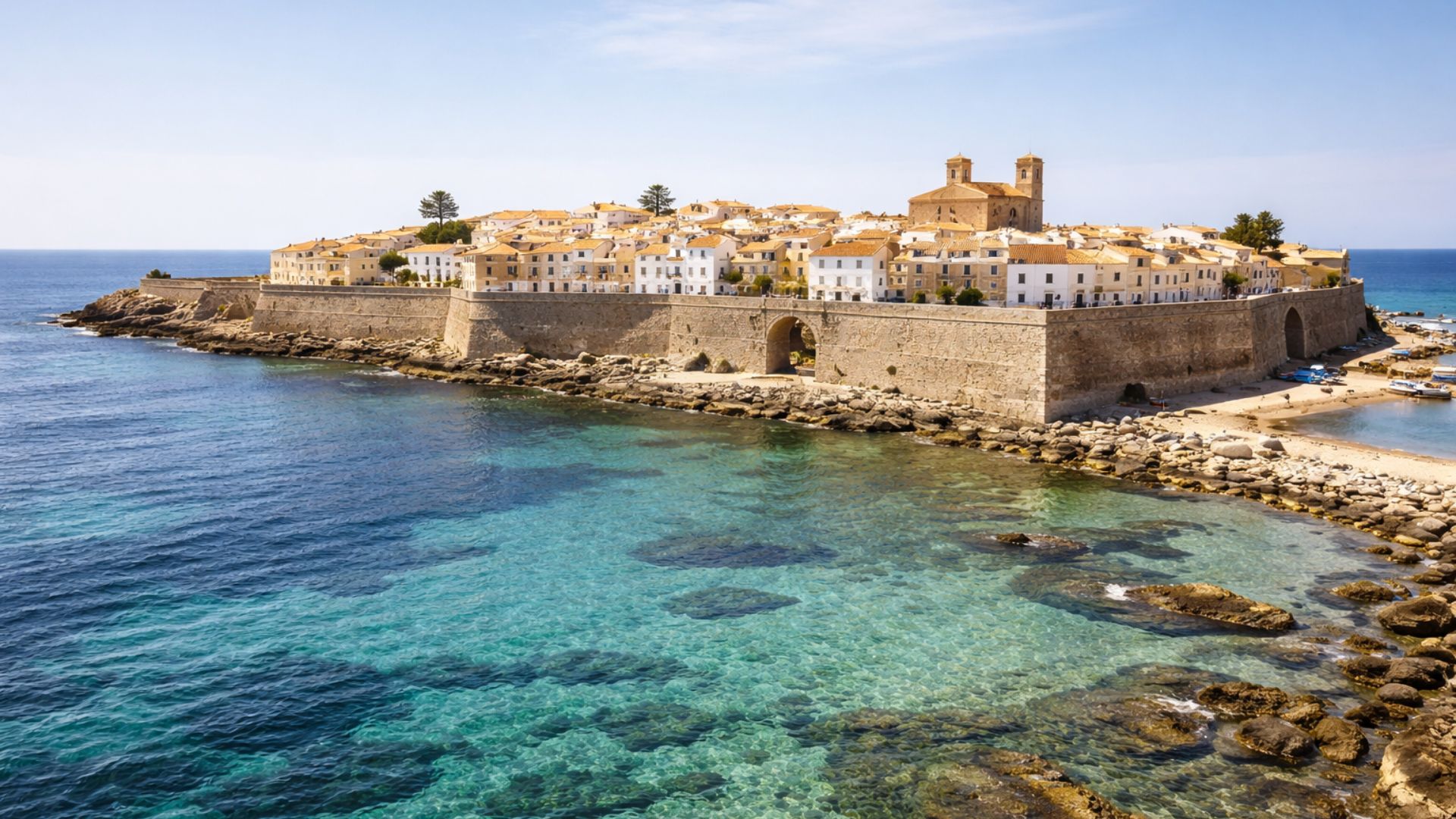
Mediterranean island concentrates historical heritage, 18th-century fortified village, and one of the first marine reserves in Spain in a minimal territory, combining landscapes of transparent waters, quick access from Alicante, and a human occupation marked by episodes of exile, defense, and environmental conservation.
Located in the Spanish Mediterranean, the island of Tabarca brings together a rare set of natural and historical attributes in a small space, going beyond tourist appearances and revealing a territory marked by urban planning, environmental conservation, and strategic occupation over the centuries.
Measuring about 1.8 kilometers in length and up to 400 meters in width, the site is approximately an hour by boat from Alicante and is home to an 18th-century fortified village, as well as a protected marine environment that has consolidated its environmental relevance in Spain.
Although often associated with transparent waters and the photogenic scenery of the seaside houses, Tabarca offers a broader experience that combines historical heritage, pedestrian circulation, and preserved coastal landscapes on an uncommon scale along the Mediterranean coast.
-
Cleaning teams doubted this beach robot until they saw it sifting the sand by itself; the equipment looks simple, uses solar energy, removes buried dirt, reduces manual effort, and is quietly changing the cleaning of tourist areas.

-
Elon Musk has enough money to buy the entire Brazilian stock exchange, give R$ 100 to every person on the planet, and still have more than US$ 184 billion left in his pocket.
-
With 70 tons of rock removed by hand and an 800-year-old abandoned cave, a former businessman transforms a dark shelter into a modern home carved in the heart of the forest.
-
After a rivalry for the world record, an American builder creates a manned aircraft measuring only 3.35 meters, with a wingspan of 1.91 meters and weighing 114 kg, recognized by Guinness as the smallest monoplane ever flown.


The only inhabited island in the Valencian Community, the territory is part of a small archipelago surrounded by rocky islets, forming an environment that connects historical urbanism, bathing areas, and short trails, allowing visitors to explore different scenarios in a single day.
Quick access and historical formation of the island of Tabarca
Departing from Alicante, the maritime crossing usually takes about an hour, while routes from Santa Pola significantly shorten the journey, making access simple and frequent during different times of the year.
Upon arrival, visitors find a compact urban core protected by walls, where straight streets and geometric organization reveal a project planned by the Spanish Crown to ensure stable occupation at a point considered strategic along the coast.
This configuration dates back to the reign of Charles III, when, in the 18th century, families of Genoese origin were relocated to the island after being rescued from captivity in North Africa, an episode linked to the ancient Tabarka in Tunisia.
The origin of the island’s current name is directly related to this historical displacement, which also explains the formation of a distinct cultural identity, marked by Mediterranean influences and an urban model designed for defense and permanence.
In addition to its residential function, the organized occupation had a strategic character, as the enclave allowed for greater maritime control of the coast, which is why walls, monumental accesses, and civil and religious buildings that are still preserved were constructed.
As time passed, the historical value of the ensemble was officially recognized, leading Tabarca to be declared a historical site in 1964, a status that contributed to the preservation of the original urban layout and its main architectural elements.
Historical gates and preserved buildings within the walls
Among the most striking elements of the urban ensemble are the three historical gates of the walled area, which served as control and access points and remain as symbols of the defensive structure built during the founding period of the village.
Known as Porta de San Rafael, Porta de San Miguel, and Porta de San Gabriel, these entrances also appear in local records associated with the names Levante, Tierra or Alicante, and Trancada, reflecting different geographical and functional references.
This ensemble reinforces the monumental value of a space designed for defense, circulation, and surveillance, maintaining original characteristics that help to understand the urban logic adopted during the process of territorial occupation.
Inside the walls, buildings such as the Church of Saint Peter and Saint Paul, the Governor’s House, and the Nueva Tabarca Museum help to reconstruct aspects of the island’s historical daily life and its relationship with fishing activities.
Housed in an old property linked to maritime work, the museum currently maintains an audiovisual room open to the public, while the main exhibition area remains under renovation, according to recent municipal information.
More than isolated monuments, the urban experience in Tabarca depends on the reading of the ensemble, as squares, sections of the wall, docks, and Mediterranean-inspired houses form an integrated landscape where history and daily life overlap.
Beaches with transparent waters and short trails across the island
Outside the walled perimeter, the natural environment quickly asserts itself, revealing coves and beaches with crystal-clear waters that contrast with the urban structure and expand the possibilities for exploration in a territory of reduced dimensions.
The layout of the island favors entirely pedestrian movement, allowing different points to be accessed in a short time, without the need for transportation, which contributes to a more continuous experience connected with the environment.
Instead of long distances, visitors traverse short paths that alternate between rocky areas, sandy stretches, natural cliffs, and low viewpoints facing the Mediterranean, creating constant variations along the route.
This compact format caters to both those seeking light walks and those prioritizing swimming, as different areas offer distinct conditions of access, depth, and water transparency.
The marked monumental trail connects points such as the harbor cove, the northern wall, the quarry, the Governor’s House, as well as Cala dels Birros and Cala de la Guardia, integrating heritage and nature into a single route.
While the main beach has a semi-urban profile and easy access right after disembarkation, other small coves and rocky areas ensure more secluded environments, expanding the diversity of experiences available on the island.
Tabarca Marine Reserve and Environmental Conservation in the Mediterranean
Surrounding the island, the marine reserve establishes a significant difference along the Spanish coastline, serving as a central element in the preservation of local ecosystems and the definition of sustainable use of natural resources.
Established in 1986, the protected area is considered the first official marine reserve in Spain and has specific rules that limit fishing and prohibit the extraction of species in certain zones.
Since its implementation, conservation and research initiatives have been continuously developed, contributing to the recovery of underwater fauna and flora over the past decades.
This process has also generated positive impacts on fishery resources, benefiting the traditional activity maintained by the local brotherhood and reinforcing the importance of the balance between economic use and environmental preservation.
By bringing together a historic village, traditional maritime practices, and conservation policies, Tabarca consolidates its own identity within the Mediterranean, maintaining relevance that goes beyond tourism and relies on the preservation of its natural and cultural heritage.





-

-

-

-

11 people reacted to this.