Portuguese
  Spanish


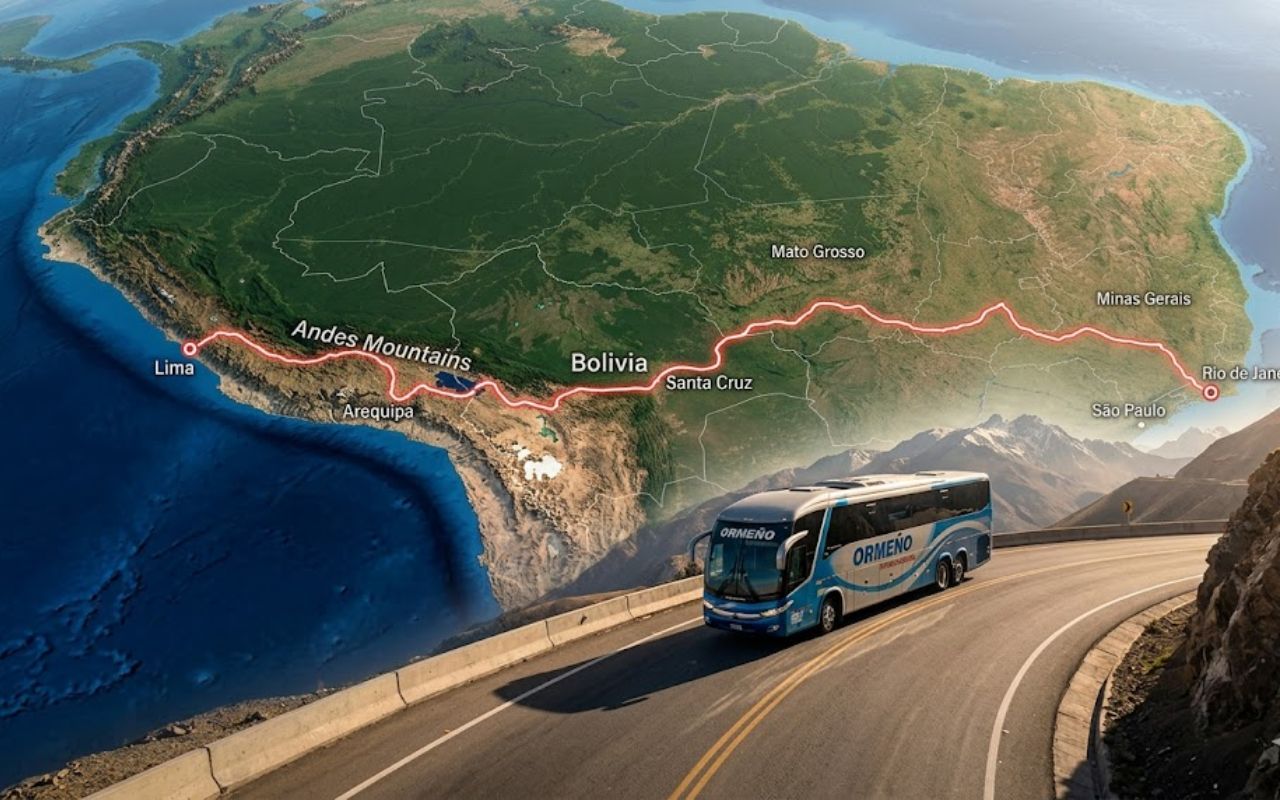

Discover the details of the world’s longest routes. From the 19-hour flight between Singapore and New York to the 100-hour bus trip between Rio and Lima.
Crossing the planet is a challenge that blends cutting-edge engineering and physical endurance. Currently, the world’s longest non-stop commercial air route connects New York (JFK) to Singapore (SIN).
Operated by Singapore Airlines, this uninterrupted journey covers 15,349 kilometers in a time ranging between 18 and 19 hours. For those who prefer the road, the land record belongs to the route connecting Rio de Janeiro to Lima, Peru.
Lasting 102 hours, the bus trip crosses the South American continent, connecting the Atlantic to the Pacific on a 6,200-kilometer journey.
-
The More You Love Someone, the Sleepier You Feel Around Them: Science Explains Why the Body Relaxes and Feels Safe with a Loved One

-
Kenyan Company Recycles Over 10 Million Flip-Flops from Indian Ocean Beaches into Elephant and Giraffe Sculptures Sold for Up to $1,200

-
Kenyan Brothers Recycle Old Newspapers Into 100,000 Pencils Daily, Aiming to Donate to 1 Million Children in Underprivileged Schools
-
China’s Water Project in Southern Chad Delivers Over 500 Wells and 57 Stations, Aiding Over 600,000 Residents




The terrestrial odyssey through South America
In road transport, the Transoceânica holds the title of the longest commercial bus trip on the planet. Operated by Trans Acreana, the route covers 6,200 kilometers in just over four days (102 hours).
The route is a true living geography lesson, crossing biomes such as the Atlantic Forest and the Amazon Rainforest.
During the journey, passengers face drastic climatic variations. In Brazil, temperatures can reach 40°C, while climbing the Andes, at 3,500 meters of altitude, can bring thermometers down to 0°C.
According to the company, a ticket to cross the states of Rio de Janeiro, São Paulo, Mato Grosso do Sul, Mato Grosso, Rondônia, and Acre to Peru costs approximately R$ 1,300.

Longest flight routes
Modern aviation uses aircraft specifically designed for ultra-long-haul routes, such as the Airbus A350-900ULR, which has extended fuel tanks.
Although Guinness World Records still cites variations, real-time monitoring by the Flight Radar website points to the New York to Singapore segment as the current leader.
Check out the longest direct routes currently:
- Singapore – New York (JFK): 15,349 km (Singapore Airlines)
- Singapore – Newark (EWR): 15,344 km (Singapore Airlines)
- Doha – Auckland (AKL): 14,535 km (Qatar Airways)
- London – Perth (PER): 14,499 km (Qantas)
- Melbourne – Dallas (DFW): 14,472 km (Qantas)
In addition to these direct options, the year 2025 brought a new record for flights with layovers.

The route between Shanghai and Buenos Aires, operated by China Eastern Airlines, covers an incredible 20,000 kilometers with just one stop in New Zealand.
Competition among the world’s longest routes
The quest to connect distant destinations non-stop continues. For 2027, Qantas plans to inaugurate a direct flight between Sydney and London.
The forecast is for 22 uninterrupted hours in the air, which will require twelve Airbus A350-1000ULR aircraft to receive extra 20,000-liter tanks and operate with four pilots rotating in the cockpit.

Meanwhile, in the bus sector, the South American record may be challenged. A route in the United States, connecting Miami to Seattle, claims a distance of 6,723 kilometers, which could alter the global ranking of road transport.
Therefore, whether by air or by land, the limits of global logistics continue to be tested to offer increasingly integrated routes.
Logistics and comfort in extreme journeys
Facing the world’s longest route requires more than just a powerful engine. In aviation, the challenge is to maintain comfort in seats designed for long periods and ensure air renewal.
On the road, logistics involves dealing with traffic jams, road conditions, and rigorous mechanical maintenance to withstand variations in altitude and temperature.
Thus, travelers who choose these routes are not just looking for speed, but rather the convenience of not having to change vehicles or check luggage repeatedly.
For those passionate about road trips or technological flights, these routes transform the journey into an unforgettable part of the adventure.
With information from Revista Galileu