






 Portuguese
  Spanish
  4 min of reading
  0 comments


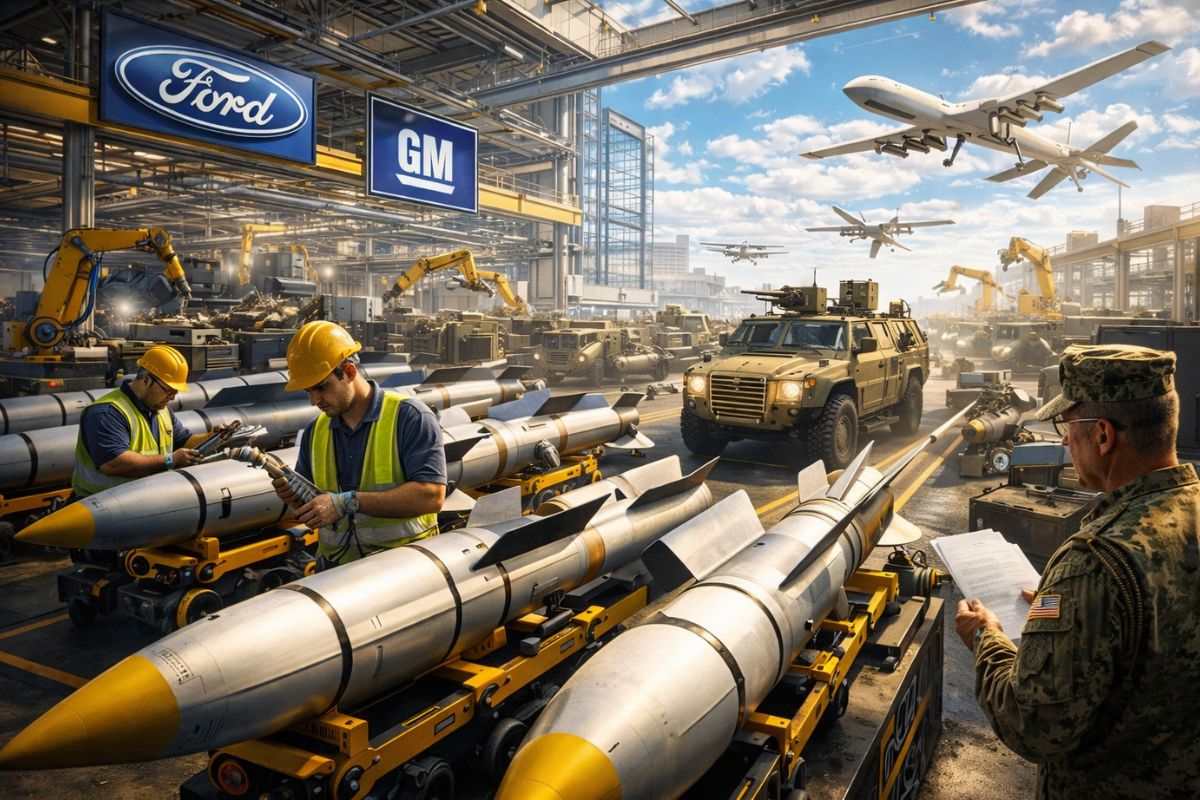
US defense negotiates with automakers to increase the production of arms and military systems, after wars in Ukraine and Iran accelerated the consumption of arsenals and exposed the limits of the traditional industry
The US defense is once again flirting with an old idea, one that seems to have remained in the last century: when pressure mounts, the civilian industry can become an extension of the military effort. The reason is no mystery. If wars consume ammunition, drones, and equipment faster than the defense industry can replenish, someone needs to step in to increase the volume.
It is at this point that Ford and General Motors come into the conversation. The source describes that US defense is not only after one-off contracts but also the ability to redirect factories, engineers, and logistics chains to produce ammunition, anti-drone systems, and tactical vehicles. The urgency comes from the pace at which the conflicts in Ukraine and Iran are draining arsenals, forcing a more “industrial” response than strategic in discourse.
When war becomes a scale problem
The scenario is presented as a return to “war mode” in the economy. Not in the sense of total mobilization as in the 1940s, but in mentality.
-
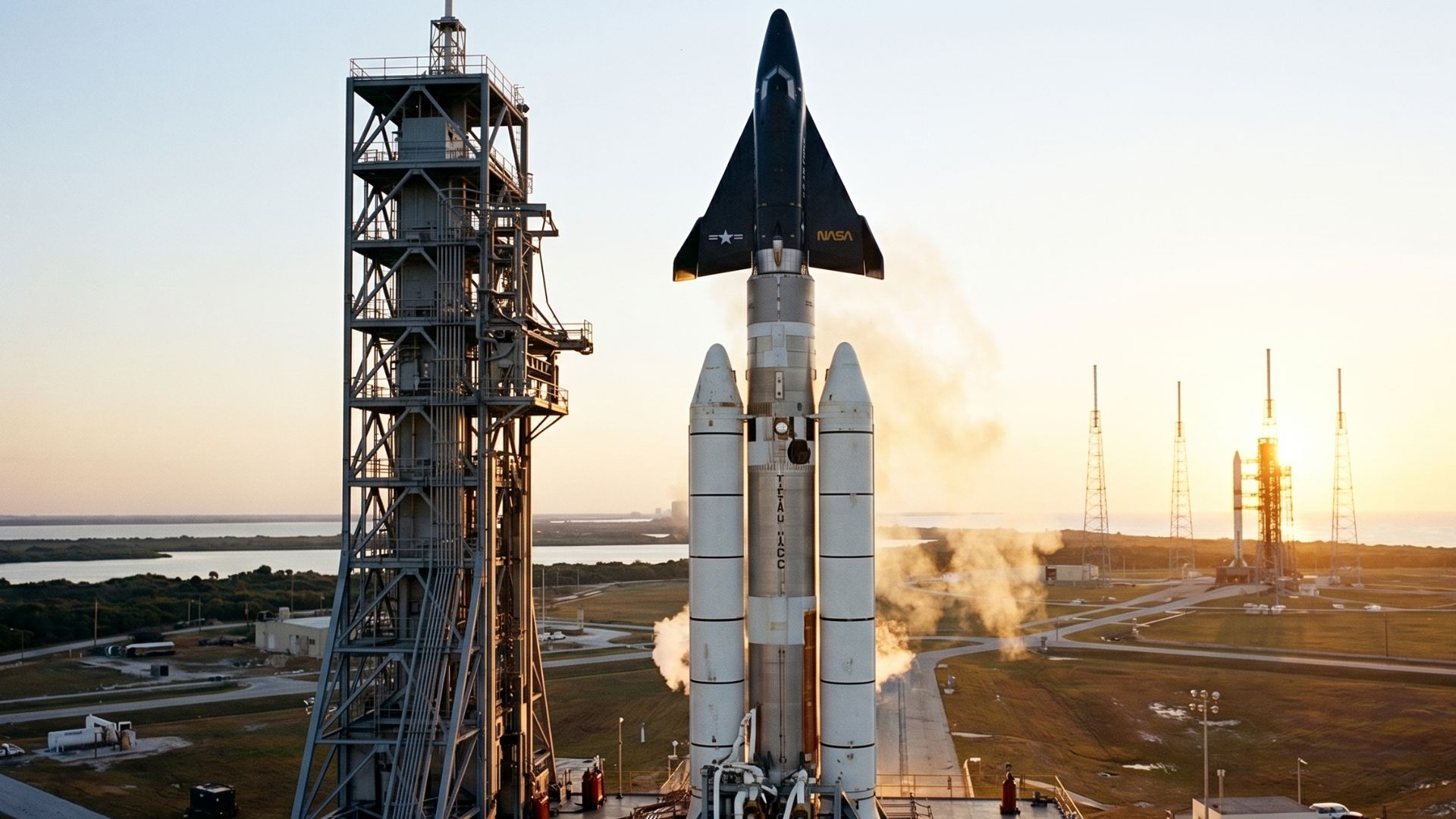
The military spaceplane that almost took the Cold War into orbit: Boeing X-20 Dyna-Soar was designed to re-enter above Mach 20, fly for up to 40 hours, land like a plane, and transform Titan rockets into a gateway to a new era of orbital warfare.

-
FAB bets on national drones and increases investments to strengthen the Brazilian aerospace industry

-
Six times, a luminous crescent the size of the Moon startled the Soviet sky at dusk: it seemed like a wave of UFOs, but it was a secret orbital weapon created to attack the United States via the South Pole and evade Cold War radars.

-
The United States government approved a potential sale of 100 portable Stinger anti-aircraft missiles to the Brazilian Army, in a package estimated at around 330 million dollars that still depends on negotiations between the two countries.



The message is that modern war, especially that revolving around drones and high-explosive ammunition, requires volume. And volume is exactly what the civilian industry knows how to deliver when it is well-oiled.
This changes the type of question the government needs to answer. It is not enough to have technology. It is necessary to have production capacity, speed of delivery, and predictability to sustain a prolonged effort.
From Detroit to the arsenal: what changes when an automaker enters the game
According to the Xataka portal, the idea would be to broaden the range of suppliers beyond traditional contractors. Instead of relying solely on the classic ecosystem of the defense industry, US defense would be looking at automakers and asking, quite directly, what they can produce, in what time frame, and what they would need to adapt their lines.
This means pushing companies accustomed to manufacturing cars or heavy machinery into a more direct role in military supply. And this change is not just about the product. It also involves planning for materials, logistics, certifications, supply chain, and, most importantly, pace.
Willow Run in 1942 and the memory that returns every time
The historical comparison is strong and appears as an inevitable reference. In 1942, the Willow Run factory in Michigan, operated by Ford, managed to assemble a B-24 bomber every 63 minutes.
It is the kind of number that seems impossible today, but has become a symbol of what happens when a civil line is converted to war.
It is suggested that even with a totally different context, the logic is similar: using scale, efficiency, and industrial flexibility to cover needs that exceed the capacity of the specialized sector.
The 1950 law that keeps the door open for this
After World War II, the U.S. did not discard this mobilization capacity. It was institutionalized by the Defense Production Act of 1950, which allows the government to prioritize and direct production for military needs.
According to the Xataka portal, during the Korean War, companies like Ford created divisions focused on defense contracts, while GM and others adapted lines to manufacture vehicles, engines, and supplies.
In later conflicts, such as Vietnam, this mechanism would have been reactivated in a more partial way, but the tool remained there, ready to be activated in moments of strategic pressure.
The current weak point: the defense industrial base cannot handle it alone
The backdrop of the shift is described as an uncomfortable reality: the defense industrial base, as it is designed today, would not be sufficient to sustain prolonged high-intensity wars while simultaneously supplying allies.
The source points out that the transfer of armaments to Ukraine since 2022 and the additional strain related to the conflict with Iran would have exposed this limitation. Therefore, the strategy changes: instead of just increasing orders to traditional suppliers, the Pentagon is considering expanding capacity with civilian companies.
The return of a logic that affects the whole economy
The base summarizes this movement as the return of a total war logic, even without a formal declaration: at certain moments, the entire economy can become part of the front line.
It would not be a total conversion as in the past, but it would be a real shift in mentality, placing factories and industrial chains back at the center of the strategy.
The effect is that the discussion ceases to be merely geopolitical and also becomes industrial. Who produces, how much is produced, at what speed, and at what cost becomes part of the board.
Thinking from this perspective, does it make sense for you to imagine an automaker, with the same assembly line logic, alternating between cars and military equipment depending on the moment in the world?






Be the first to react!