Portuguese
  Spanish


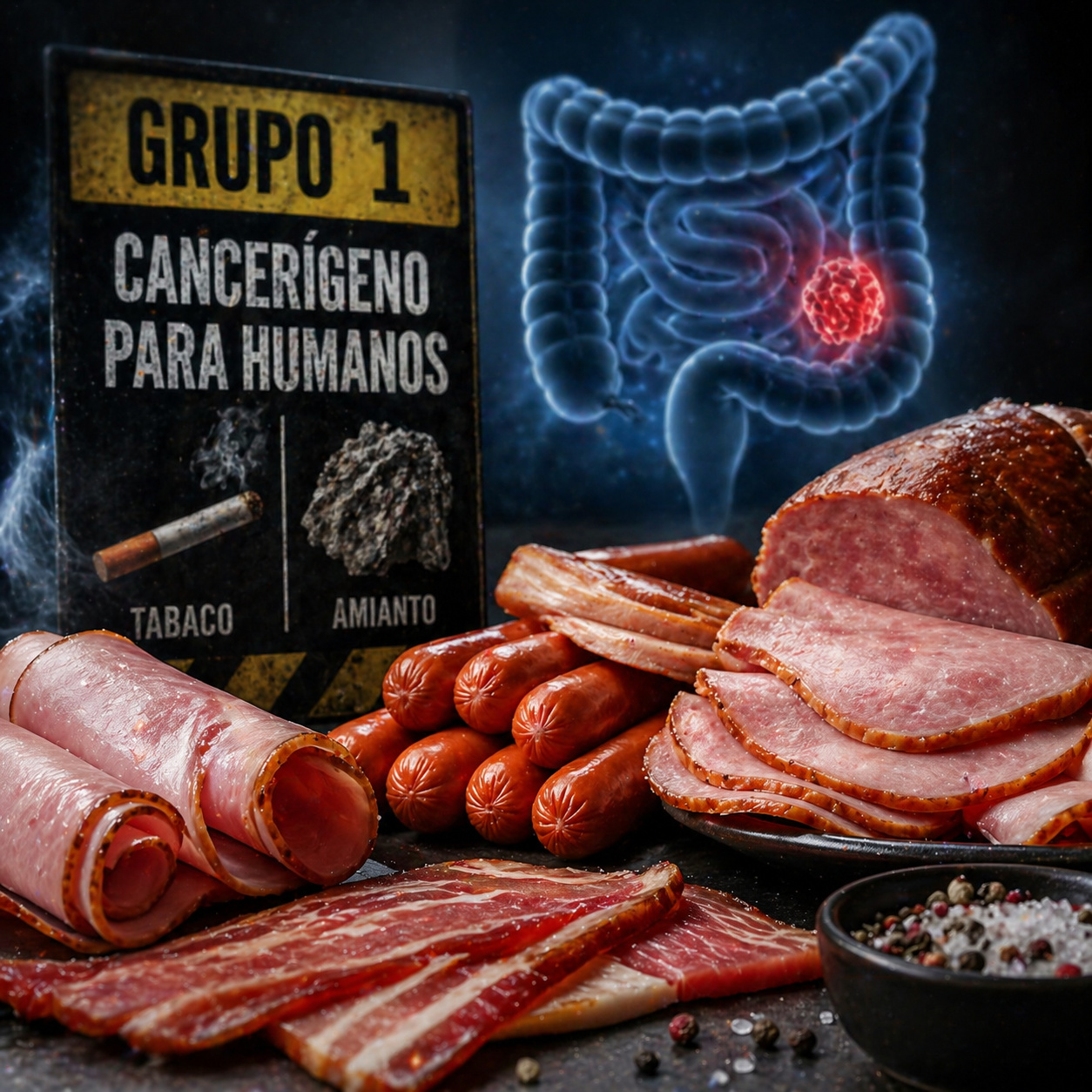

WHO classifies processed meats as carcinogenic and points to an 18% increased risk of colorectal cancer with daily consumption of 50g.
On October 26, 2015, the International Agency for Research on Cancer (IARC), a specialized agency of the World Health Organization, classified processed meats, such as ham, bacon, and sausage, into Group 1 carcinogenicity, a category used when there is sufficient evidence that an agent can cause cancer in humans. The decision was made by a group of 22 experts from 10 countries, after reviewing more than 800 epidemiological studies on meat consumption and cancer, but it does not mean that these foods have the same level of individual risk as tobacco or asbestos.
The most cited data from the report indicates that each daily serving of 50 grams of processed meat is associated with an increase of about 18% in the risk of colorectal cancer. According to the WHO, the individual risk remains relatively small, but it grows as the consumed quantity increases, which turned the IARC classification into one of the most debated alerts in modern nutrition.
Continue reading below to understand what it means to be in WHO Group 1, why processed meats entered this classification, and how to correctly interpret the increased risk indicated by the studies.
-
The industrial waste that even recyclers didn’t want has gained value in the interior of Bahia: two entrepreneurs invested R$ 2.8 million to transform 350 tons per year of foam, rubber, and plastic into boards that can replace wood and MDF.

-
What is a red flashlight used for, after all? See why it is so commonly used at night.

-
He has never read a line of code, but he already knows how to work: the French company UMA presented in Paris the Northstar, its first AI-powered humanoid robot designed for factories and warehouses, capable of copying tasks just by observing an employee in action.

-
A young Kenyan engineer collects plastic waste from the streets and transforms it into robots that translate physics lessons into sign language in real-time, a machine made with old bottles that teaches what was missing to deaf children left out of science.



WHO Group 1 classification indicates strong evidence of association with cancer, not equivalence of risk
The inclusion of processed meats in Group 1 generated great repercussion by placing them in the same category as substances like tobacco and asbestos. However, the IARC classification does not measure the degree of danger, but rather the strength of scientific evidence that an agent can cause cancer.
This means that both tobacco and bacon have robust evidence of carcinogenicity, but they do not present the same level of absolute risk. Tobacco, for example, is associated with multiple types of cancer and much higher risks.


In the case of processed meats, the evidence is specific mainly for colorectal cancer, with a proportionally smaller but statistically significant impact.
Consumption of 50 grams per day increases relative risk by 18%, according to IARC analysis
The number of 18% increase in risk refers to relative risk, not absolute risk. This means that if a group of people has a baseline probability of developing colorectal cancer, daily consumption of 50 grams of processed meat increases that probability by 18% relative to this initial value.
For example, if the lifetime risk is about 5%, it could rise to approximately 5.9% with this consumption pattern.
This distinction is fundamental to avoid exaggerated interpretations of the data.
What are considered processed meats according to the WHO definition
IARC defines processed meats as those that have undergone preservation or modification methods to improve flavor or shelf life.
This includes products such as: ham, bacon, sausage, frankfurters, salami, and smoked or cured meats.
These processes often involve the addition of salt, nitrates, nitrites, or exposure to smoke, factors that can contribute to the formation of potentially carcinogenic compounds.
Chemical compounds formed during processing are linked to increased risk
The biological mechanism behind the association with cancer involves the formation of substances such as:
- nitrosamines, formed from nitrites and nitrates
- polycyclic aromatic hydrocarbons, generated during smoking
- heterocyclic amines, formed at high temperatures
These compounds can cause DNA damage to intestinal cells, increasing the likelihood of mutations that lead to cancer.
Evidence comes from observational studies with a large number of participants
IARC’s conclusion was based primarily on observational epidemiological studies, which track populations over time and analyze dietary consumption patterns and disease incidence.

While this type of study does not prove causality in isolation, the body of evidence was considered sufficient to establish a causal relationship.
The data was reinforced by consistency across different studies, populations, and analysis methods.
Red meat was placed in a different group with a lower level of evidence
In the same report, unprocessed red meat was classified in Group 2A, which indicates probable carcinogenicity.
This shows that the level of evidence for processed meats is stronger than for fresh meats. The difference is related to industrial processes and preparation methods, which increase the formation of harmful compounds.
Despite the individual risk being relatively moderate, the population impact is significant because processed meats are widely consumed in various countries.
IARC estimated that the consumption of this type of food can contribute to tens of thousands of colorectal cancer cases per year worldwide. This cumulative effect is what justifies the concern of public health authorities.
WHO classification marked a change in how foods are evaluated in public health
The decision to classify processed meats in Group 1 represented a milestone in how foods are analyzed from a health risk perspective.
It reinforced the idea that not only industrial chemical substances, but also dietary patterns, can have a direct impact on the development of chronic diseases.
This approach broadened the scope of public health, integrating nutrition, epidemiology, and disease prevention.
Now, in light of this evidence, the question that remains is direct: is the daily consumption of ultra-processed foods part of a consolidated habit that will be difficult to change, or are we facing an inevitable dietary transition in the coming years?