






 Portuguese
  Spanish


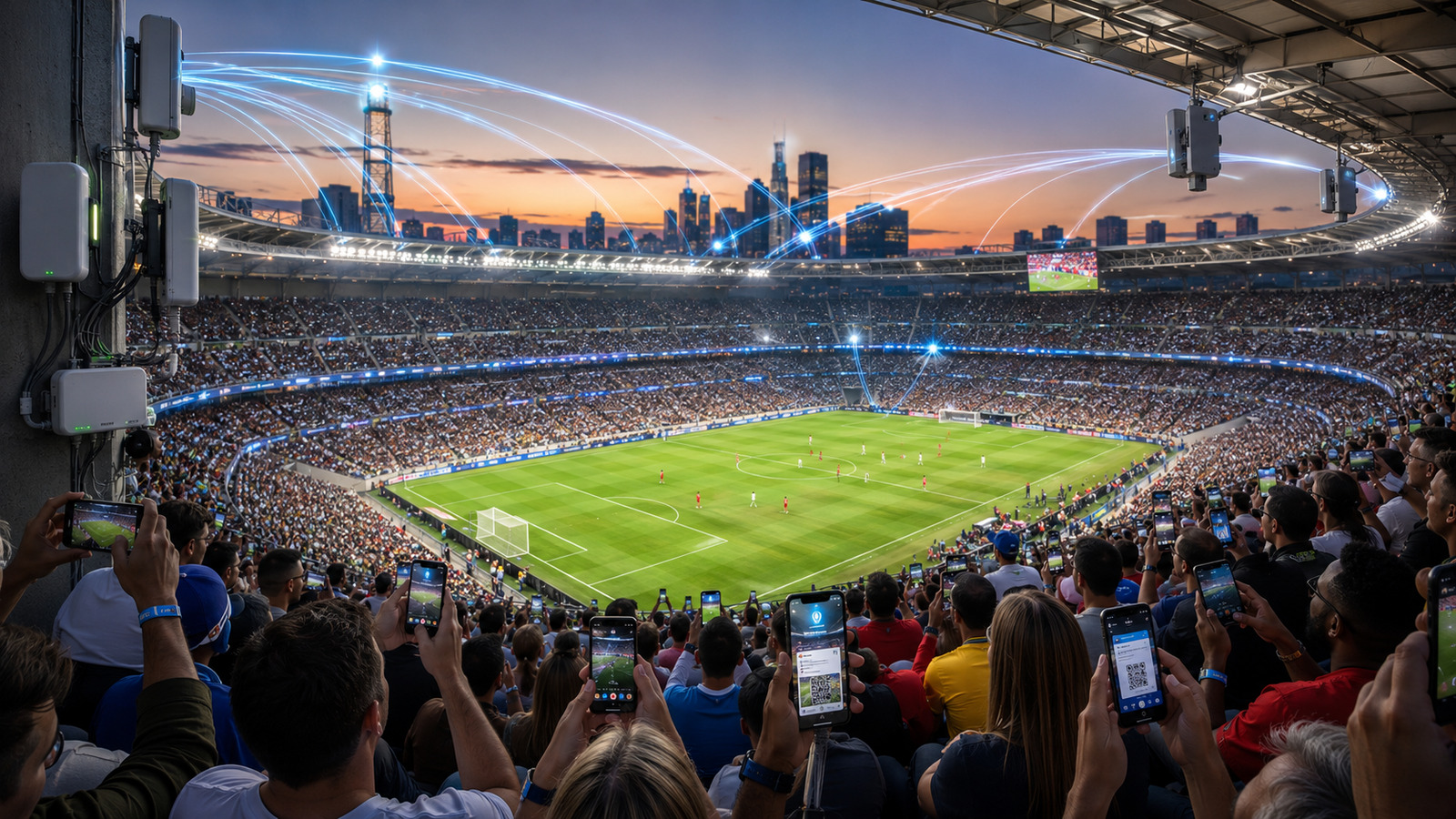


2026 World Cup will require reinforcement of 5G networks in stadiums, airports, fan zones, and urban centers, with Verizon, AT&T, Rogers, and Mexican operators preparing infrastructure for data peaks
The 5G in the World Cup of 2026 will be tested on an unprecedented scale, with 48 teams, 104 matches, and venues in the USA, Canada, and Mexico. Operators like Verizon, AT&T, and Rogers are preparing networks for heavy traffic in stadiums, fan zones, airports, subways, hotels, and areas near the games.


5G in the World Cup goes beyond stadiums
The FIFA World Cup 2026 will not just be a major sporting tournament. For telecommunications companies, the event will also serve as a real-time test of mobile network capacity.
The challenge is not restricted to fans inside the arenas. Demand is also expected to grow at fan festivals, airports, subway stations, hotels, training centers, restaurants, official stores, and urban areas near the game locations.
-
A fossil kept for years in a small museum in Montreal concealed 450-million-year-old soft tissue, a discovery that has only happened once before in history.

-
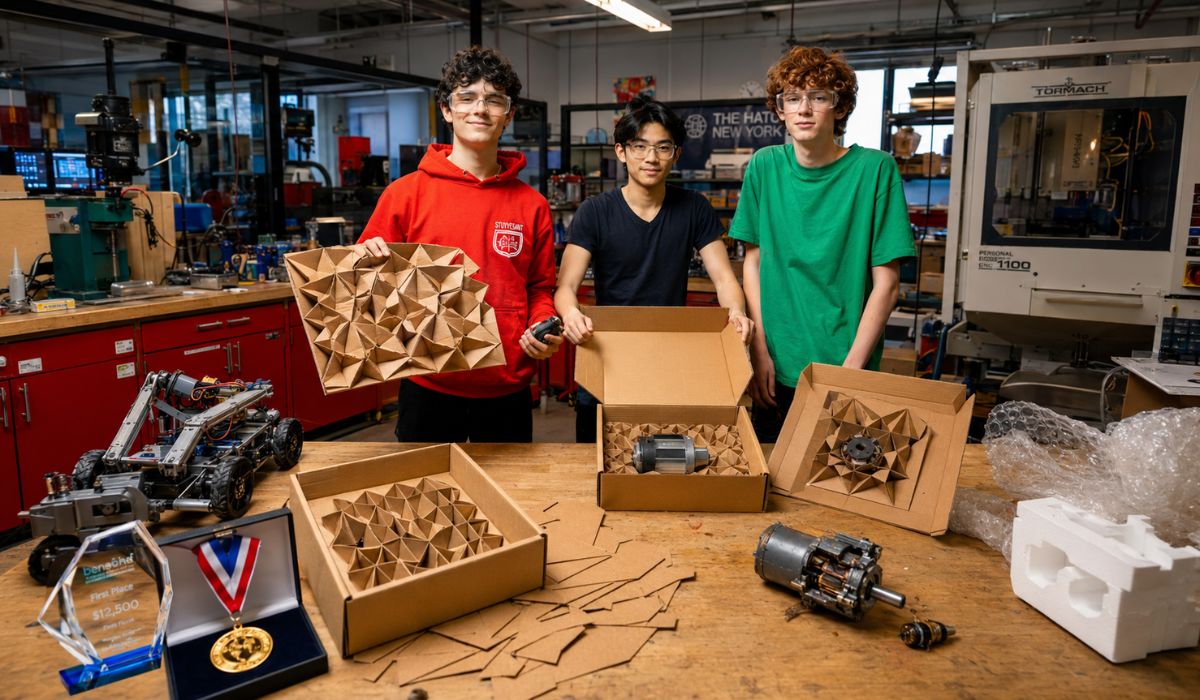
Three teenagers transform cut cardboard into Japanese origami-style packaging that promises to retire styrofoam and bubble wrap, win a $12,500 prize, and target giants like Amazon, FedEx, and Home Depot after a robot motor arrived broken.

-
The large jar blender has a rival: Oster Ultra Power bets on 1,000 W, six stainless steel blades, and two portable cups with leak-proof lids.

-
Tesla injected an additional $250 million into the German factory, doubled the battery cell target, and opened its own production line for startups.



This change alters the operators’ planning. Instead of reinforcing only the stadium coverage, companies need to prepare a broader network capable of supporting simultaneous use at different points in the host cities.
The requirement involves coverage, capacity, uplink performance, roaming, connectivity for public safety, and reliability in services related to game broadcasts.
Verizon predicts more than 50 TB per match in a stadium
Verizon is the official telecommunications service sponsor of the FIFA World Cup 2026. According to the operator, FIFA will use its 5G solutions, fixed wireless access, and broadcasting in stadiums, fan festival locations, and tournament operations.
One of the strongest numbers in the planning is the forecast of consumption exceeding 50 TB of data inside a stadium per match. To meet this volume, the company claims to have added more 5G spectrum.
Verizon also reported having increased capacity by about three to five times in the stadiums that will host games.
The strategy includes thousands of antennas installed under the seats and other targeted 4G and 5G coverage systems.
This reinforcement is not just for download. During the games, fans will need to send videos, use social networks, make payments, scan tickets, check statistics, and access apps simultaneously.
In practice, the stadium will concentrate thousands of simultaneous uses, putting great pressure on the mobile network. Therefore, the performance of data transmission also becomes an essential point of the operation.
Private 5G and transmission enter the tournament operation
Verizon’s plan includes the use of private 5G networks for essential tournament applications. Examples cited include the Lenovo Referee View body cameras.
This shows that 5G at the World Cup will not only serve the audience in the stands. The infrastructure will also be used in operational workflows and activities related to the playing field.
Another relevant point is in broadcasting. Verizon states that its fiber and high-capacity wave services will support the Broadcast Contribution Network, known as BCN.
This network connects the stadiums to the International Broadcast Center. Thus, the image seen by fans on TV and digital platforms depends on a robust telecommunications infrastructure behind the scenes.
The tournament will also test 5G network slicing. FIFA and Verizon plan to use this technology in applications that require priority performance.
The logic is to separate network resources for different uses. A fan sending a video, a referee’s camera, a public safety team, and a broadcast operation do not have the same priority.
With slicing, mission-critical applications and emergency communications can have specific treatment, even during peak data usage by the public.
AT&T strengthens 11 U.S. stadiums and Rogers invests in Canada
AT&T is not an official FIFA sponsor, but it is also preparing for high demand. The operator claims to have invested in connectivity in the 11 U.S. stadiums, as well as airports and transportation hubs.
The company listed more than 2,000 network updates and improvements, support for 146 locations, over 90 enhanced small cells, and capacity designed to support two to three times the expected traffic.
AT&T also offers Turbo Live for priority data in 10 of the 11 locations. Additionally, it provides eSIM plans for international travelers visiting the U.S., Mexico, and Canada during the tournament.
In Canada, Rogers claims to have completed a CAD 22 million 5G+ network around BMO Field in Toronto and adjacent areas.
The improvements include wireless network reinforcements inside the stadium, more 5G+ spectrum, and additional infrastructure around fan zones, hotels, Pearson International Airport, Union Station, and some TTC subway stations.
Rogers also reported an investment of CAD 5 million in coverage in Vancouver, including the area around BC Place.
Mexico releases temporary spectrum to enhance connectivity
In Mexico, the preparation involves a regulatory measure. According to reports from the country, the telecommunications regulatory agency allowed temporary access to the spectrum for Telcel, AT&T, and Altan.
The mentioned bands include 600 MHz, 1.9 GHz, 2.5 GHz, and from 3.3 GHz to 3.6 GHz. The goal is to strengthen mobile connectivity near stadiums, airports, and fan gathering points.
The measure covers Mexico City, Guadalajara, and Monterrey. The case shows how governments and operators can work together when a global event creates temporary but extreme demand on networks.
The 2026 World Cup also brings a lesson for other markets. Major events, such as IPL matches, cricket tournaments, concerts, and peak periods at airports, can generate similar spikes.
With greater adoption of 5G, users expect the network to function even when tens of thousands of people are sending videos or making payments in the same location.
For Indian operators, the example points to capacity planning by location, small cells, distributed antenna systems, temporary sites, better uplink, priority services, and real-time monitoring.
This article was prepared based on information from the provided source material, with data, numbers, and statements preserved as per the consulted material.


