Portuguese
  Spanish


Gripen F was presented by Saab in Sweden with Brazilian participation in development, two seats, supersonic performance, and forecasted use by the Brazilian Air Force in advanced training and operational missions within the fighter aviation renewal program.
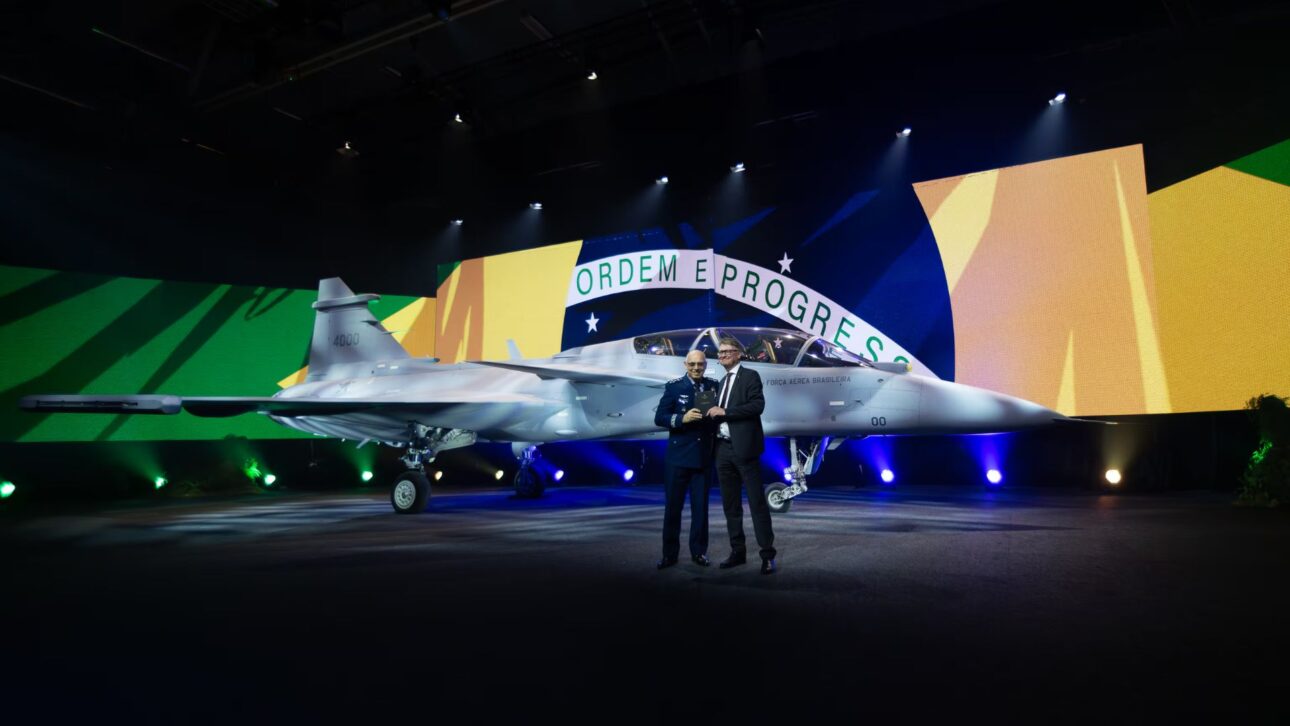
On June 2, 2026, Saab presented in Linköping, Sweden, the first Gripen F, a two-seater version of the F-39 fighter developed for the Brazilian Air Force with participation from the national industry.
With capacity for two crew members, the aircraft can be used in training and operational missions, within the fighter aviation renewal program of the FAB established with the Swedish manufacturer.
The model meets a Brazilian demand outlined in the contract signed with Saab for the acquisition of 36 Gripen fighters, distributed between single-seat and two-seat versions.
-
Harvard Researchers Develop Biological Clock to Estimate Life Expectancy, Potentially Transforming Human Aging Studies

-
Methane, natural fuel lakes, ice, and a nitrogen-rich atmosphere make Titan central to NASA’s plans for the first “space fuel station” to speed up missions beyond Mars.
-
16-Year-Old Kentucky Student Solves Long-Standing Biomedical Challenge, Wins Top Young Scientist Award at $9 Million Science Fair
-
Teen Invents Biodegradable Material from Shrimp Shells That Decomposes 1.5 Million Times Faster Than Regular Plastic




In total, the agreement includes 28 units of the Gripen E, designed for one pilot, and eight units of the Gripen F, configured for the simultaneous operation of two military personnel on board.
The presentation ceremony gathered the Brazilian Defense Minister, José Múcio Monteiro, the Swedish Defense Minister, Pål Jonson, as well as Saab executives involved in the program.
The event marked another stage of the Brazilian Gripen schedule, which involves technology transfer, professional training, and participation of national companies in the development and production of components.
Gripen F will be used in training and operational missions
Designed with two seats, the Gripen F version allows trainee pilots to undergo training in an operational aircraft, not just in simulators or ground equipment.
During the flight, one crew member can be responsible for piloting the aircraft, while the other monitors navigation, sensors, onboard systems, and mission-related information.
This configuration allows the FAB to employ the fighter in pilot training stages and also in operations that require task division within the cockpit.
In addition to being used in the training of new pilots, the Gripen F was also designed for combat missions, maintaining technical characteristics of the Gripen E/F family, including supersonic performance and integration with air warfare systems.
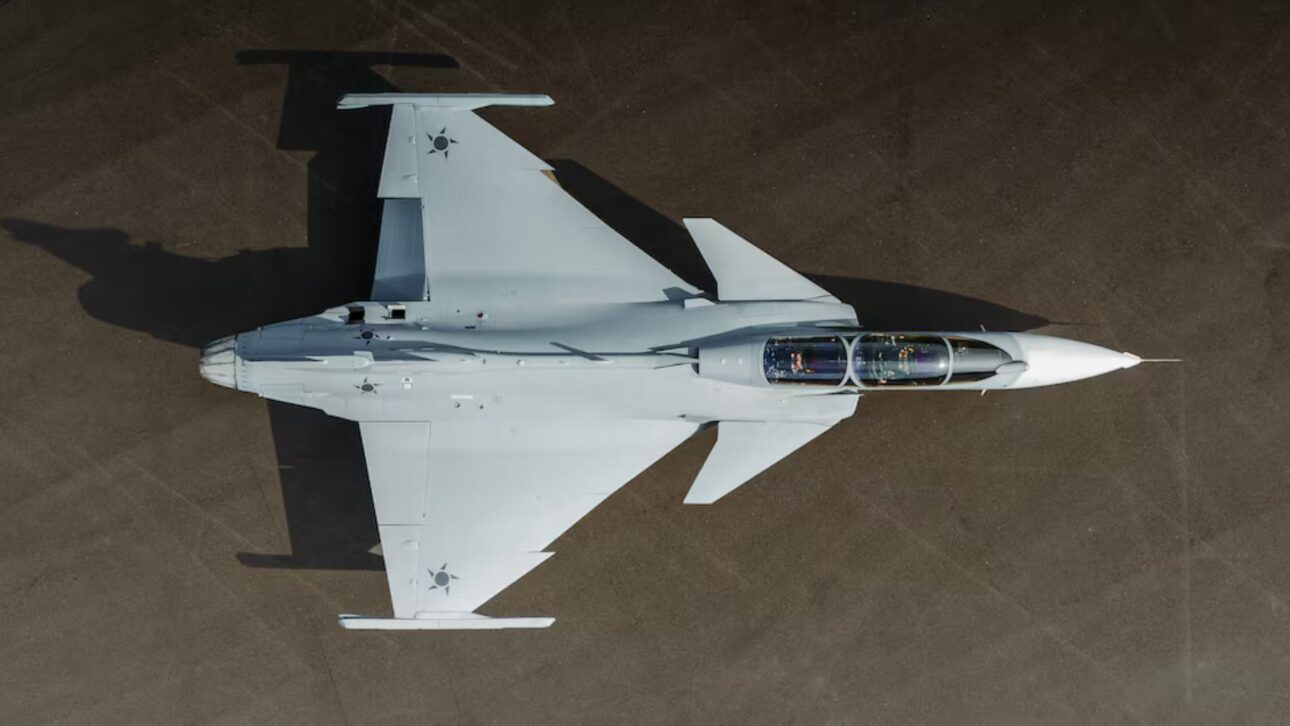
According to Saab, the two-seater version combines advanced training and operational capability, with a second independent cockpit for monitoring in-flight activities.
In the evaluation presented by the manufacturer, this configuration allows the instructor to operate in real mission conditions, without transforming the aircraft into just a training platform.
Brazilian participation involved national companies and engineers
The development of the Gripen F involved Brazilian engineers and technicians, as well as the participation of companies such as Embraer, Akaer, and AEL Sistemas at different stages of the program.
Part of the Brazilian professionals worked in Sweden during the project, in a technological exchange provided for in the agreement signed between Brazil and Saab.
Despite the visual similarity to the single-pilot version, the Gripen F required structural changes compared to the Gripen E, mainly due to the inclusion of the second seat.
The aircraft is 66 centimeters longer than the Gripen E, with 15.9 meters in length and 8.6 meters in wingspan, according to data released by the manufacturer.
The maximum speed reported for the Gripen E/F family reaches approximately 2,470 km/h, a mark equivalent to about twice the speed of sound.
Fredrik Gustafson, global director of business development and sales at Saab, stated that the size difference required a reassessment of essential areas of the project.
According to the executive, in a military aircraft, a change of 66 centimeters requires new studies of structural load, redistribution of internal equipment, review of piping, wiring, and systems.
Saab reported that the development of the two-seater version took about three years and had significant participation from Brazilian professionals in engineering activities.
According to data presented by the manufacturer during the fighter’s launch, a significant part of the technical work on the Gripen F was conducted by teams linked to the Brazilian program.
Gripen Contract Foresees Partial Production in São Paulo
The Brazilian Gripen program advanced after Saab was chosen in the F-X2 process, an open competition to renew the Brazilian Air Force’s fleet of fighters.
The decision was announced in 2013, and the contract came into effect the following year, with plans for technology transfer and partial production of the aircraft in Brazil.
Under the agreement, 15 of the 36 contracted fighters will be produced on the line installed at the Embraer complex in Gavião Peixoto, in the interior of São Paulo.
The Brazilian line was inaugurated in May 2023 and became part of the industrial structure linked to the Gripen outside Sweden, in cooperation with Saab.
On March 25, 2026, Saab, Embraer, and FAB presented the first Gripen E produced in Brazil, also at the Gavião Peixoto facilities.
On the occasion, the companies reported that the aircraft was part of the national production schedule provided for in the contract signed with the Brazilian government.
Although the Gripen E is scheduled for production in Brazil, the F version is not expected to be manufactured in the country under this first contract, according to information presented by Saab.
The company’s justification is related to industrial scale, as the number of two-seater units ordered by FAB is smaller than that of the single-seater version.
Research Center Discussed in São José dos Campos
During the agenda related to the presentation of the Gripen F, Brazilian authorities and Saab representatives also discussed the creation of a research and development center in São José dos Campos, in the interior of São Paulo.
The proposal, formalized through a memorandum of understanding, aims to expand technological cooperation around the Gripen program and activities related to the defense industry.
José Múcio stated that the investments made in the program involve, in addition to the military area, the training of qualified personnel and economic opportunities linked to the aeronautical sector.
The minister also declared that there are talks for the creation of a research structure focused on industrial development, technology, and artificial intelligence.
Micael Johansson, president of Saab, classified the Gripen F project as part of an ongoing technology transfer between the Swedish company and Brazil.
According to the manufacturer, cooperation with the Brazilian industry seeks to support the operation of the fighters over the years and maintain technical capabilities associated with the program.
The creation of the center still depends on subsequent stages, but the memorandum of understanding indicates the parties’ intention to deepen technological cooperation.
The planned focuses include operational capabilities of the Gripen, technological development, and support for aircraft maintenance during its life cycle.
Colombia and Thailand appear among the Gripen clients
The Gripen F has more limited demand than the single-seat version, as the adoption of two-seat fighters depends on the training and operational organization of each air force.
Micael Johansson stated that different countries structure pilot training in various ways, which influences the demand for two-seat versions.
Besides Brazil, Colombia and Thailand appear among the buyers of the Gripen E/F family, according to information released by Saab about international contracts.
The Colombian government ordered 17 Gripen fighters, including 15 Gripen E units and two Gripen F units, with deliveries scheduled between 2026 and 2032.
Thailand also contracted aircraft from the Gripen E/F family, in an agreement announced by Saab in 2025 and linked to the modernization of the local fleet.
There are discussions about potential participation of the Brazilian structure in international deliveries, but the production of Gripen destined for Colombia in Brazil still depends on formal confirmation.
Sweden, which operates earlier versions of the Gripen, has not yet confirmed the purchase of the Gripen F, although Swedish authorities have admitted talks on the subject.
For Brazil, the F version adds to the Gripen program a two-seat aircraft aimed at training and operational missions, developed with direct participation from the national industry.