Portuguese
  Spanish


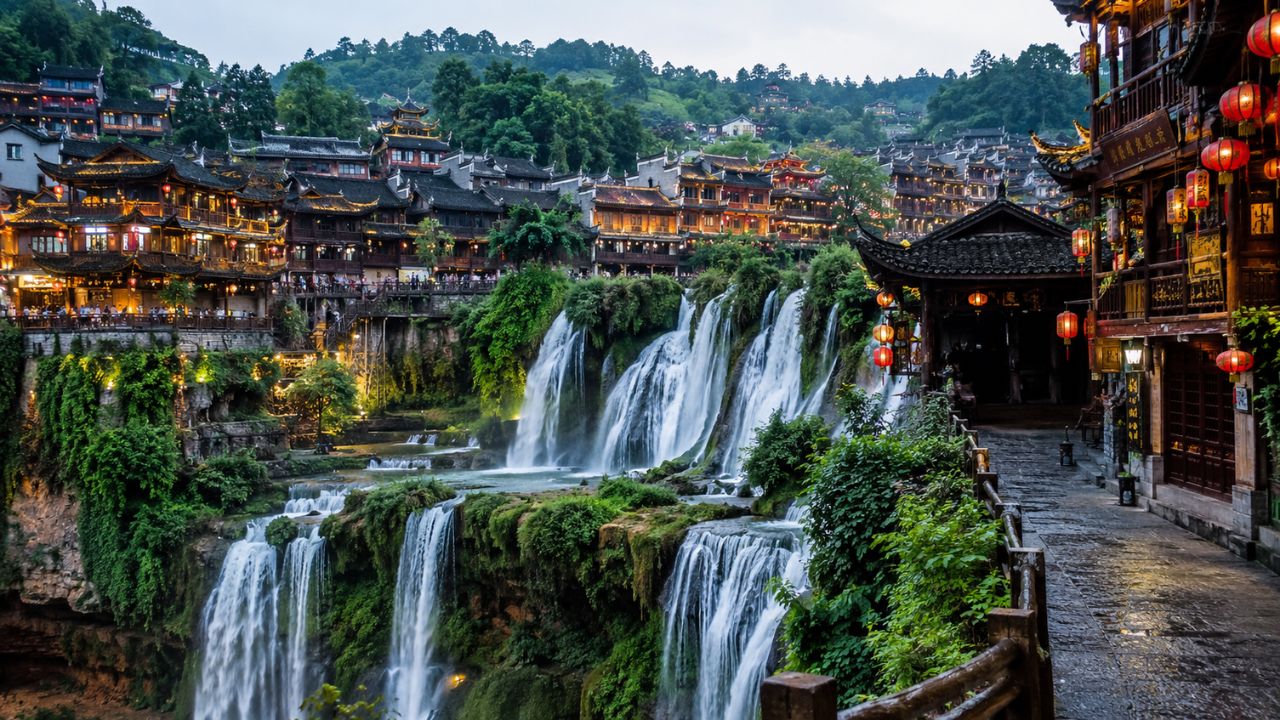

Furong, in the Chinese province of Hunan, received 6.53 million visitors in 2025 and gained international projection with Tujia architecture and viral videos.
The city of Furong, in the province of Hunan, China, received 6.53 million visitors in 2025, after gaining international reach with videos showing its ancient village built next to a 60-meter waterfall. The destination also recorded an increase in foreign tourism, with a 61% rise in ticket sales for visitors from other countries compared to the previous year.
More than 338,000 tourists from over 70 countries and regions visited the location last year, according to data released by the Hunan government. Outside of China, content related to the city accumulated about 1 billion views, expanding the destination’s presence on digital platforms.
Previously known as Wangcun, the village features traditional constructions of the Tujia people, wooden houses supported on rocky slopes, and an urban complex integrated with the waterfall. The combination of local heritage, historical architecture, and circulation on social media placed Furong among the Chinese destinations that have recently gained the most visibility.
-
YouTube Inventor Dubbed “Real-Life Tony Stark” Builds Robotic Legs for Father’s Day, Creating a Wheelchair That Conquers Stairs and Rough Terrain

-
Brazilian Scrap Dealer Processes 3,000 Tons of Ferrous Scrap Monthly, Paying $0.09 to $0.70 per Pound, Reveals Why a Hidden Cylinder Costs 1,500 kg Discount

-
Alabama Family Converts Giant Grain Silos into a 1,750 sq ft Rustic Home, Spending $100,000 to Prove the Impossible

-
Modular ‘Microhouse’ Arrives Ready to Install in Hours Without Deep Foundations or Construction Waste





Furong experienced growth in foreign tourism
The increase in international demand is evident in the latest numbers released by local authorities.
In 2025, ticket sales for foreigners grew by 61% compared to the previous year. In the same period, the city received more than 338,000 visitors from over 70 countries and regions.
The total volume of tourists reached 6.53 million, considering both national and international audiences.
Visitation data in 2025
- Total visitors: 6.53 million;
- Foreign tourists: more than 338,000;
- Origin of foreign visitors: more than 70 countries and regions;
- Growth in ticket sales for foreigners: 61%;
- Video views outside China: about 1 billion.
These data show how digital promotion has started to work alongside in-person tourism. The circulation of images on social media increased interest in the city.
Videos recorded in the old village show the contrast between the waterfall, traditional houses, and nighttime lighting. This material began circulating outside of China and helped spark the curiosity of international travelers.


According to the Hunan government, content related to Furong reached approximately 1 billion views on platforms accessed by foreign users.
The digital exposure added to the official promotion of the city as a historical destination associated with the waterfall.
60-meter Waterfall is Integrated into the Urban Area
The waterfall is one of the central elements of the local landscape.
About 60 meters high, the waterfall appears among the old buildings and forms a landmark within the village. During the day, the volume of water stands out among the structures built on the slopes.
At night, the lighting changes the appearance of the place and creates reflections on the water and nearby buildings.
This configuration contributed to the city being presented by Hunan authorities as a historical village directly linked to the waterfall.
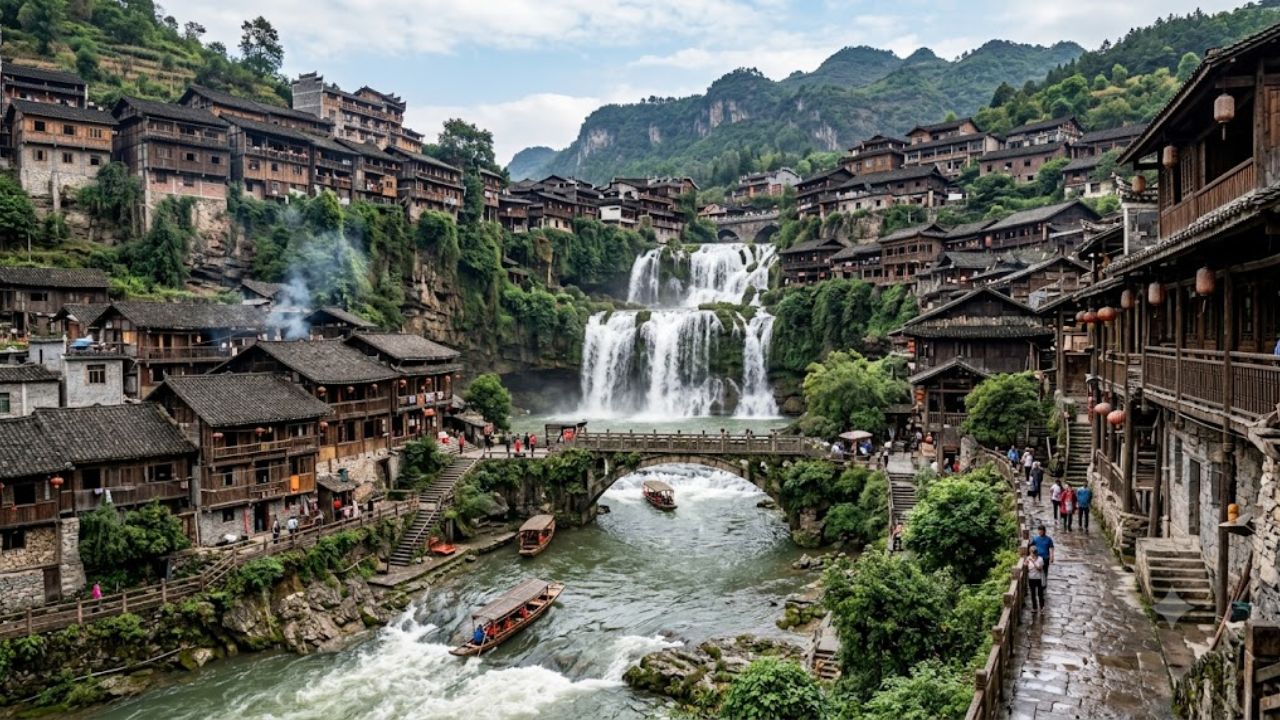
Furong Preserves Tujia People’s Constructions
The local architecture is associated with the traditions of the Tujia people.
The houses known as diaojiaolou are wooden structures supported on stilts. This construction method allows the homes to adapt to the mountainous terrain and rocky slopes.
In Furong, these buildings form an important part of the urban landscape. They appear at different levels of the terrain, following the topography and creating passages between streets, cliffs, and areas near the waterfall.
The preservation of this architectural ensemble is one of the factors explaining the demand for the destination.
Old Wangcun gained prominence with Chinese film
Before gaining traction on social media, the city had already achieved visibility within China because of cinema.
The place was called Wangcun and served as the setting for the Chinese film Hibiscus Town, released in the 1980s.

The production helped make the village more known in the country. Decades later, the circulation of short videos brought the destination to a wider international audience.
The name change and association with the cinematic work are part of the tourist trajectory of Furong.
City combines history, architecture, and digital tourism
The case of Furong brings together elements from different periods.
The village has more than 2,000 years of history, preserves cultural references of the Tujia people, and has been seen by millions of people through social media.
Recent tourism does not rely solely on the waterfall. The demand is also related to the houses on slopes, night lighting, ancient streets, and the city’s image as a visually striking setting.
Among the main attractions promoted are:
- 60-meter waterfall;
- diaojiaolou constructions;
- Tujia cultural tradition;
- ancient streets;
- setting used in the film Hibiscus Town;
- illuminated night scenery;
- videos with wide reach outside China.
Furong establishes itself as a tourist destination in Hunan
The expansion of visitation in 2025 shows that the city has come to occupy a larger space in travel itineraries.
The government of Hunan released both the total volume of tourists and the growth of the foreign audience, indicating an expansion of the destination’s international reach.

The presence of Furong on social media also reinforced the connection between tourism and digital image. Some visitors come to the location after seeing videos of the waterfall and historic houses.
With millions of views outside China and more than 6 million tourists in a year, the former Wangcun has become recognized for a combination that unites local heritage, natural landscape, and global circulation of content.