Portuguese
  Spanish


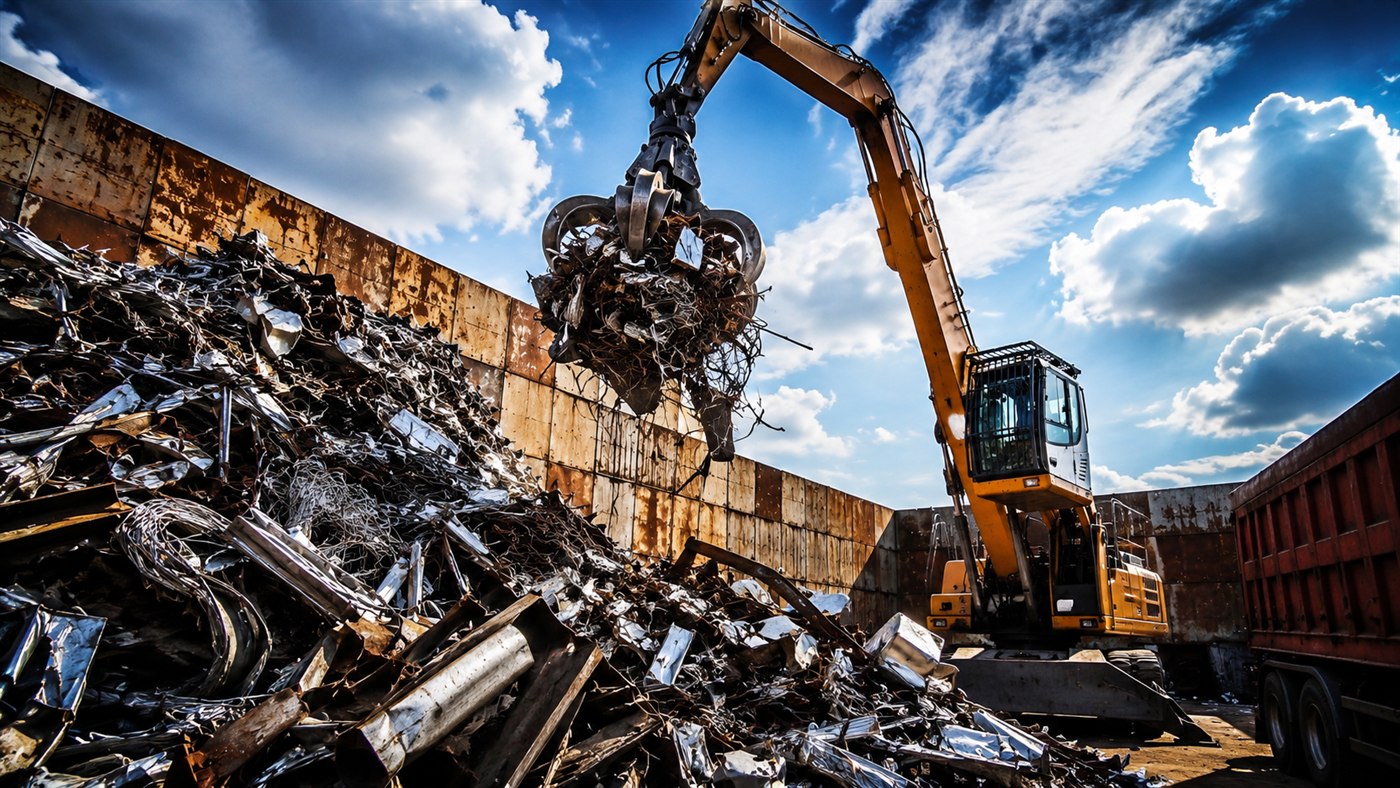

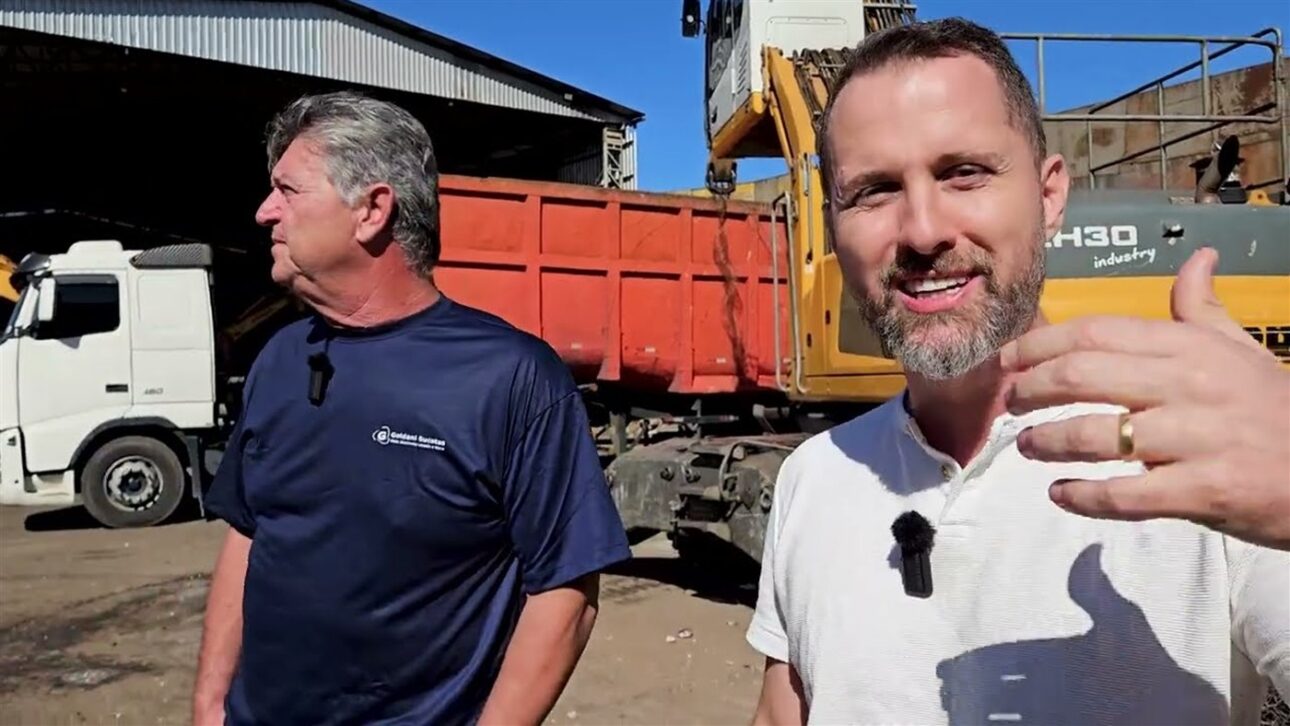
Where do the old refrigerator and stove that nobody wants anymore go? According to the channel O RECICLADOR, in a visit published in April 2026 to Goldani Sucatas, in Rio Grande do Sul, the answer is an operation that processes about 3,000 tons of ferrous scrap per month and pays from R$ 0.45 to R$ 3.50 per kilo, depending on how the material arrives at the yard.
The business rule is simple. The more classified, sliced, and clean the ferrous scrap, the higher the price paid per kilo, and stainless steel 304 reaches R$ 3.50, about three times the value of common steel, as O RECICLADOR shows in the conversation with the company’s owner, Paulo Goldani. From the paper clip to the train wagon, everything has a destination, and the destination determines the price.
The price table of ferrous scrap, kilo by kilo
The heart of the visit is the list of values. According to O RECICLADOR, mixed scrap, that of obsolescence with stove and refrigerator, is paid at about R$ 0.45 per kilo, and the same scrap already separated, with less impurity and denser, rises to R$ 0.60.
-
Alabama Family Converts Giant Grain Silos into a 1,750 sq ft Rustic Home, Spending $100,000 to Prove the Impossible

-
Modular ‘Microhouse’ Arrives Ready to Install in Hours Without Deep Foundations or Construction Waste

-
UK Student Develops Solar Water Purification System Using Fresnel Lens, Wins Global Young Scientists Popular Vote
-
Giant Dredger “No Woman, No Cry” Arrived in Brazil in 2010 to Clear 1.8 Million m³ of Sand and Improve Port Logistics


The price scale rises as the work increases. Small scrap, already sliced, reaches R$ 0.80 per kilo; cast iron from engine carcasses goes to R$ 1.20; high carbon bar end is around R$ 1; and stainless steel 304 reaches R$ 3.50, as O RECICLADOR records in the presented table. Also included are tinplate stamping at R$ 0.80, lower nickel content stainless steel at R$ 1.40, and steel shavings, that spiral leftover from metallurgical processes, at R$ 0.50 per kilo.
Why classifying pays more than lumping everything together
The central lesson of the video is that laziness costs money. According to THE RECYCLER, oversized scrap is worth less because it takes up volume and mixes impurities, while the same scrap cut, separated by alloy, and cleaned of plastic and polyurethane yields a much higher price at the plant.
The message is direct for those who want to make a living from recycling. Those who understand waste classification sell at higher value and become regular partners of the plants, and those who deliver dirty material are the first to be cut from the supplier list, as THE RECYCLER summarizes. It’s the difference between dumping a pile on the truck and setting up an operation that knows how to distinguish tinplate from stainless steel 304 and cast iron from bar end.
The hidden danger: cylinders that explode and cost 1,500 kg
Not all scrap is just metal, and some hide life-threatening risks. According to THE RECYCLER, the sector’s nightmare is gas cylinders, CNG and LPG ones, the famous canister, which if they fall into a crusher at a plant like Gerdau or ArcelorMittal can explode and put people at risk.
The penalty is severe even when no one gets hurt. For each cylinder found in the load, the company gets a 1,500 kg discount for impurity, meaning a canister of a few kilos drops more than a ton off the load’s value, as THE RECYCLER explains. That’s why Goldani only buys cylinders without valves and separated, paying even the price of small scrap to encourage the supplier to deliver this segregated and safe material.
The “Kinder Egg” scam that ruins the market
Every recycling chain has its cunning ones, and they are costly for everyone. According to THE RECYCLER, there is the old habit of hiding dead weight in the middle of the load, a practice nicknamed “Kinder Egg,” the negative surprise in the middle of the bundle, like the cited case of a supplier who stuffed cheap salt in the middle of an aluminum load.
The plan backfires. Those who adulterate the load end up losing the client and spending months cleaning up their own loss, besides undermining the trust of the entire market, as THE RECYCLER warns. Goldani pays more precisely for well-separated material, making the scam a double bad deal: it doesn’t pay off in the short term and burns the partnership in the long run.
The fleet that collects 90% of the scrap at the source
Logistics explain part of the price and scale. According to the O RECICLADOR channel on YouTube, about 90% of the scrap is collected at the source by the company itself, which maintains 13 grapple trucks, 4 roll-off trucks, 5 hook-lift trucks that leave containers with suppliers, as well as Munck and trailers for collection and delivery.
The yard machinery handles the volume. A Liebherr LH30 handler moves the piles with agility, a shear press cuts and compacts the scrap into packages that reduce the volume by about 60%, and an electromagnet loads and unloads the ferrous material without needing a grapple, as shown by O RECICLADOR. Compaction is what allows more weight to be accommodated per trip, and prior separation is what ensures the price at the plant.
From Old Truck to Empire: 50 Years and 3 Generations
Behind the operation is a story of life turnaround. According to O RECICLADOR, the owner’s father started without knowing anything about recycling, with an old truck and a “freight service” sign in front of the house, until a client asked if he transported bones, the first commercially valuable material the family learned to scavenge.
The leap came from an unexpected offer. Around 1975, they were offered old buses to dismantle, the material ended up at Gerdau, and that’s where the scrap operation was born, which now spans over 50 years, reaches the third generation of the family, and gathers around 600 suppliers, as reported by O RECICLADOR. It is the portrait of almost all Brazilian recycling, which, as O RECICLADOR itself shows, is born in the overwhelming majority of family units that grew up in the scrapyard.
What Scrap Teaches About Income in Brazil


The topic is economic before it is environmental. Scrap recycling supports entire families in Brazil, from the collector who gathers cans on the street to the yard operator, and the video treats the activity as a formalizable source of income, not as a last resort.
The potential is as big as the country. Every CPF and every CNPJ generates scrap, and the Brazilian market is large enough for those who specialize in classifying and adding value instead of trying to do everything at once, as O RECICLADOR concludes. The message for the beginner is clear: the money is not in gathering more, it’s in better separation, because each level of classification, from the R$ 0.50 chip to the R$ 3.50 stainless steel, multiplies the value of the same kilo of metal.
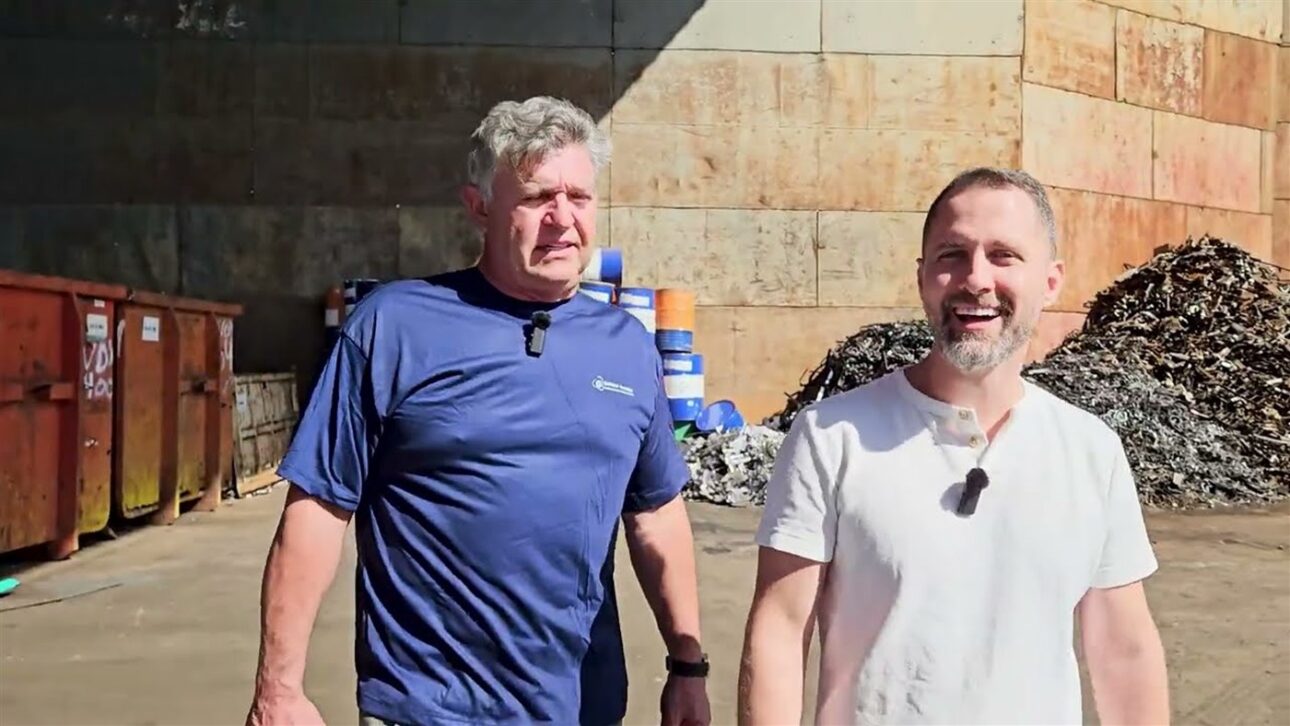
The video tours the Goldani Sucatas yard, the equipment, the piles of each material, and the price table explained by the owner.
The visit to Goldani shows that scrap is not trash, it's raw material with a price list and its own rules. Tell us in the comments: did you know that stainless steel 304 is worth three times more than common steel at the scrapyard?