






 Portuguese
  Spanish


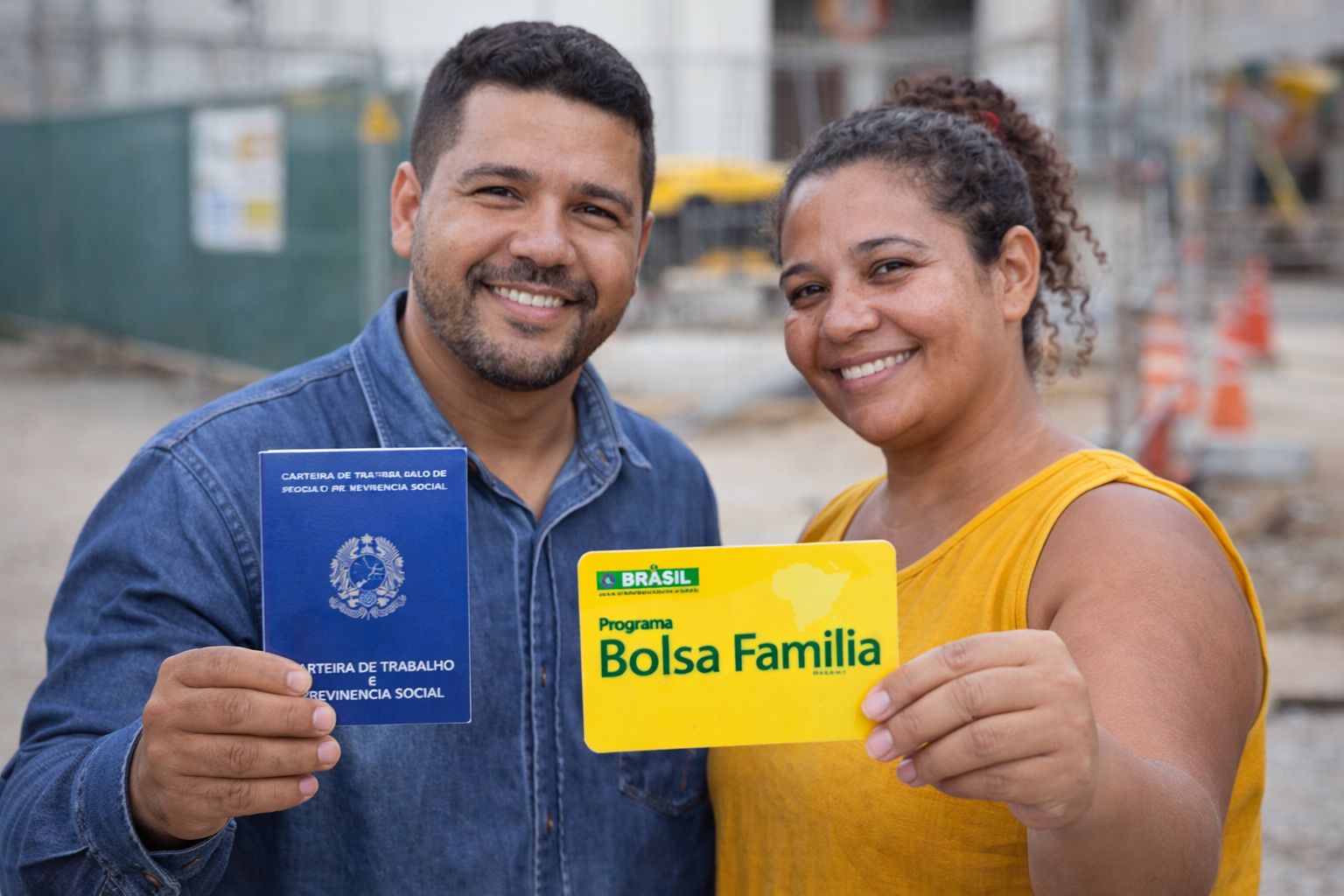

The Bolsa Família allows beneficiaries to accept formal employment and maintain 50% of the amount for up to 12 months under the Protection Rule. If the per capita income is between R$ 218 and R$ 706, the worker remains in the program while stabilizing, and in case of dismissal, has priority for Guaranteed Return for up to 36 months.
Those who receive the Bolsa Família and are afraid to accept a formal job due to the fear of losing the benefit can feel more at ease. The Federal Government confirmed that there is a specific rule, called the Protection Rule, which allows Bolsa Família beneficiaries to work formally without being immediately removed from the program. The measure ensures that the family continues to receive half of the benefit amount for up to 12 months while the worker stabilizes financially with the new income, eliminating the risk of having no support during the transition.
The Protection Rule was created to solve a real problem: thousands of Bolsa Família beneficiaries were refusing formal job opportunities because they feared losing the only certain income they had. With the rule, the family whose per capita income rises to an amount above R$ 218 but below R$ 706 per person remains in the program, receiving 50% of the previous amount. Additionally, if the worker loses their job after the benefit ends, the program offers what is called Guaranteed Return, which prioritizes returning to receive full payments for up to 36 months.
How the Protection Rule works for those receiving Bolsa Família
According to the portal ndmais, the Protection Rule is automatically triggered when the income per person in the family exceeds the limit of R$ 218 per month, which is the ceiling for receiving the Bolsa Família in full. If the per capita income rises but does not exceed R$ 706 per person, the family enters the protection regime and starts receiving 50% of the amount they previously received, maintaining partial financial support while the new salary consolidates in the household budget.
-
At 14 years old, she worked in a factory in Hong Kong, studied economics abroad, and then entered the Chinese real estate market, which helped change the landscape of Beijing.

-
While NATO secured more than $10 billion in missiles and space surveillance at a single forum, Brazil still spends 1.1% of its GDP on defense and is stalling its own anti-aircraft system.

-
Corn ethanol attracts R$ 23 billion in 21 new plants and prepares for a nearly 50% jump in Brazilian production by 2027, even with high interest rates.
-
A newly opened terminal in the middle of the Amazon has begun transporting soy and corn through Amapá, eyeing the queue of ships that is congesting the ports in the South.


In practice, this means that a Bolsa Família beneficiary who secures a formal job does not have to choose between the salary and the benefit. For up to 12 months, they receive both at the same time, with the Bolsa Família reduced by half. This period is designed to give the worker enough time to stabilize, pay off any debts accumulated during unemployment, and build a minimum reserve before relying solely on the new salary.
What happens if the Bolsa Família beneficiary loses their job
One of the biggest fears for those who receive Bolsa Família and accept a formal job is: what if I get fired after losing the benefit? The Protection Rule addresses this situation. If the family’s income remains above the limit after the 12 months of protection, Bolsa Família is terminated. However, the program offers a second safety net called Guaranteed Return.
The Guaranteed Return works like this: if the beneficiary loses their job after the cancellation of Bolsa Família and the per capita income of the family returns to the limit of up to R$ 218, they have priority to return to the program and receive full payments for up to 36 months. This return guarantee is crucial because it eliminates the most feared scenario by Bolsa Família beneficiaries: accepting a job, losing the benefit, getting fired, and being left with neither. With the Guaranteed Return, the worker knows they have a safety net in case the formal experience does not last.
What are the income limits to maintain Bolsa Família
The calculation is straightforward and determines what happens to the benefit. All household earnings are summed and divided by the number of residents, generating the monthly per capita income that the authorities use to define the family’s situation. With a per capita income of up to R$ 218 per person, Bolsa Família is paid in full. This is the range where most beneficiaries find themselves and where no changes are necessary.
When the per capita income is between R$ 219 and R$ 706 per person, as usually happens when someone in the family gets a formal job, the family enters the Protection Rule and starts receiving 50% of the Bolsa Família amount for up to 12 months. Above R$ 706 per person, the payment is immediately suspended. These limits are monitored through automatic data cross-referencing with eSocial, which means that information about the new job reaches the government without the beneficiary needing to declare it, although voluntary updates at CRAS are strongly recommended.
How to update the Bolsa Família registration at CRAS
Keeping data updated at CRAS (Social Assistance Reference Center) is mandatory for those receiving Bolsa Família and accepting a formal job. Although data cross-referencing with eSocial is automatic, voluntary declaration prevents blocks due to inconsistencies and ensures that the Protection Rule is applied correctly. Those who do not update their registration risk having Bolsa Família suspended due to irregularity, even when they are entitled to partial maintenance.
To update the registration, the family head must go to the CRAS of the municipality bringing the following documents: CPF or voter registration of the head, photo identification of all residents, updated proof of residence, physical or digital work card of the new employee, and birth certificate or ID of the children in the household. The process is free and can be done on any business day. The recommendation from Bolsa Família is that the update be done as soon as possible after signing the work card.
Why this Bolsa Família rule is important for the labor market
The Protection Rule addresses a problem that economists call the “poverty trap”: the situation in which a beneficiary refuses formal employment because the net gain would be less than the benefit lost. Without the rule, a worker receiving R$ 600 from Bolsa Família who managed to get a minimum wage job would lose the entire benefit at once, which could result in such a small income improvement that it wouldn’t compensate for transportation costs, eating out, and other expenses associated with work.
With 50% of Bolsa Família maintained for 12 months and the guarantee of return in case of dismissal, the worker can accept the opportunity knowing that they will have a financial cushion during the transition. This security makes formal employment more attractive and reduces informality, benefiting both the worker who gains labor rights and the government that expands the taxpayer base. Bolsa Família stops being a trap and becomes a bridge between vulnerability and financial independence.
Bolsa Família allows maintaining 50% of the benefit for up to 12 months for those who accept formal employment. Did you know about this rule? Do you think it encourages or discourages work? Have you ever been in this situation? Share in the comments.








