






 Portuguese
  Spanish


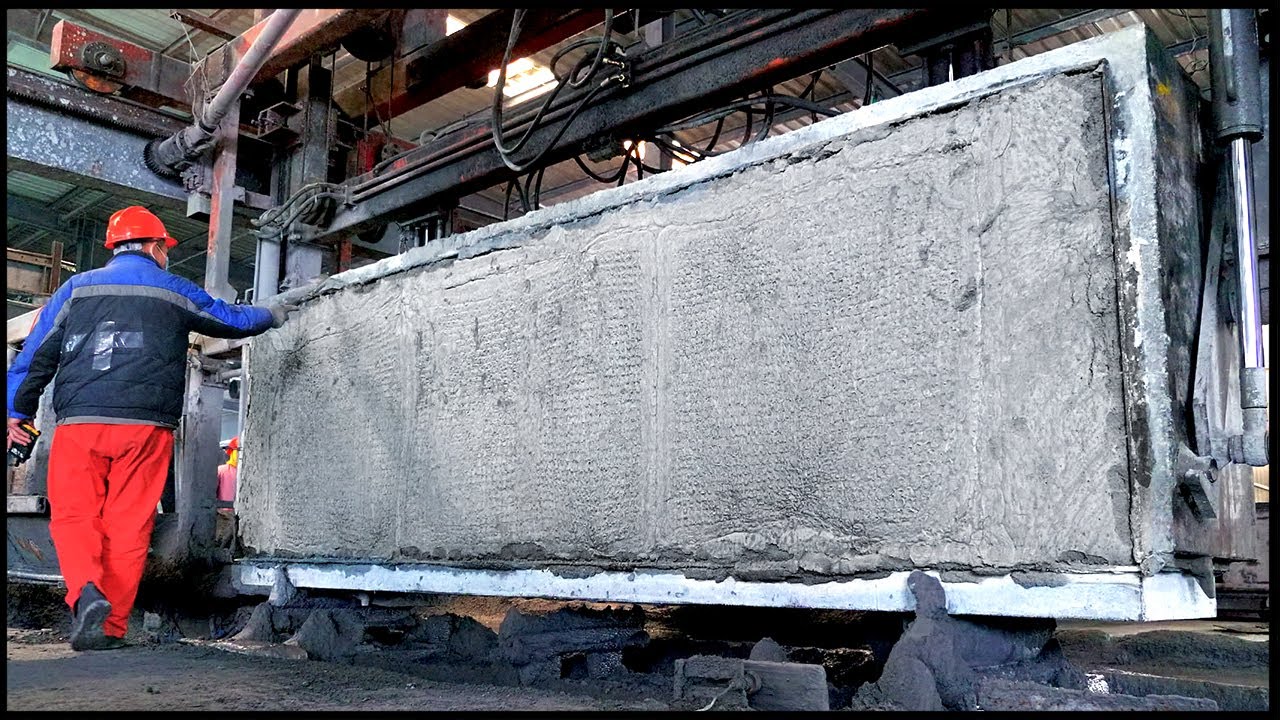


Brick Made From Power Plant Ashes Is Lighter, More Resistant, and Durable Than Conventional Brick and Begins to Replace Clay in Construction Due to Efficiency and Sustainability.
In recent years, a quiet innovation has begun to redefine construction in various countries: the use of bricks made from fly ash from thermoelectric power plants, also known as fly ash. What was once an industrial waste with difficult disposal accumulated in huge basins and reservoirs has transformed into one of the most efficient, sustainable, and technically advanced materials of modern construction. The adoption of ash bricks gained momentum after technical publications from engineering institutes, research centers, and international standards demonstrated that the material has superior properties compared to traditional clay bricks. By combining sustainability, cost-efficiency, and structural performance, it has paved the way for a change that impresses engineers, architects, and construction companies.
What Is the Brick Made From Power Plant Ashes
The “fly ash brick” is produced from the ash left over from the combustion of mineral coal in thermoelectric power plants. This ash, composed mainly of silica, alumina, and mineral oxides, has a fine particle size and adequate reactivity for use as a binder.

The mixture generally includes:
-
Tarcísio Opens New São Paulo Metro Line After 18-Year Wait, Offering Free Rides at 6 Stations and Aiming to Cut Commute to 23 Minutes for 633,000 Daily Passengers

-
Facing a housing shortage, Hong Kong uses prefabricated concrete modules to construct a 12-story public building with the help of massive cranes and trucks.

-
Amsterdam Repurposes Retired Boats and Plants to Restore Contaminated Industrial Land Instead of Removing All Polluted Soil
-
Saudi Arabia to Build 33,000-Seat Desert Arena with Retractable Roof and Clay Courts for 2028 Masters 1000 Tournament


- fly ash
- Portland cement or lime
- fine sand
- water
- small additions of gypsum in some formulations
Instead of being burned in kilns like clay bricks, ash bricks are compressed under high pressure and cured; a process that drastically reduces energy consumption and eliminates CO₂ emissions associated with burning.
The absence of the firing step already represents an environmental revolution, but the technical difference goes much further.
Why Is It More Resistant Than Conventional Brick
Research from universities and reports from engineering authorities show that fly ash bricks achieve:
- compressive strength between 7.5 and 12 MPa, while conventional clay bricks range between 3.5 and 5 MPa;
- lower dimensional variation, reducing cracks and misalignments;
- high durability and lower surface wear;
- lower water absorption rate, an essential factor to prevent infiltration.
These advantages occur due to the chemical structure of the material. Fly ash reacts with the calcium hydroxide present in the cement, forming additional cementitious compounds that increase strength over time, a process similar to what occurs in high-performance concretes.

As a result, the brick not only meets standards but outperforms traditional brick in practically all relevant technical parameters.
More Lightness and More Cost Savings for Construction
Another point that has caught the attention of construction companies is weight. Ash bricks can be up to 30% lighter than equivalent clay bricks. This brings several advantages:
- Reduction of load on foundations, allowing for more economical structures.
- Cheaper transportation, as the load weighs less per truck.
- Easier handling on-site, speeding up masonry work.
For larger buildings such as residential and commercial buildings, this difference represents significant accumulated savings.
Sustainability: Where There Was Once an Environmental Problem, a Solution Emerges
Fly ash is a waste classified as an industrial byproduct. Power plants around the world produce millions of tons of this material annually, which needs to be stored in large containment basins. These reservoirs consume space, require constant environmental monitoring, and can generate ecological impact.
Transforming this waste into bricks solves multiple problems:
- reduces the volume of accumulated waste;
- decreases land use for deposits;
- avoids burning clay bricks, which consumes a huge amount of firewood;
- preserves natural clays, which are widely exploited for traditional bricks.
International studies show that for every 1 million fly ash bricks produced, the following are avoided:
- about 500 tons of CO₂ emissions;
- removal of 1,000 tons of clay;
- firewood consumption used in rudimentary kilns that still operate in various regions.
It is a structural change with real impact.
The Accelerated Expansion of Ash Brick Usage
Although it started in regions with large thermoelectric power plants, ash brick is spreading rapidly to other markets due to its efficiency.
Construction companies are adopting it in:
- residential condominiums;
- industrial warehouses;
- schools and public projects;
- light infrastructure works;
- retaining walls and enclosures.
Its growth happens for three reasons:
- Proven technical performance
- Competitive cost compared to traditional brick
- Reduction of the environmental impact of construction
The demand has increased so much that several specialized factories have emerged near power plants to take advantage of the material directly at the source.
Surprising Thermal and Acoustic Performance
Another little-known characteristic is the thermal and acoustic behavior of the brick. The fine, compacted composition reduces pore formation and ensures:
- good thermal insulation, keeping interiors cooler;
- better acoustic performance compared to fired bricks;
- lower temperature variation in walls throughout the day.
These properties mean that ash bricks are often recommended in urban projects where insulation and comfort are essential.
Why It Is Starting to Replace Clay Brick in Large Works
The set of advantages that includes strength, lightness, durability, cost savings, and sustainability—has created a scenario that accelerates the transition. Major developers have begun to test and approve its use on a large scale, especially in works where standardization and dimensional quality are essential.
Furthermore, since ash bricks are manufactured in industrial molds, they have a more precise geometry than handcrafted clay bricks, reducing:
- mortar consumption,
- rework,
- execution time,
- and imperfections in masonry.
All this efficiency translates into direct savings for large-scale construction.
A Technology That Is Here to Stay
The brick made from power plant ashes is not a passing trend; it is one of the most solid and technically grounded innovations in contemporary construction. It addresses environmental issues, reduces costs, speeds up construction, improves structural quality, and increases the durability of buildings.
With proven performance from research, established technical standards, and growing adoption, this technology is on track to become the new standard in various countries, repeating what has already happened with reinforced concrete and structural blocks in the past. The transition is underway—silent, sustainable, and highly strategic.







Qual empresa que já está fabricando?
Onde consigo comprar esta cinza volante em pequena quantidade para **** de