Portuguese
  Spanish


Study by Sanepar and UFPR shows that the lambari-miúdo incorporates carbon derived from methane into its biomass and acts as an ecological filter in the Passaúna Reservoir
A native fish about 10 centimeters long may have an important role in the local reduction of gases linked to global warming.
The discovery was announced on June 26, 2026 by the Paraná State News Agency, based on research by Sanepar, the Federal University of Paraná, and partner institutions.
The study was conducted in the Passaúna Reservoir, located in the Metropolitan Region of Curitiba. Thus, it helps to understand how nature itself can contribute to balancing artificial aquatic environments.
-
ChatGPT Creator Bets Big on Fusion Energy Machine Promising Unlimited Power for Microsoft by 2028, But Physicists Skeptical

-
Time Travel Proven Possible by Science, Yet a Mystery Still Challenges Einstein, Quantum Physics, and Top Scientists

-
Pennsylvania Mine Creates Ice in Summer Heat and Melts in Winter, Turning a Mountain Crevice into a Reverse Natural Refrigerator
-
China Accelerates Global Expansion of Robotics: From Smart Vacuums to Industrial and Humanoid Machines, Millions Exported to Over 150 Markets




Lambari-miúdo acts as an ecological filter in the reservoir
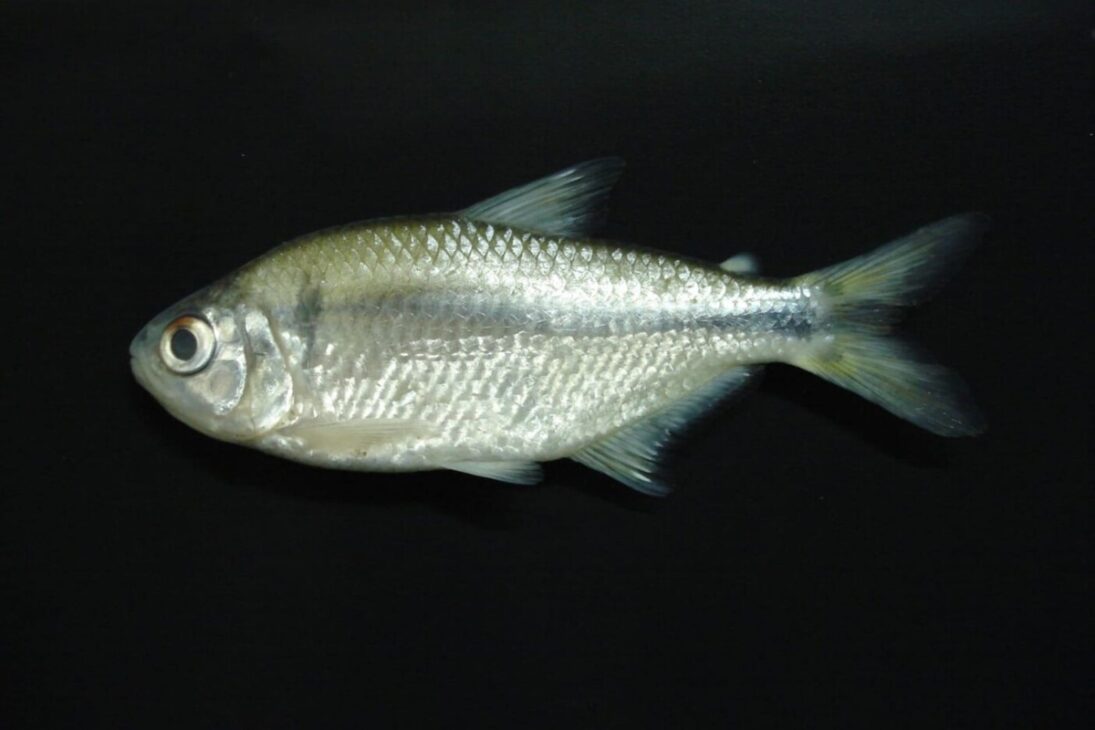
The lambari-miúdo, scientifically identified as Psalidodon minor, was identified by the research as a species capable of retaining part of the carbon derived from methane.
This carbon is incorporated into the fish’s biomass, that is, its flesh. In this way, the species functions as a kind of ecological filter within the reservoir.
Supply and energy generation reservoirs usually have slower water circulation than rivers. Therefore, they accumulate more organic matter at the bottom.
Over time, this matter decomposes and releases greenhouse gases, such as methane. This gas is considered one of the main contributors to global warming.
Why is this small fish so important?
According to Jean Ricardo Simões Vitule, professor and researcher at UFPR, the lambari-miúdo has great ecological importance, even though it is small.
Furthermore, the species has significant mass within the food chain. This is because it serves as food for predators in the aquatic environment.
The assimilation of carbon from methane can reach up to 15% of the fish’s weight.
For this reason, researchers warn that the reduction of the lambari-miúdo population could accelerate methane emissions into the atmosphere.
According to Jean Ricardo, the entire biological community functions as an ecological filter. However, the lambari-miúdo appears as one of the most important gears in this process.

Black bass may threaten ecosystem balance
The study also showed that invasive species can harm this balance.
Among them is the black bass, scientifically identified as Micropterus nigricans. This exotic predator can reduce populations of lambari-miúdo and other native fish.
As a result, the food web of the reservoir is disrupted. Consequently, the release of methane into the atmosphere can be enhanced.
According to Jean Ricardo, these impacts appear on different scales, both in the reservoir and in the environment.
Therefore, monitoring and ecological management of native fauna are considered essential by researchers.
Management protocol can be applied in other reservoirs
Maurício Bergamini Scheer states that Sanepar and the Laboratory of Ecology and Conservation at UFPR have developed an ecological management protocol.
The proposal can be applied in reservoirs in Brazil and other countries. The goal is to prevent biological invasions, control exotic species, and strengthen native populations.
Additionally, the protocol considers different forms of life, both aquatic and terrestrial. Thus, it seeks to reduce ecological and economic damages.
Research brought together institutions from Brazil and abroad
The research was titled “Assimilation of methane-derived carbon by native and non-native fish in a neotropical reservoir”.
The work brought together Sanepar, UFPR, Federal University of Lavras, Lancaster Environmental Centre, LAB Analyses, and Capão da Imbuia Natural History Museum.
According to Jean Ricardo, this cooperation between institutions transforms scientific knowledge into useful information for society.
There is still much to be investigated. However, the study indicates that thousands of reservoirs may have important ecological services that are still little known.
Thus, in addition to taking care of the quantity of water, researchers advocate attention to the environmental quality of water sources.
And you, do you believe that native fish like the lambari-miúdo should be more valued in environmental strategies against global warming?