Portuguese
  Spanish



Microsoft signed an agreement with Helion to purchase fusion energy in 2028, while Sam Altman and investors bet billions on the nuclear fusion race.
Microsoft signed an agreement to purchase electricity from Helion Energy starting in 2028, in one of the boldest bets ever made in the nuclear fusion sector. The commitment involves at least 50 megawatts and was presented as the first announcement of its kind in the market, even with Helion yet to prove commercial operation of electric fusion.
The operation helps explain why Helion has become one of the most watched energy startups in the United States. Sam Altman invested $375 million in the company, and the company raised an additional $465 million in June 2026, reaching a valuation of $15.5 billion and a total of $1.5 billion in capital raised.
What is nuclear fusion and why do Microsoft and Sam Altman bet it can change the global energy market
Nuclear fusion is the process that powers the Sun: instead of splitting heavy atoms, as in fission, it joins light nuclei and releases large amounts of energy. In theory, this would allow electricity generation without significant greenhouse gas emissions and without large volumes of long-lasting radioactive waste.
-
Time Travel Proven Possible by Science, Yet a Mystery Still Challenges Einstein, Quantum Physics, and Top Scientists

-
Pennsylvania Mine Creates Ice in Summer Heat and Melts in Winter, Turning a Mountain Crevice into a Reverse Natural Refrigerator
-
China Accelerates Global Expansion of Robotics: From Smart Vacuums to Industrial and Humanoid Machines, Millions Exported to Over 150 Markets
-
Polar Air Mass to Hit Brazil: Temperatures to Plummet in Nine States, Near Freezing in the South with Frost Risk Until Monday



The problem is that turning this principle into a viable power plant remains one of the greatest challenges of modern engineering. Reuters itself summarized the central point of the global fusion race: scientists and engineers have yet to find a reliable way to generate more energy from the reaction than is needed to initiate and maintain it.


This challenge has become even more strategic with the explosion in demand for electricity for data centers and artificial intelligence.
Reuters noted that Helion’s new round occurred precisely amid the increased demand for energy for large AI operations, which helps connect Microsoft’s and Altman’s bet to the advancement of systems like those of OpenAI.
How the Helion Polaris Reactor Works and Why the Company Tries to Generate Electricity Without Using Turbines
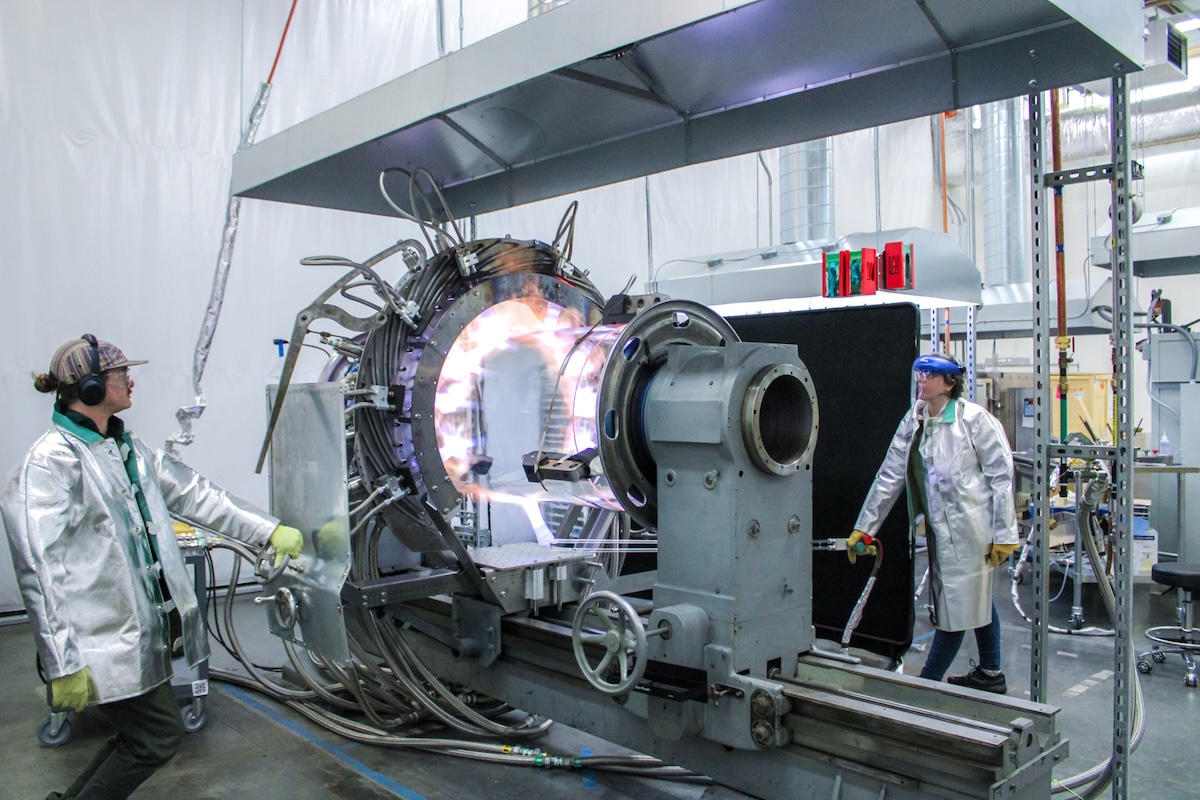
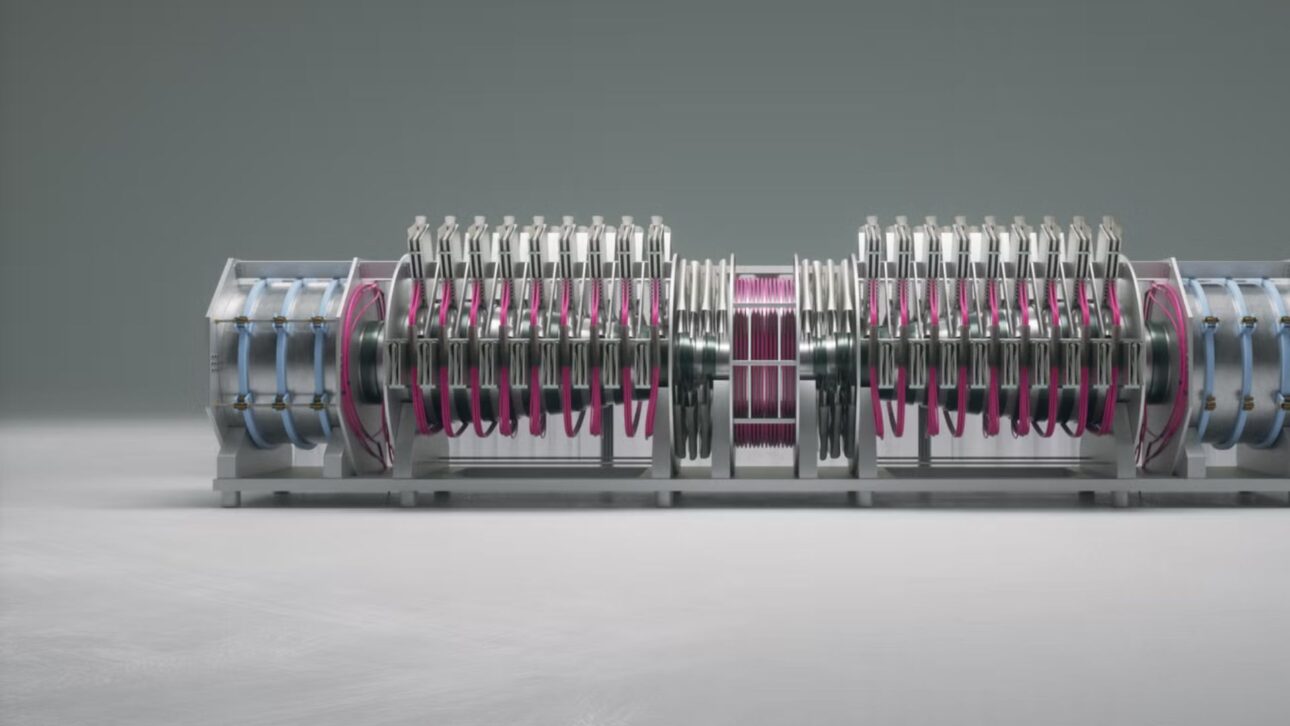
Helion follows a different path from most fusion companies. According to TechCrunch, its reactor uses the concept of field-reversed configuration, with a chamber resembling an hourglass: the fuel enters at the ends, turns into plasma, and is accelerated by magnets until collision in the center.
When the plasmas meet, they start in the range of 10 million to 20 million degrees Celsius. Then, stronger magnets compress this combined plasma, raising the temperature. In February 2026, Helion announced that the Polaris prototype reached 150 million degrees Celsius, a milestone repeated by Reuters as one of the company’s most recent advances.
Helion’s technical ambition lies in the way of extracting electricity. Instead of using fusion to generate heat, boil water, and move turbines, the company wants to capture energy directly through electromagnetic induction, taking advantage of the plasma expansion against the magnetic fields of the system itself. Reuters and TechCrunch highlight this as one of the company’s central differentiators.
Contract with Microsoft Put Helion at the Center of the Race to Deliver Fusion Energy to the Grid in 2028
The agreement with Microsoft gave Helion a showcase that no other fusion startup had achieved. Fortune reported that the company promised to supply at least 50 MW to Microsoft within a year from the start of delivery, or pay a financial penalty if it fails to meet the contract.
The ambition moved from speech to construction phase. In July 2025, Reuters reported that Helion started building the site of its first plant, called Orion, in Malaga, Washington, with the goal of serving Microsoft’s data centers by 2028.
In June 2026, Reuters reported again that Orion was under construction and that the new billion-dollar funding would be used to accelerate commercial deployment, expand manufacturing capacity, and support the delivery of clean electricity to customers. This shows that the schedule remains active, but the company still depends on solving the most difficult problem of all: proving that the system generates useful net electricity.
Billions entered Helion, but the company has yet to prove the main commercial milestone of nuclear fusion
Helion’s financial advancement is real. The $465 million round announced in 2026 nearly tripled the company’s valuation compared to the previous round of $425 million in January 2025, when the startup was valued at $5.4 billion.
On the technical side, however, the decisive question remains open. TechCrunch reported that when asked if Helion had already achieved scientific breakeven, David Kirtley avoided answering directly and said the company is focused on “making electricity,” not on pure scientific milestones.
This point matters because high temperature, use of fusion fuel, and plant construction do not, by themselves, equate to a functioning commercial plant. Reuters was direct in stating that the central barrier of the sector remains generating more energy with fusion than is consumed to create and sustain the reaction.
Sam Altman’s bet on Helion became a symbol of the connection between artificial intelligence, energy, and infrastructure
The $375 million investment made by Sam Altman helped transform Helion into one of the most emblematic bets of the new AI-linked energy race. Fortune recorded this contribution when reporting the agreement with Microsoft, and Reuters showed that Altman remained among the company’s investors even after new billion-dollar rounds.
The logic behind this movement is clear: the expansion of artificial intelligence requires more computational capacity, and computational capacity requires more electricity. Therefore, nuclear fusion has been treated by part of the market as a possible long-term answer to supply digital infrastructure at scale.

If Helion delivers on its promises, the agreement with Microsoft will be remembered as a historic milestone in energy. If not, the case will remain one of the most ambitious examples of how capital from the artificial intelligence era began to finance one of the most difficult and uncertain technologies ever pursued by the industry.