Portuguese
  Spanish


Connected Cars Can Be Targets of Hackers, Posing a Threat to Driver Safety Even in Popular Models with Advanced Automation Features.
Modern cars come equipped with increasingly advanced connectivity and automation systems, but this technological evolution also opens the door to invisible risks. Today, popular models, including SUVs with digital features, are more susceptible to cyberattacks carried out by hackers. The danger often goes unnoticed by the driver, but it can directly affect vehicle control and the safety of occupants. According to experts, the combination of embedded technology and internet connectivity makes connected vehicles vulnerable to unauthorized access, even from a distance.
SUVs And Modern Cars Have Become Targets Of Hackers
The digitalization of vehicles has turned cars into true computers on wheels. Features like adaptive cruise control, automatic parking systems, keyless entry, smartphone commands, and remote updates are part of the routine for many models, especially mid-range and luxury SUVs. These systems operate based on internal and external networks, creating access points that can be exploited in cyberattacks.
Hackers can infiltrate through Wi-Fi connections, Bluetooth, GPS systems, or even through the car’s USB ports. In some cases, it’s possible to access functions such as locking doors, accelerator, brakes, or the electric steering system. Most drivers are unaware of these vulnerabilities, making the risk even more concerning.
-
Brazilian Airport to Receive $2.8 Million Investment, Completion Expected Within a Year

-
UN Warns of AI’s Environmental Impact and Calls for Greater Corporate Transparency

-
Former Atacadão Employee Turns Online Cake-Baking Lessons into a Confectionery Brand with Factory, Store, Delivery, and Nearly $400,000 in Revenue
-
Brazilian Startup Sells Nearly 9 Million Surprise Bags of Near-Expiry Food, Prevents Thousands of Tons of Waste, Aiming for $42 Million Revenue by 2026




Cyberattacks On Cars Have Already Occurred In Practice
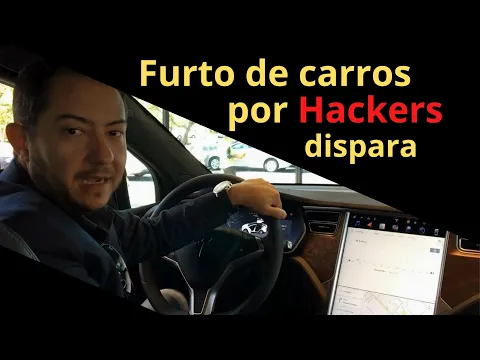
Researchers and security experts have already demonstrated that it is possible to carry out cyberattacks on vehicles under real conditions. One of the most well-known cases involved a Jeep Cherokee in 2015 in the United States. At that time, two security experts managed to remotely control functions like air conditioning, radio, acceleration, and even steering while the car was in motion. This episode led the automaker to conduct a recall of over 1 million vehicles.
More recently, a group of Belgian security researchers demonstrated how to remotely hack a Tesla Model X by exploiting vulnerabilities in the digital key system. There have also been reports of vulnerabilities in the infotainment systems of SUVs from brands like Nissan and Toyota, which allowed for the remote activation of lights, horn, and windows.
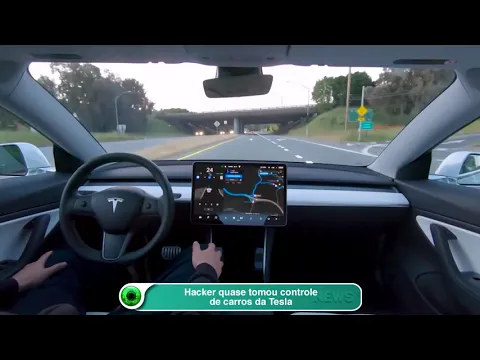
These episodes reinforce that the risks are real and not limited to the theoretical realm. With the increase in connectivity in modern SUVs, hackers have more potential pathways for infiltration into automotive systems.
Digital Systems Increase The Attack Surface
Modern cars, especially SUVs with multiple integrated functions, utilize complex electronic architecture. Various Electronic Control Units (ECUs) are interconnected via internal networks, such as the CAN (Controller Area Network) system, which lacks authentication or encryption from the origin. This means that once an attacker gains access to the vehicle’s network, they can transmit false commands as if they were legitimate.
Additionally, many manufacturers allow control of the vehicle through smartphone apps. For example, it is possible to lock and unlock doors, start the engine remotely, or monitor positioning via GPS. These apps, if poorly protected, also become targets for hacking attempts.
Models that come with factory 4G or 5G connectivity, such as some SUVs released in recent years, maintain a constant communication channel with remote servers. If this channel is not well protected, it can become a gateway for remote attacks—without the driver perceiving any warning signs.
Manufacturers Strengthen Digital Security Measures
In light of the increase in cyberattacks against modern cars, automakers have invested in extra layers of digital security. Tesla, for example, has started holding competitions among experts to identify vulnerabilities before malicious hackers can find them. Other brands have adopted the practice of over-the-air (OTA) updates to quickly and remotely fix vulnerabilities.
The majority of manufacturers have also started working with automotive cybersecurity specialists to develop proprietary operating systems focused on digital protection. Nonetheless, experts warn that there is no foolproof system and that constant vigilance is necessary.
According to industry researchers, the more connected a car is, the more susceptible it becomes. A modern SUV with integrated connectivity, internet-connected entertainment system, and smartphone integration, for instance, can have dozens of potential access points for a hacker.
How To Reduce The Risks Of Cyberattacks On Vehicles
Although much of the responsibility lies with manufacturers, drivers can also adopt preventive measures to reduce the risk of cyberattacks on their cars. These include:
- Keeping the vehicle’s software always updated, either through the dealer or via remote updates;
- Avoid connecting unknown devices to the USB ports;
- Not leaving Bluetooth and Wi-Fi connections enabled when not in use;
- Using strong passwords on apps that remotely control the car;
- Monitoring any unusual behavior in the vehicle’s electronic system.
In the case of SUVs purchased in the used market, it is important to carry out a comprehensive technical and digital review, especially if the model has active connectivity, remote control apps, or autonomous assistance systems.
Digital Security Becomes Part Of The Automotive Routine
As modern cars evolve toward autonomous driving, total connectivity, and integration with external networks, protection against cyberattacks becomes as essential as brakes or airbags. The trend is that, in the coming years, digital security will be one of the main criteria for evaluating the purchase of a new car—especially SUVs with a higher volume of embedded systems.
Drivers should consider that by acquiring a smart vehicle, they are also bringing home a digital device that is subject to flaws and external access. Care regarding passwords, connections, updates, and privacy should not be limited to smartphones or computers. The car itself is also now on the radar of hackers.