Portuguese
  Spanish


Modular beach houses, three sisters, and an inherited plot in Australia came together in an award-winning project that preserved sea view, family memory, and equal space for all
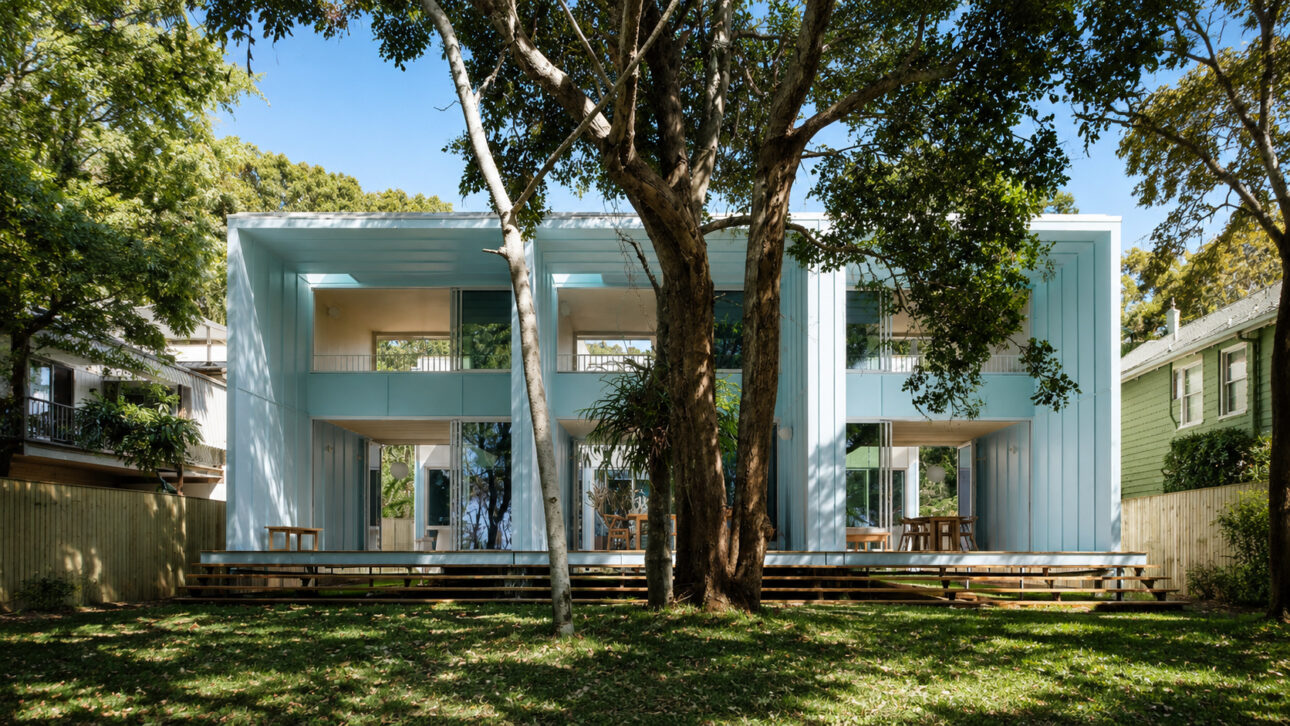
How to divide a beach plot among three sisters without anyone losing the best sea view? In Australia, the answer came with the Blok Three Sisters project, consisting of three identical, narrow, and modular houses on Stradbroke Island.
The information was published by The Guardian, a British news outlet. The project was awarded the title of Australia’s house of the year in 2025 and drew attention for transforming a family inheritance into a simple, beautiful, and balanced housing solution.
The three units were manufactured in Brisbane, transported to the island, and assembled on the plot as two-story dwellings. The idea prevented one sister from having the most privileged part of the property while the others lost direct contact with the beach.
-
Einstein’s Lasting Advice: “Strive to Be a Person of Value, Not Just Success” Inspires Many Seeking Life’s Meaning

-
Man Spends Weeks Clearing Overgrown Land, Faces Equipment Failures, and His Story on Scott Harrison’s Channel Reaches 94,000 Views

-
Engineer Builds Star Farm Resort on $250,000 Plot Near U.S. National Park, Projected to Reach $6 Million Value by 2030
-
In the Amazon Flood Season, Life Transforms: Riverside Family Near Parintins Relies on Fishing Nets, Stingrays in the Yard, and Canoe-Only Transport


The old family house was from the 1970s and was on a plot almost impossible to replicate
The inherited plot was near the beach on Stradbroke Island, Australia. The old house had been built by the parents of the three sisters in the 1970s, and the family had used the place for vacations since childhood.
The sale of the property could end this family story. Therefore, the sisters sought a solution that would keep the property with them without turning the division into conflict.
The solution was to replace an old house with three independent beach houses, each with the same weight in the division. Thus, none of the families had an obvious advantage over the others.
This detail helps explain the project’s appeal. It is not just about architecture, but about inheritance, memory, and coexistence among sisters who wanted to remain connected to the same place.
Why the houses were made narrow so no one would lose the sea view
The houses were designed as long and narrow units. This format helped fit three homes on the same plot without concentrating the best view on just one of them.
Each unit has two floors, three bedrooms, and two bathrooms. The vertical division, with the house growing upwards, helped make better use of the lot near the beach.
The identical design also reduced the chance of dispute. The three houses follow the same pattern, from the wooden floors to the light fixtures, which reinforces the sense of balance among the sisters.
On beach plots, the position of the house changes everything. A small shift can alter the view, ventilation, and contact with the outdoor area. In this case, architecture became a way to organize the inheritance without choosing a winner.
How the modules were manufactured in Brisbane and transported to the island
The three houses were not entirely built on-site. A large part of the work took place in Brisbane, where the modules were manufactured before being taken to Stradbroke Island.
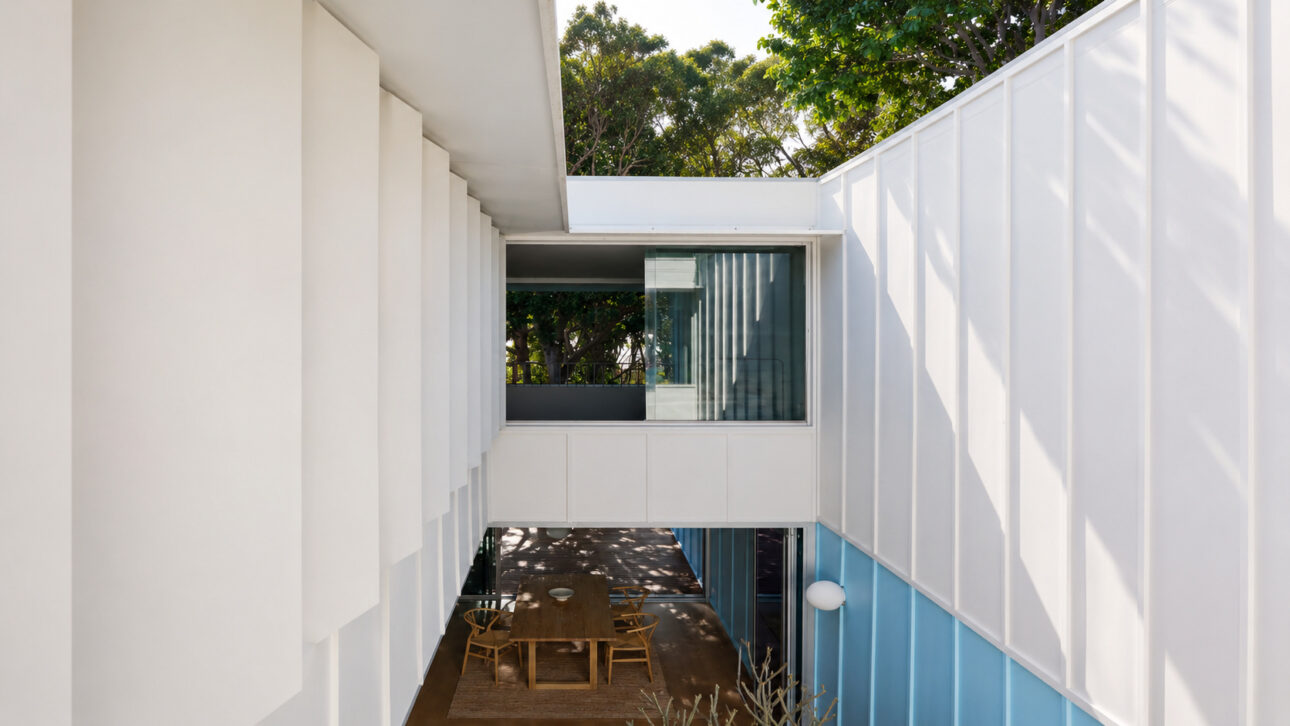
Modular construction is when the house is created in large parts, made in a factory, and then taken to the final location. For the lay reader, it’s like assembling a house with ready-made blocks, but with the finish of a permanent residence.
This model helped because the construction was on an island. Bringing ready-made parts reduces the amount of heavy work on the site and decreases the need to keep teams on-site for a long time.
The modules arrived by land transport and were assembled on the property. Then, local teams made important connections, such as plumbing and electrical, to connect the houses to the necessary services.
What was already ready from the factory before the final assembly
The houses arrived on the island at an advanced stage of construction. They weren’t just empty walls waiting for all the finishing on-site.
The Guardian, British news outlet, detailed that windows, doors, tiles, carpentry, faucets, and floors were already finished in the factory. This made the on-site assembly faster and more organized.
In practice, many things that usually cause delays in construction were already resolved before the modules arrived. The site received almost ready houses, with only final adjustments and technical connections needed.
This choice also gave more control over the finish. Inside the factory, machines, cranes, and teams work in a more predictable environment than an open site near the beach.
Why making the three houses identical helped avoid family conflict
Equality among the units was a central decision. The sisters analyzed the project choices together, as if forming a small family committee.
The result was a set of three identical houses by design. This prevented one unit from seeming more important, more beautiful, or more privileged than the others.
The choice of who would get each house also followed a simple logic. The sisters held a draw during a dinner, without turning the decision into a dispute.
This point makes the story even more curious. Instead of negotiating every corner of the land, they created equal rules and let the project solve the hardest part.
Why modular construction reduced the construction time on the island
Factory construction helped ensure the deadline. The houses were completed in less than a year, an important fact for a project with three units on an island.
Off-site production also reduced interference on Stradbroke Island. Fewer on-site stages mean less movement, less improvisation, and less construction time near the natural area.
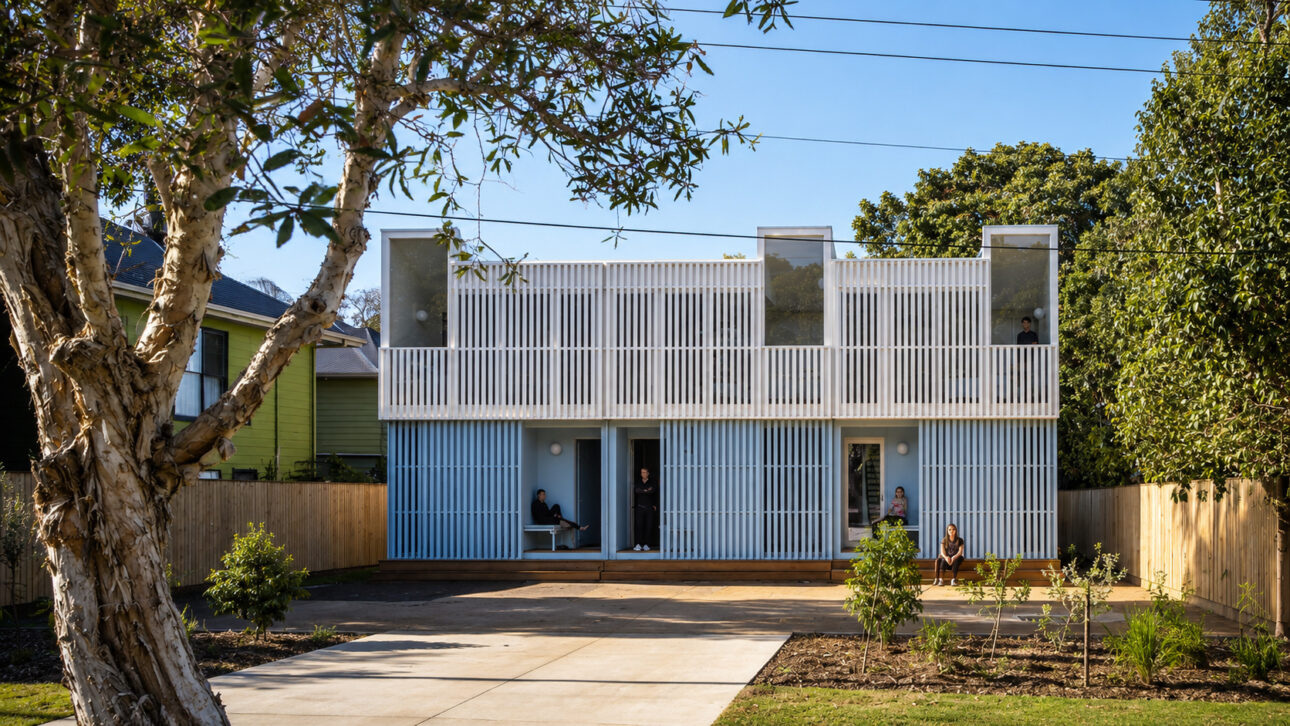
Architect Daniel Burnett, from Blok Modular, participated in the project along with architect Stuart Vokes, from Vokes and Peters, and Pagewood Projects. The union of these teams allowed for the creation of modules ready for delivery and assembly.
The project showed that modular houses do not need to look too simple. The Blok Three Sisters gained recognition precisely for combining speed, good finish, and an intelligent solution to a family problem.
What this project teaches about beach houses on inherited land
The case of the three sisters shows that a family plot does not need to be divided only by sale or unequal separation. With planning, it is possible to create independent dwellings and maintain the connection with the place.
The solution also shows how narrow houses can work well when land is limited. Instead of a single large house, three smaller beach houses, identical and facing the same landscape emerged.
For families who own property near the beach, the example draws attention for a simple reason: the view, access, and memory of the place often weigh as much as the value of the land.
In the end, the project combined inheritance, modular construction, and beach architecture without turning the division into a conflict. The three houses kept the family in the same emotional address, but with separate spaces for each unit.
The Blok Three Sisters became a curious case because it solved a common problem with a not-so-obvious answer. Three sisters, a beach plot, and three identical houses showed that building differently can be a way to preserve the family.
Do you think this model of identical houses on the same plot could avoid conflicts in beach inheritances in Brazil, or would family division still be the most difficult part?