






 Portuguese
  Spanish


The 41-minute video shows the complete transformation of the reservoir, from hull cutting to premium finish, in a project credited to builder Mustaqim Muhammad Hatta
On the outside, it looked just like a common water tank, the kind that rests atop millions of rooftops worldwide. According to the World Tech channel, in a 41-minute video published on February 9, 2026, the reservoir turned into a luxury boat valued at $20,000, about R$ 110,000, in a transformation recorded from start to finish that has already surpassed 571,000 views.
The promise of the video lies in the contrast. A simple material gains a premium appearance through proper planning and precise execution at each stage, as World Tech describes in the presentation of the project, credited to builder Mustaqim Muhammad Hatta. In the end, the boat completely hides the original form: no one looks at the deck and sees the water tank it once was.
From reservoir to yacht: what the video shows
The project follows the classic order of an artisanal shipyard. According to World Tech, the transformation involves cutting, shaping, structural reinforcement, interior installation, surface finishing, detailed carpentry work, and final adjustments, until the boat becomes elegant, eye-catching, and fully functional.
-
Inventor Builds Amphibious Vehicle with Kayak and Electric Motors, Gains 223,000 Views on Quiet Nerd Channel

-
Former Yale Hospital Cleaner Returns as Resident Doctor After a Decade; Shay Taylor-Allen Transitions from Janitorial Duties to Medical Practice

-
Microsoft Submerges 855 Computers in Nitrogen-Filled Capsule 35 Meters Under the Scottish Sea, Records Eight Times Fewer Failures Than on Land After Two Years

-
Animal Once Thought Extinct in the 2000s Reborn in Lab, Survives Minutes, Becomes Rare Biological Case




Each phase has its role in the visual trick. The hull shape emerges from the cut, connection points are reinforced, the internal space is worked to be comfortable, and the final touches deliver the feeling of true luxury, as the World Tech channel on YouTube details in the project description. It’s the recipe for extreme transformations that dominate the genre: showing the impossible becoming obvious, step by step.
The cut and the new hull shape
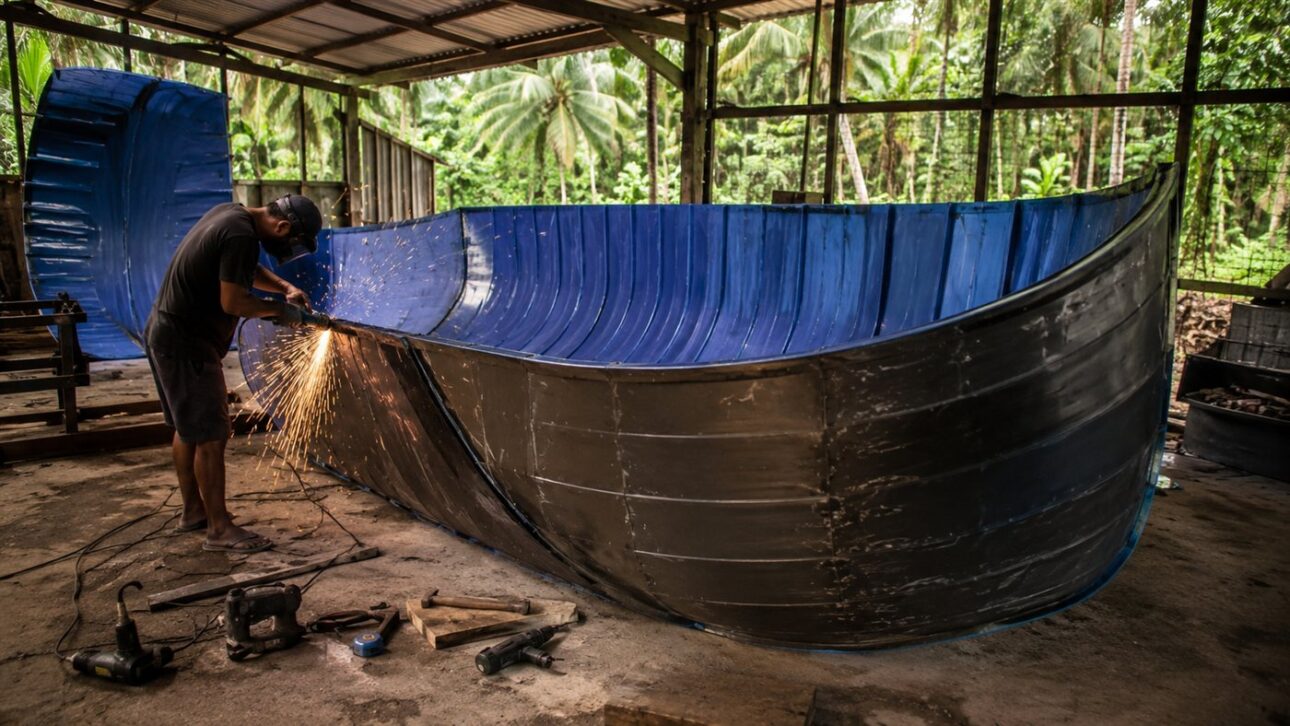
The first challenge of any such project is geometric. A water tank is originally rounded and symmetrical to withstand water pressure equally, and a boat hull needs a tapered bow, a firm stern, and a bottom designed to glide, which forces the builder to cut, rearrange, and splice the material until the nautical silhouette appears.
There is a hidden advantage in this raw material. Generally, domestic reservoirs are made of polyethylene or fiber, lightweight materials, waterproof by nature, and easy to cut and weld with the right tools. The same plastic that holds thousands of liters still on the roof is, technically, a hull waiting to be sculpted, and it is this logic that builders of the genre explore.
Structural reinforcement: the secret to not becoming a shipwreck
The least glamorous step is the most important. According to World Tech, the process includes structural reinforcement and strengthening of connection points before any finishing, exactly the order that separates a real boat from a floating trap.
The reason is physical, not aesthetic. A reservoir is designed for uniform internal pressure, and a boat takes a beating from the water from outside to inside, with waves, twists, and the weight of the occupants concentrated at specific points, which requires stringers, frames, and reinforcements at the joints. That’s why the video description highlights the strengthening of connections as a central step of the work, according to World Tech: at sea, a pretty weld is worth less than a strong weld.
The interior that no one expects to find
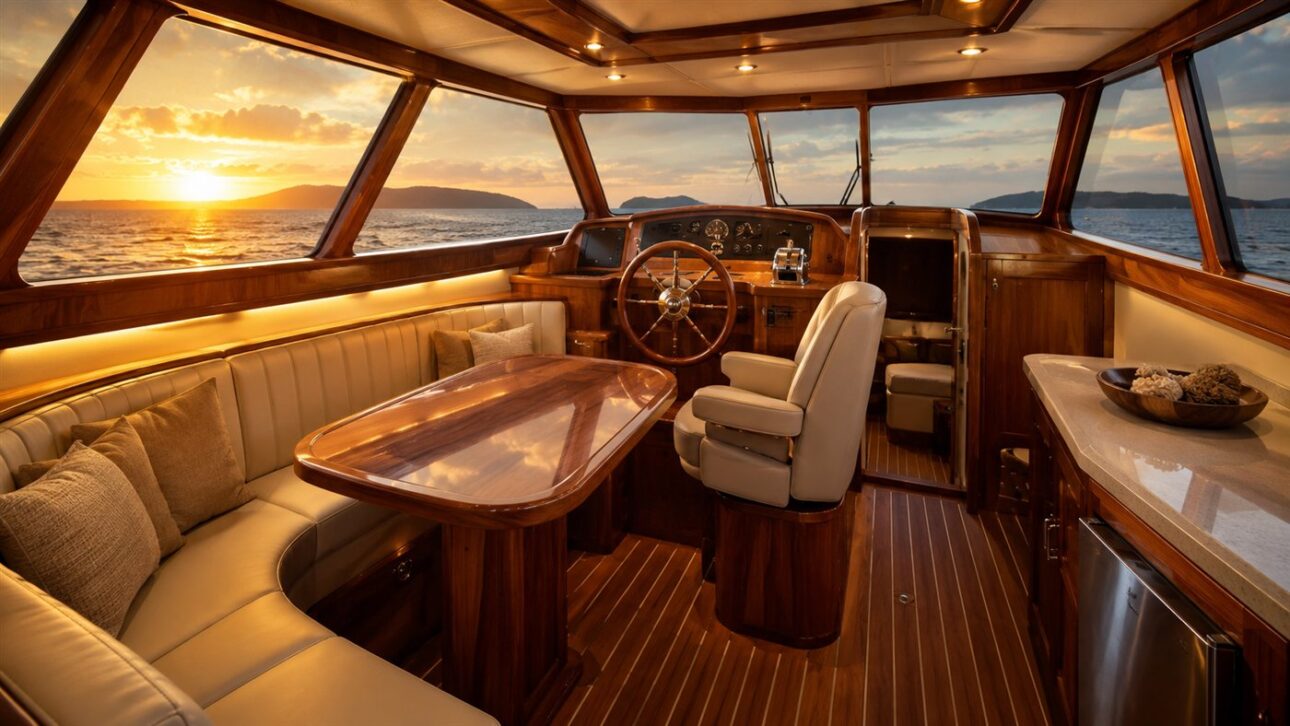
The shock of the video is in the aesthetic turnaround. According to World Tech, after the structure comes the installation of the interior and surface finishing, with detailed craftsmanship that gives the set the clean and organized look of the final result.
The surprise element is the standard of the result. The transformation ends in a boat described as incredibly luxurious, elegant, and looking far above what anyone would imagine for the raw material, as the World Tech channel on YouTube presents. The genre of extreme makeovers thrives on this question, “how did this become that?”, and the water tank boat is one of the most literal examples: the most mundane object on the Brazilian roof transformed into the most desired item at the marina.
US$ 20,000: how much is a boat that started as a water tank worth
The number in the video title positions the project in the market. The US$ 20,000 mentioned by World Tech, about R$ 110,000 at the current exchange rate, places the result in the range of small entry-level boats, an unthinkable value for those who saw the raw material in the first scene.
The calculation that the viewer does alone is the engine of the 571 thousand views. Between a used reservoir and a boat valued at tens of thousands of dollars, there is only work, technique, and time, and it is this margin, real or symbolic, that transforms the video into a weekend fantasy for half a million people. The channel, which has 195 thousand subscribers, specializes exactly in this type of creative engineering, according to World Tech.
The comparison with the formal market is valid. A new entry-level boat, in the range of 5 to 6 meters, rarely leaves the shipyard for less than that value, and the video sells precisely the idea of reaching the same level starting from an object that costs a fraction of that. The viewer knows that specialized labor and the hours invested have a price, but the emotional arithmetic of the genre ignores the spreadsheet: what remains is the image of the impossible floating.
Why so many people build boats with water tanks
The boat in the video is not an isolated case; it is the most luxurious example of an informal tradition. In countries full of rivers and reservoirs, home builders discovered long ago that plastic reservoirs are cheap, abundant, and float from the factory, becoming the base for fishing rafts, platforms, and small handmade boats.
The leap in the video is of category, not concept. The difference between the improvised raft and the luxury boat of the channel lies in the stages that improvisation skips: calculated reinforcement, finishing, and final checking, the same path that separates any makeshift solution from a product. The lesson serves the garage builder in any country: the material dictates the starting point, but it is the process that defines where the project reaches.
The detail that the Brazilian reader knows by heart
If there is a country where this idea sounds familiar, it is Brazil, where the water tank is an obligatory presence on practically every roof and popular nautical creativity is a heritage of riverbanks. From drum rafts in the North to fishing floats in the reservoirs of the Southeast, the principle of the video has been navigating here for decades.
Just a reminder of responsibility. Handmade boats also adhere to the rules of the Brazilian Navy, with registration, safety items, and usage limits that vary by type and size, so those inspired by the video should include paperwork in the dream’s budget. Floating is physics; legal navigation is bureaucracy, and both need to be on board.
Watch the complete transformation
The video shows the entire process, from the intact reservoir to the finished boat, in the assembly line rhythm that made the genre famous.


In the end, the $20,000 boat that started as a water tank delivers the moral of all great transformations: the value was not in the plastic, it was in the hands that knew what to do with it. Tell us in the comments: what ordinary object have you seen turn into something no one believed in?


