






 Portuguese
  Spanish


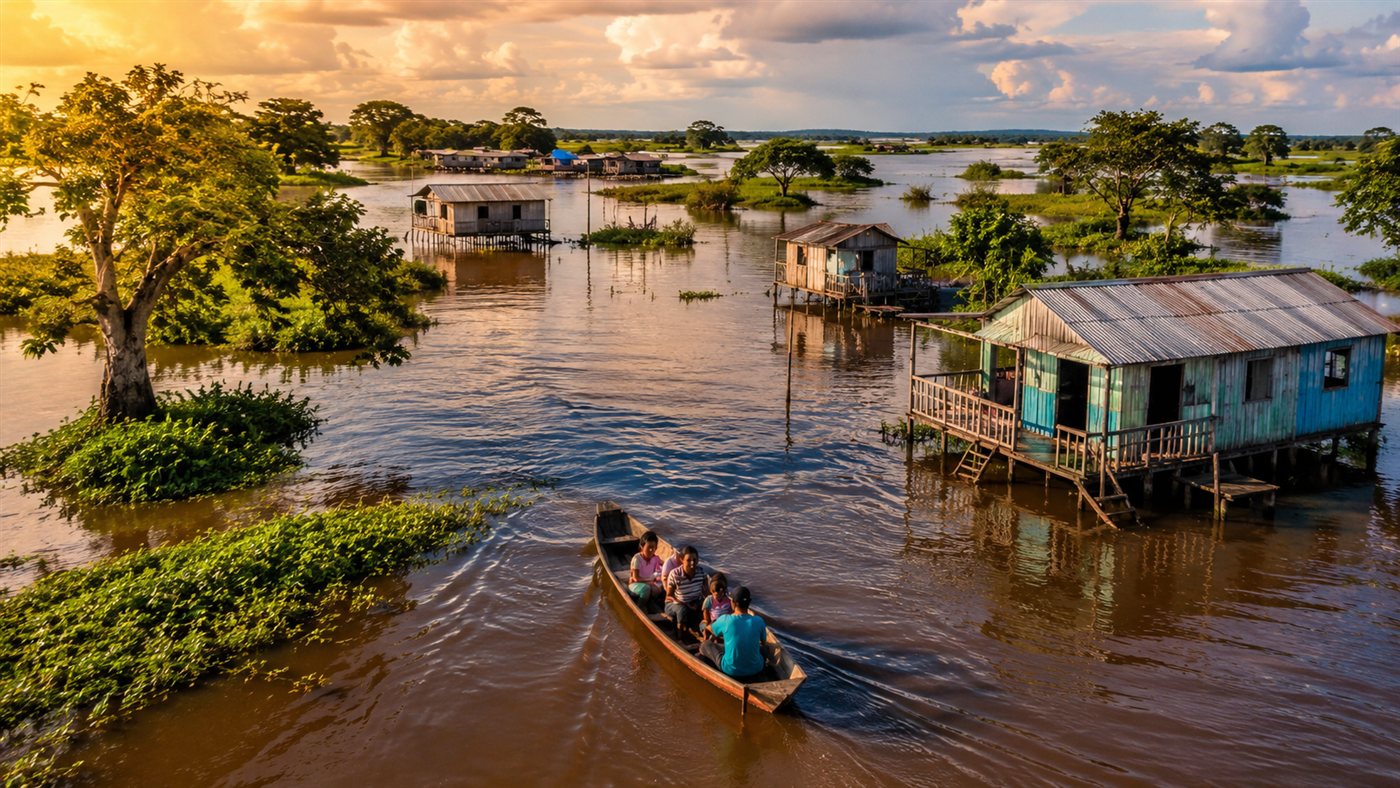

The Raízes do Sapucaia channel recorded the return to the community with the river at its highest level in about 15 years, and the 38-minute video of family fishing already has 96,000 views
When the river rises in the Amazon, the land simply disappears from the map, and the entire life reorganizes itself over the water. According to the Raízes do Sapucaia channel, in a 38-minute video published on June 22, 2026, the family returned to the Sapucaia community, in the Parintins region, in Amazonas, during the flood, with the corral flooded, the animals gathered on solid ground, and the backyard turned into a river, and the record already exceeds 96,000 views.
The size of the flood impressed even those who grew up there. The creator says it had been about 15 years since he saw the water take over everything like that near the house, since the time he still lived in the community, as reported by Raízes do Sapucaia. Next to the house, zero land in sight; the nearest patch of ground was on the other side of the river.
Zero land in sight: the backyard that turned into a river
The arrival landscape sums up the season. According to Raízes do Sapucaia, the corral was completely flooded at dawn, the neighborhood ducks took over the new water, and stingrays became a constant presence: just between arrival and the first morning, the creator counted more than 10 of them, of all sizes, swimming where it used to be a walking path.
-
Man Converts Water Tank into $20,000 Luxury Boat, DIY Video Reaches 571,000 Views on World Tech Channel

-
Inventor Builds Amphibious Vehicle with Kayak and Electric Motors, Gains 223,000 Views on Quiet Nerd Channel
-
Former Yale Hospital Cleaner Returns as Resident Doctor After a Decade; Shay Taylor-Allen Transitions from Janitorial Duties to Medical Practice

-
Microsoft Submerges 855 Computers in Nitrogen-Filled Capsule 35 Meters Under the Scottish Sea, Records Eight Times Fewer Failures Than on Land After Two Years




The abundance has a good side and a dangerous side. Small fish appeared in quantity on the first day, a sign of guaranteed fishing, but walking became a certain risk of stepping on a stingray, as shown by the Raízes do Sapucaia channel on YouTube. It’s the rule of the flooded floodplain: the same water that brings food to the door demands respect with every step.
The fishing net, the alligator, and daily maintenance
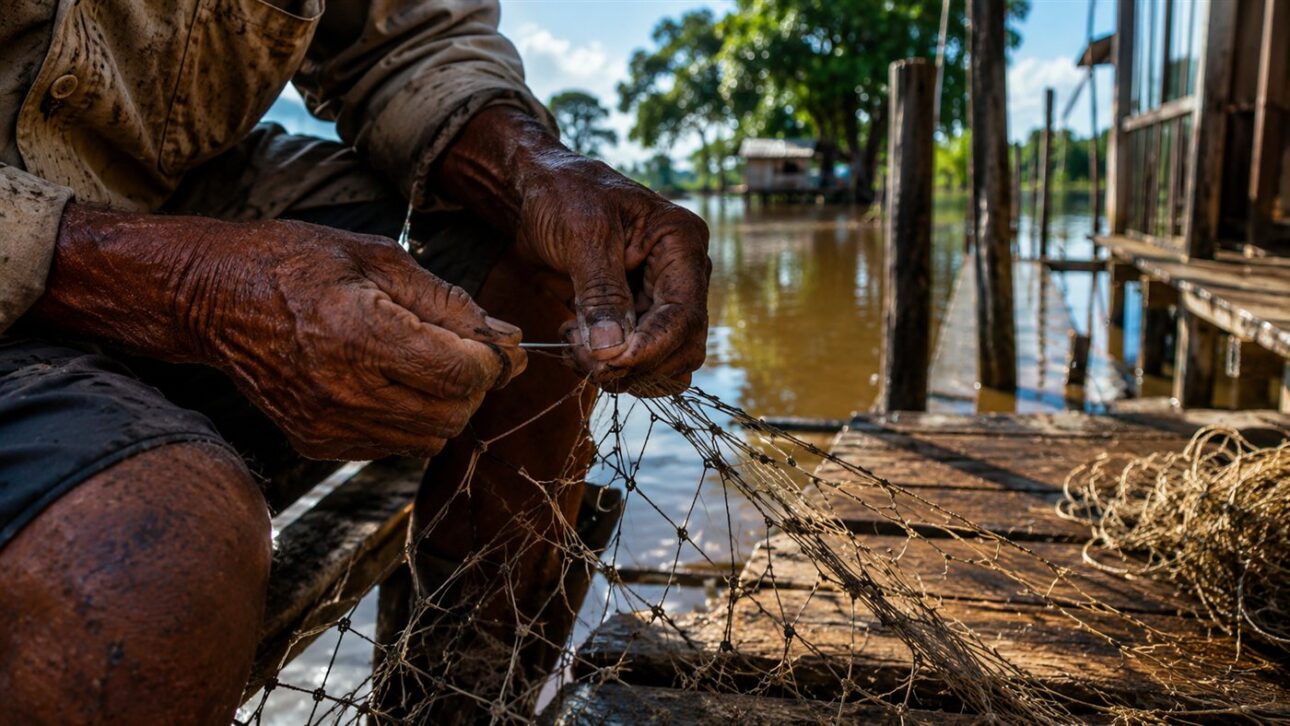
Before fishing, it’s necessary to sew. According to Raízes do Sapucaia, the family’s father opens the video repairing the fishing net, the waiting net that is the main fishing tool of the house, and the culprit of the holes has a name: the alligator, which forcefully pulls the trapped fish and tears the net without ceremony.
Maintenance is part of the craft. If you don’t mend, the net ends, so every fishing trip begins with needle, thread, and patience by the water’s edge, as recorded by Raízes do Sapucaia. In the family’s arsenal is also the mesh 9, the thicker thread net reserved for the big ones, like the tambaqui, the giant that fattens on seasonal fruits.
Caratinga, pacu, and piranha: the pantry that swims
The result came quickly. According to Raízes do Sapucaia, barely had the first net entered the water when the family pulled out four caratingas at once, in the first fishing trip filmed by sister-in-law Luana, a newcomer behind the camera and dubbed in the video as the woman of luck.
The day’s list looks like a market menu. Caratinga, pacu, piranha, cará, aracu, sardine, and jaraqui came out of the water on the same day, between the net and the rod, as shown by the Raízes do Sapucaia channel on YouTube, with fish left over from the previous day. Lunch went from river to table in a matter of hours, in the shortest cycle that exists between pantry and plate.
Gaponga and rod: the fishing arts of the floodplain
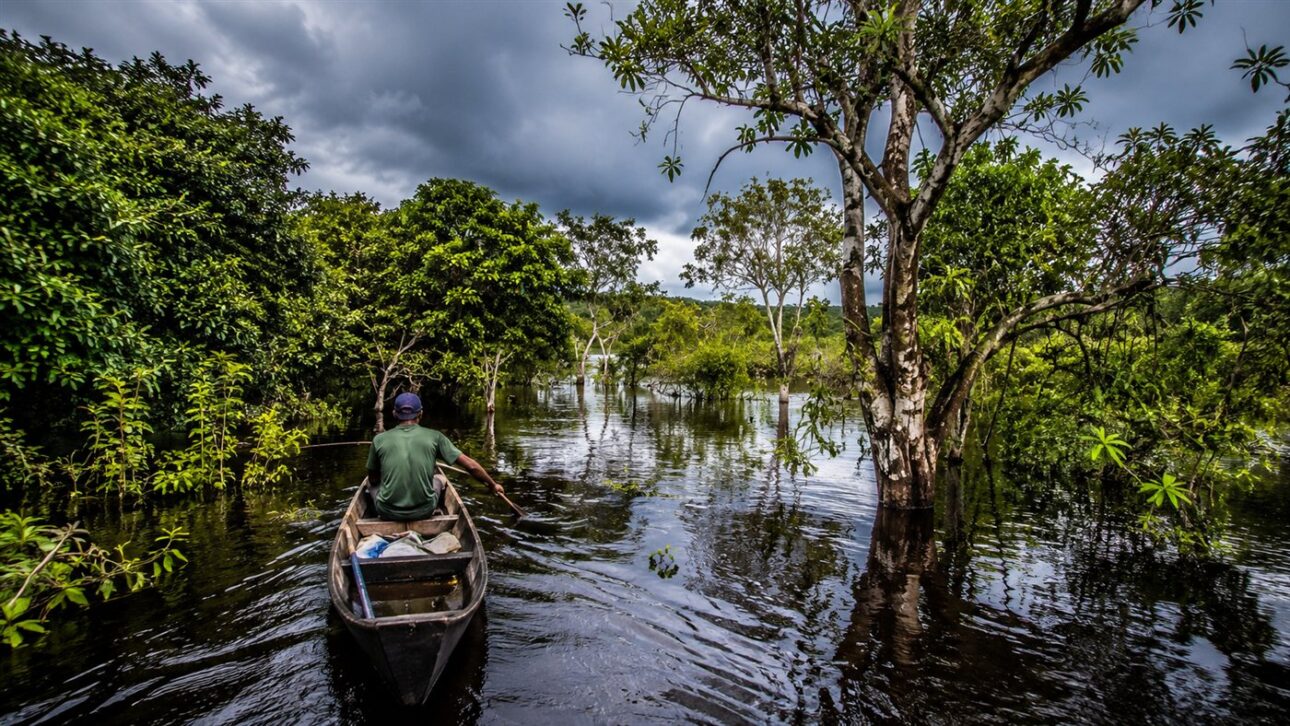
The flood even changes the technique. According to Raízes do Sapucaia, the catauari trees have their canopy in the water at this time, and the fruit-eating fish, like pacu and tambaqui, circle the branches to eat what falls, turning each flooded tree into a fishing spot.
This is where the sound trick inherited from the ancients comes in. On one side the gaponga, the rhythmic beat on the water that mimics falling fruit and lures the pacu to the bait; on the other, the rod waiting, as explained by Raízes do Sapucaia. The pair of techniques sums up the intelligence of floodplain fishing: instead of searching for the fish, the fisherman reproduces the sound of the banquet and lets the fish search for him.
From canoe to neighbor’s house: the logistics of the Amazon flood
In the Amazon flood, the canoe becomes a leg. According to Raízes do Sapucaia, any visit to relatives’ houses, any net check, and any outing happens by water, with canoes and boats tied at the door as if parking a car in the garage.
Public transport also stops at the door. A line boat crosses the river towards Parintins, connecting the floodplain communities to the city, as recorded by the Raízes do Sapucaia channel on YouTube. It is the invisible infrastructure of the water-filled Amazon: without asphalt and without bridges, the full river is at once street, road, and bus station.
Who stays when the river rises
Not everyone moves when the water arrives. According to Raízes do Sapucaia, several relatives and neighbors endure the flood in their own homes, including cousins and uncles mentioned by name in the video, while others spend the season in the city and return when the waters recede.
There is a practical explanation for staying. The floodplain houses are built with the annual rise of the river in mind, and those who stay take care of the nets, the animals, and the territory, in a family rotation captured in the video during the arrival conversation: the aunt who was in Manaus returning these days, the cousin from the house next door, the cousin who holds the fort in both drought and flood. The community does not abandon the river; it rises and falls with it.
It’s worth remembering the scale of the phenomenon: the Amazon flood is not an accident; it’s an entire season of the calendar. The basin’s rivers rise several meters every year between the end of the rainy winter and mid-year, flooding the floodplains and renewing the soil’s fertility and the abundance of fish. That’s why the architecture, fishing, and even the humor of the riverside families are designed for two worlds: land and water, each with its half of the year.
The kitchen of the flood: wood stove and 80-year-old itaúba table


The counterpoint to all the wet logistics is the dry and warm kitchen. According to Raízes do Sapucaia, the family mother commands the wood stove that bakes cake in 15 minutes, prepares the porridge for snacks, and turns the day’s catch into lunch, served on the table that is the house’s heritage.
The furniture has a biography. The table is made of black itaúba, a noble Amazonian wood, has been in the family for about 80 years, and has accompanied the creator’s mother for 40, as Raízes do Sapucaia recounts, an inheritance from a deceased aunt. Between the stingray in the backyard and the cake coming out of the stove, the octogenarian table sums up what the flood does not change: the riverside house remains the center of the world, with water at the door or not.
Watch life in the Sapucaia flood
The video follows the family’s arrival, the repair of the nets, fishing in pairs with the father, and the routine of the house surrounded by water on all sides.
The Amazon flood that the channel records is the portrait of a Brazil that lives on its own calendar, dictated by the river: half a year of land, half a year of water, and an engineering of life adjusted to every centimeter of the level. Tell us in the comments: would you face a flood season living with the river at your doorstep?


