






 5 min of reading
  0 comments


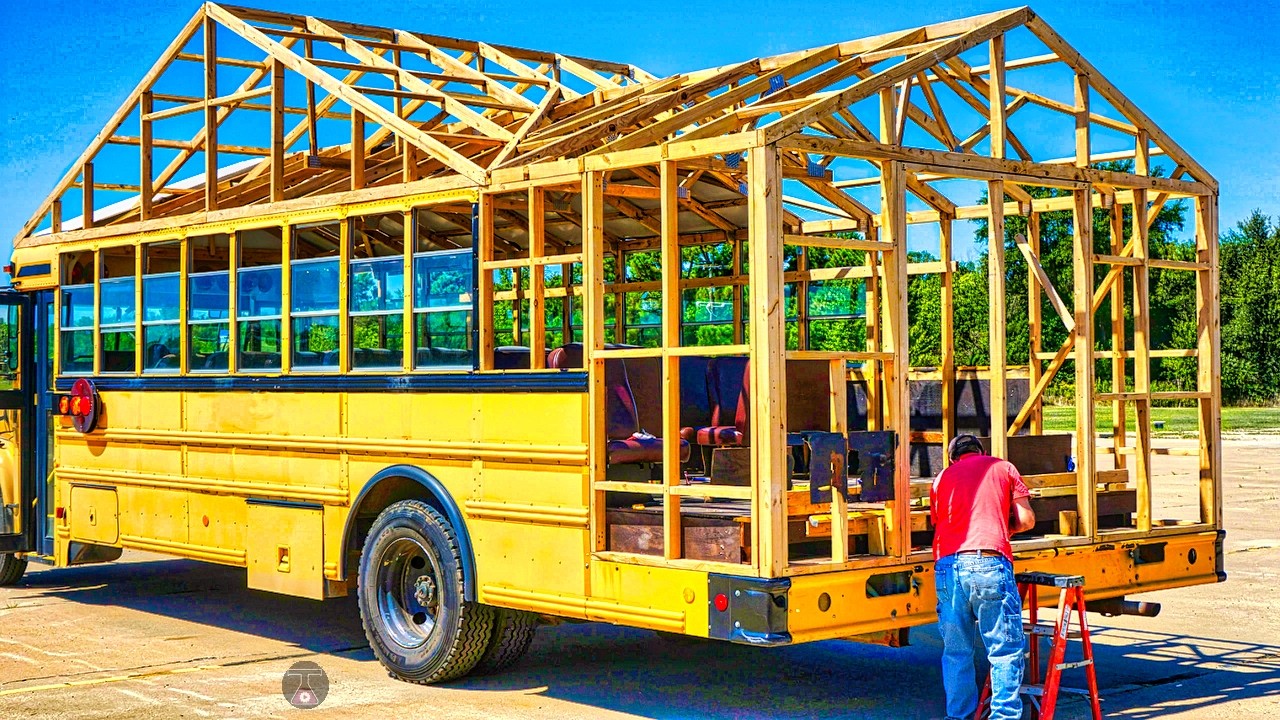
Couple transformed a $7.2k school bus into a mobile home with bedroom, bathroom, and kitchen after 7 months and a total cost of $40k.
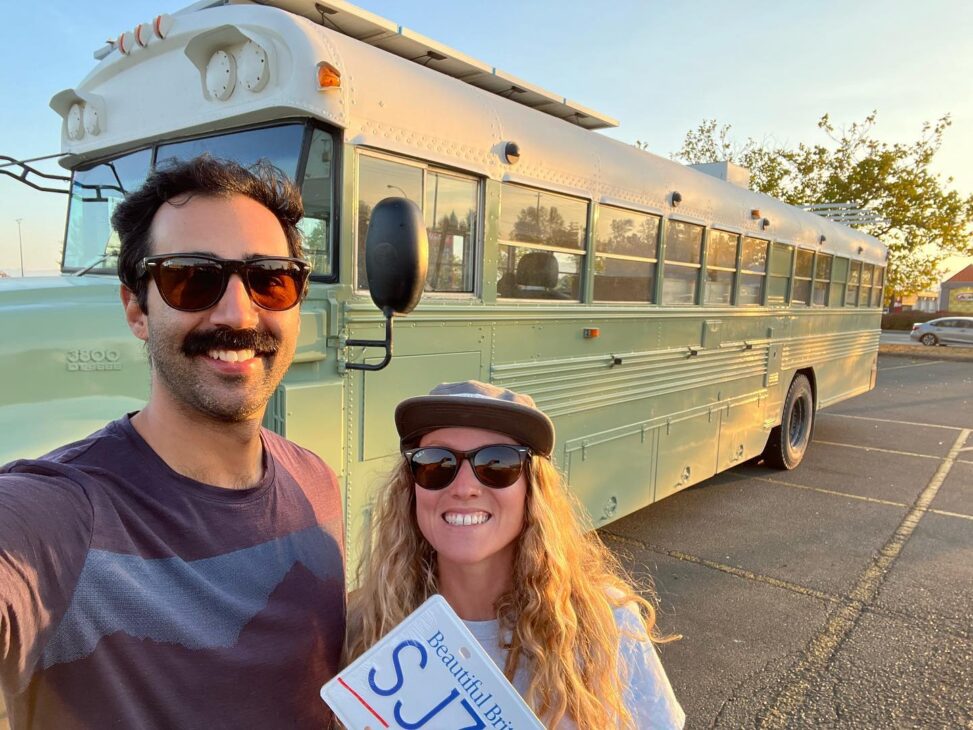
Tanya Nestoruk and Arya Touserkani transformed a retired school bus into a complete mobile home, with a bedroom, bathroom, kitchen, and even a roof deck, after purchasing the vehicle for $7,200 in Vancouver. According to Business Insider, the couple had previous experience living in a van but decided to move to something larger and more functional, opting for a bus retired to make way for a new fleet.
What makes the story even more striking is the final cost of the transformation. Although the vehicle was relatively inexpensive, the renovation raised the total investment to about $40,000, a sum that includes the interior construction, finishes, and adaptation of the bus for residential use. Upon completion, the couple began living in the vehicle while traveling through regions of the United States, Canada, and Mexico.
Cheap school bus became the basis of a much larger project than it seemed
According to Business Insider, the couple found the bus on Facebook Marketplace and decided to buy it when the vehicle was being retired to make room for a newer fleet.
-
Tired of seeing residents sleeping on the streets, a U.S. city approved a village with 55 micro-houses, rent starting at $300, and an 1880 school transformed into a community center to accommodate people without requiring a minimum income.

-
Mato Grosso inaugurates the first 162 km stretch of the largest railway project underway in Brazil, with around R$ 5 billion invested to transport 10 million tons of grains per year to the Port of Santos.

-
Without money to pay rent and without an architect’s degree, a man took a chisel, chainsaw, and hammer, carved a house into the hillside, and built a fairy-tale dwelling that looks like it’s straight out of The Lord of the Rings in just four months for less than R$ 25,000.

-
A 33-year-old from Paraná received a quote of R$ 12,000 just for the structural base of the house, opened tutorials on YouTube, and transformed a family plot into a 200 m² two-story house for about half the price charged by professionals.



The choice was not just financial. In a report reproduced by Newsweek, Tanya and Arya stated that the updated maintenance records, low mileage, and the overall good condition of the bus helped seal the decision.
The purchase of the vehicle was just the beginning of a much more demanding process. According to Business Insider, the two spent seven months converting the empty metal structure into a functional home, while Newsweek reports that the couple immersed themselves in an intense routine of research, videos, and manual work to learn practically everything during the execution of the project.
The result shows how, in this type of compact housing, the value of the vehicle represents only part of the equation. The bus served as a base, but the bulk of the investment ended up concentrated on the internal adaptation, insulation, carpentry, plumbing, finishes, and creating a space capable of sustaining a travel and living routine at the same time.
Renovation cost almost six times the price of the bus and revealed where the money really went
Business Insider reports that the conversion reached a total of US$ 40,000, far above the US$ 7,200 paid for the bus. This difference helps explain why such projects attract attention: the vehicle may seem cheap to buy, but transforming an old school bus into a comfortable home requires heavy investment in structure, materials, and adaptation.
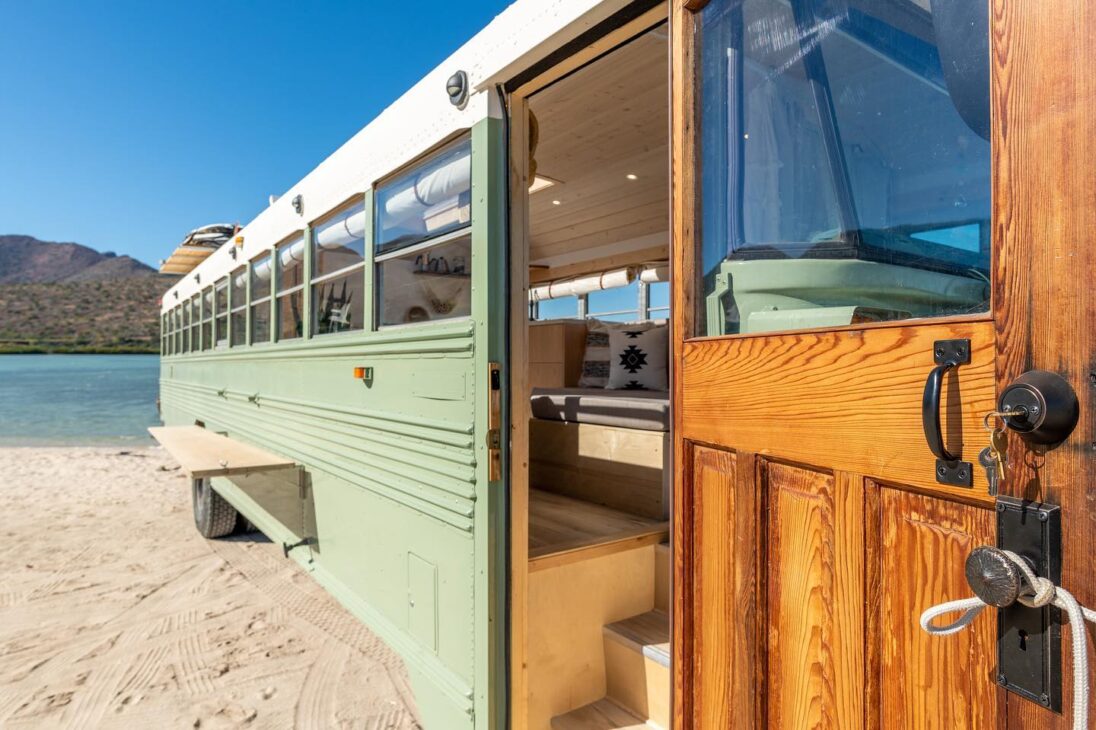
Throughout the work, the couple assembled an interior with a clear and functional look, including a social area, compact kitchen, bathroom, bed at the rear, and storage solutions.
Business Insider also shows that the house on wheels gained a king-size bed, repurposed wooden door, living area, and a top deck, enhancing the sense of space in a vehicle originally designed just for school transport.


This contrast between cheap purchase and expensive renovation is one of the central points of the story. Instead of the bus representing the most costly part of the project, it became almost an initial structure upon which the real investment was built. This logic helps to understand why mobile homes of this type can turn out much more sophisticated than the purchase price of the vehicle suggests at first glance.
Seats, racks, and old parts found a new destination to reduce waste
The environmental concern appeared from the demolition phase. According to Business Insider, Tanya and Arya tried to recycle, donate, or repurpose practically everything they could remove from the bus.
The original seats were donated to a local children’s camp, while the luggage racks were sold to someone intending to use them in a garage.
Newsweek reinforces the same logic by reporting that the couple sold, donated, or reused as much as possible during the emptying of the internal structure.
The process was described as tiring, but also decisive for creating a “blank canvas” inside the vehicle. This stage included the removal of seats, finishes, insulation, and other components that needed to be taken out to make space for the new project.
Custom Skylight and Green Paint Completely Changed the Vehicle’s Identity
Among the technical challenges of the renovation, one of the most complex was the installation of the skylight. According to Business Insider, Arya explained that the curvature of the roof made it difficult to adopt a ready-made piece.
Instead of buying a pre-fabricated structure, the couple created a custom solution, building a box that fit the curved design of the bus.
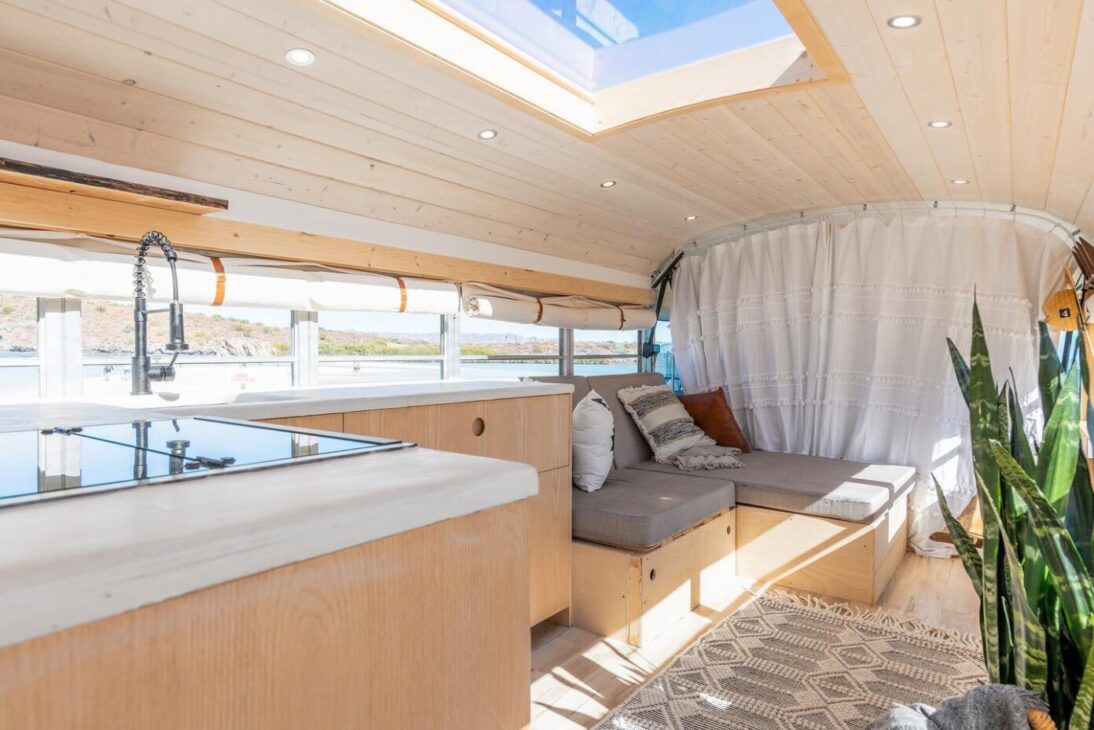
The skylight became one of the most striking elements of the project because it helped increase the entry of natural light and improve the sense of height in strategic points of the interior.
Business Insider shows that they also made space on the roof for other adaptations, while Newsweek highlights that the renovation was strongly guided by self-taught learning, with continuous research in videos and tutorials.
The external finish completed the change in identity. According to Business Insider, the old school bus yellow was replaced with a sea foam green paint, which completely transformed the vehicle’s appearance.
The change helped consolidate the image of a home on wheels with its own personality, far removed from the original appearance of a traditional school bus.
Home on Wheels Gained Solar Power and Became a Base for Travel Across North America
Once completed, the structure began to function as a mobile residence. Business Insider reports that the bus received solar panels on the roof, which helped the couple sustain the home’s energy routine during trips.
The final configuration also included a bathroom, kitchen, living area, bedroom at the rear, and outdoor spaces adapted for leisure and logistical support.
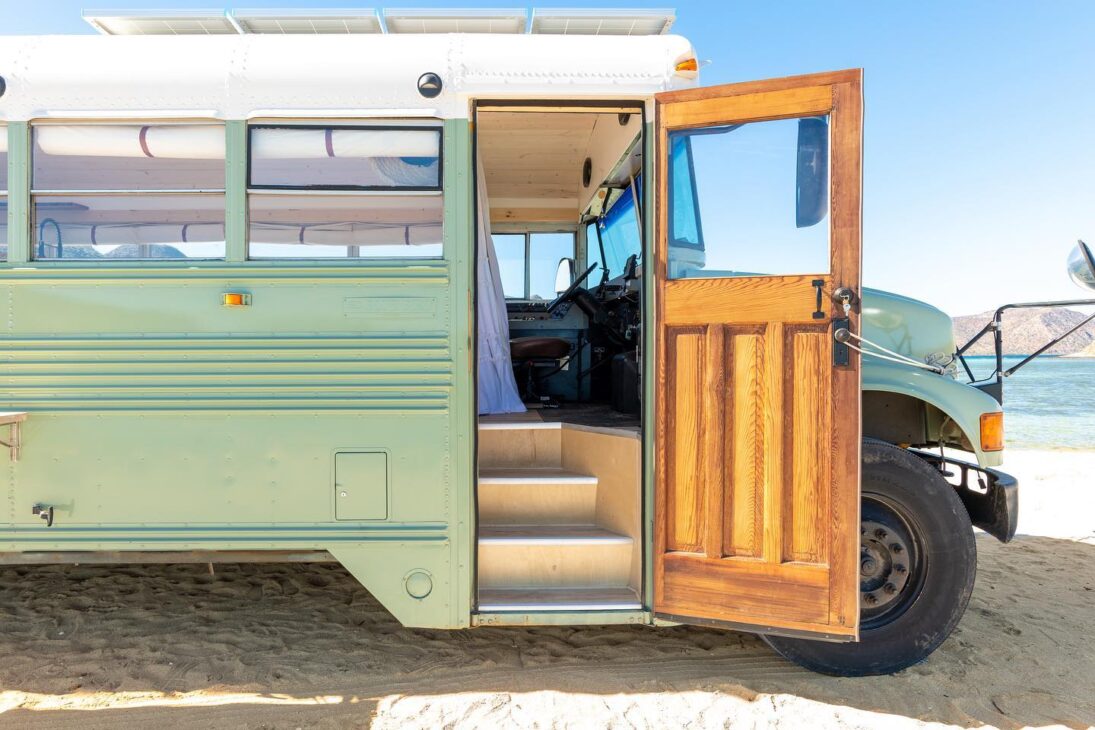
The report shows that after completing the work in November 2022, Tanya and Arya continued their journey along the Pacific coast, passing through Washington, Oregon, California, and then entering Mexico and Arizona.
The bus ceased to be just a conversion project and began to operate as a real home, allowing the couple to combine travel, work, and daily life in the same space.
More than just a simple vehicle renovation, the project became an example of how a retired school bus can be converted into a compact and highly personalized home.
What started with a $7,200 vehicle ended as a home on wheels worth $40,000, created with manual labor, material reuse, and custom solutions to transform an industrial shell into a functional and visually striking home.





Be the first to react!