Portuguese
  Spanish


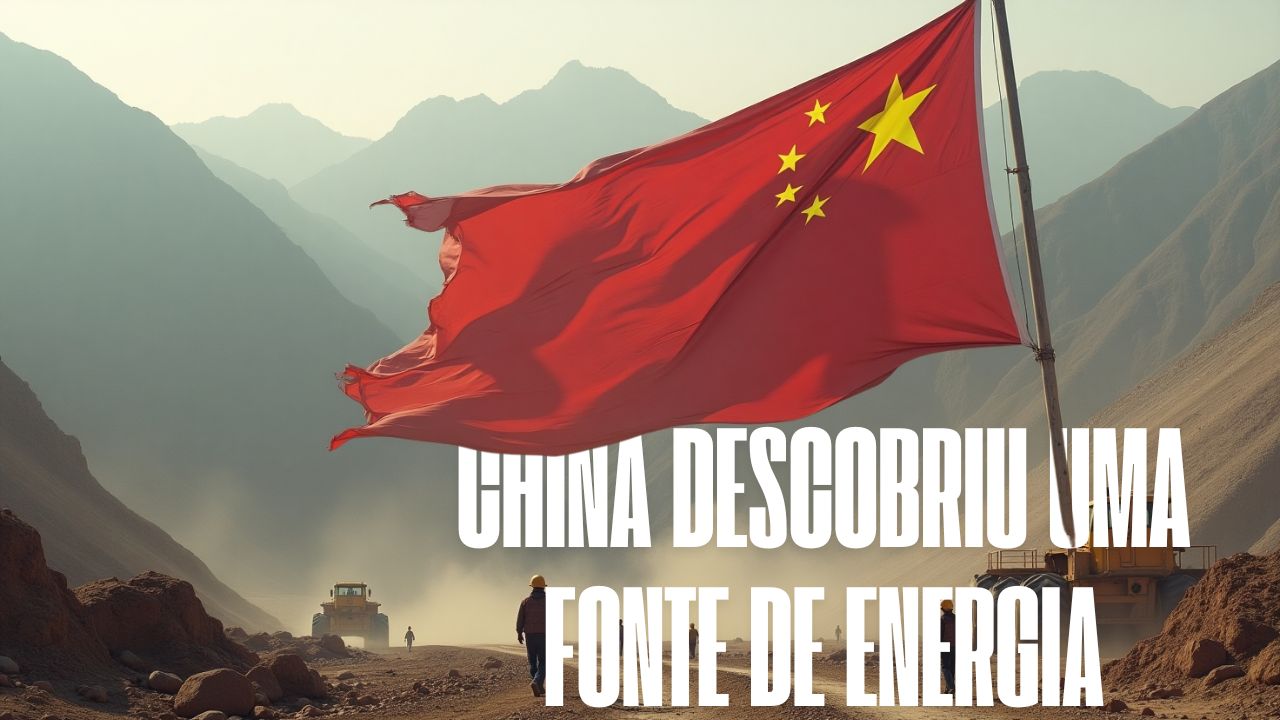


The Search for New Energy Sources Is a Global Priority, and China May Have Made a Discovery That Could Change the Course of Energy Generation. A Study Revealed That the Bayan Obo Mine, Located in Inner Mongolia, Contains a Huge Amount of Thorium – a Radioactive Element That Could Supply the Country for Up to 60,000 Years.
However, despite the revolutionary potential, there is a significant problem: thorium is not an easily exploitable energy source. Its large-scale use still faces technical, environmental, and regulatory challenges that hinder its immediate implementation.
The Bayan Obo Mine and the Potential of 1 Million Tons
China already dominates rare earth production and may now be on the brink of controlling one of the largest thorium reserves on the planet. The Bayan Obo mine, in Inner Mongolia, contains about 1 million tons of this element, representing practically unlimited energy potential.
To put this discovery into perspective, just five years of mining waste from this mine could contain enough thorium to supply all American households for the next thousand years. If fully exploited, the Bayan Obo complex could provide energy for China for the next 60,000 years.
-
In Colombia’s desert, 30 families receive 80 m² homes with solar panels, waterless toilets, and rainwater collection systems amid water and energy shortages.

-
Engie Secures 10-Year Use of 625 MWh in Batteries to Store Excess Solar and Wind Energy in Spain by 2028
-
Giant Batteries Take Center Stage in Chile Auction as Company Offers 960 GWh of Solar Energy for Nighttime Use, Aiming to Stabilize Solar Power Supply
-
After a Year of Success in Switzerland, Solar Railway Attracts Italy’s Interest for Clean Energy Transformation



What Makes Thorium a Potentially Revolutionary Energy Source?

Thorium is a radioactive element found in large abundance in the Earth’s crust – about three to four times more than uranium. Its major advantage is that it can be used in thorium nuclear reactors, which have several advantages over conventional uranium reactors:
- Greater Safety: Thorium reactors operate at lower temperatures and produce less long-lived radioactive waste.
- Lower Risk of Nuclear Proliferation: Thorium cannot be easily converted into weapon-grade material, making its use less concerning from a geopolitical standpoint.
- Higher Energy Efficiency: The utilization can be superior to that of uranium, meaning less fuel would be needed to generate the same amount of energy.
If It Has So Much Potential, Why Is It Not Used Yet?
Despite being an abundant element, thorium is typically extracted as a byproduct of rare earth mining, especially from monazite. The problem is that its handling requires strict control, as its extraction involves aggressive chemical processes that generate toxic and radioactive waste.
In other words, although China already produces large amounts of thorium-containing minerals, its commercialization on a large scale faces difficulties.
In addition to the technical challenges, thorium exploration still lacks a consolidated regulatory framework. Unlike uranium, which already has a well-established production chain, thorium would require massive investments in research and infrastructure to become viable as an energy source.
Currently, renewable sources like solar and wind energy are becoming increasingly cheaper, reducing the incentive to adopt this element.
Can China Lead the Development of Thorium Energy?
Despite the challenges, China has already launched experimental projects to test thorium as an energy source. One of the main examples is the TMSR-LF1 reactor, a small 2 MW reactor that is currently in the testing phase. If the results are positive, the plan is to develop an expanded 10 MW version by 2030.
If this technology proves efficient, China could build the first 100 MW reactors, solidifying its leadership in the exploration of this new energy source.