






 Portuguese
  Spanish


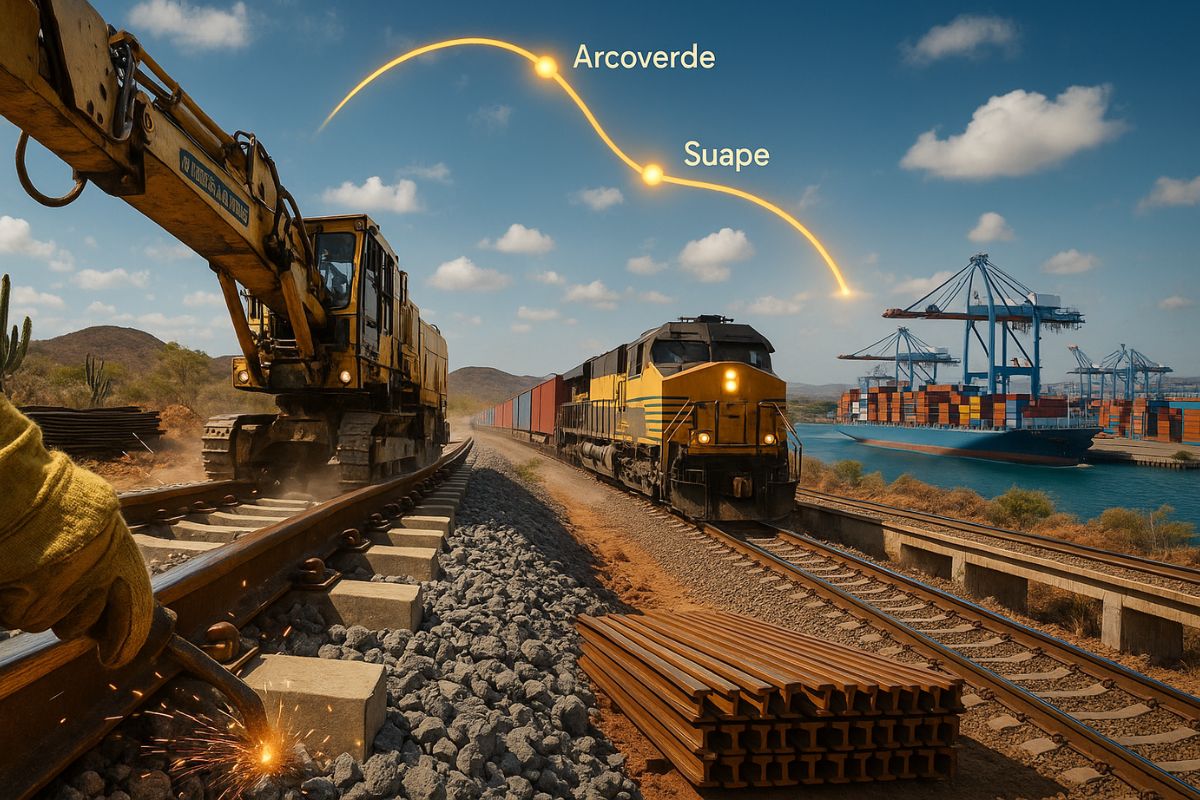


Federal Investment Puts Pernambuco Back on the Transnordestina Map and Promises to Unlock the Flow of Grains, Minerals, and Pulp to the Port of Suape, Creating Jobs and Income in the Sertão.
The federal government announced the release of R$ 415 million to resume construction of the Transnordestina between Custódia and Arcoverde, a strategic 73-kilometer stretch that had been interrupted. The measure, published in the Official Gazette of the Union, marks Pernambuco’s return to the railway axis that will connect the northeastern interior to the Port of Suape, with a direct impact on job creation and regional logistical competitiveness.
The Transnordestina is considered one of the most important infrastructure projects in the country, spanning about 1,750 kilometers, connecting Piauí, Ceará, and Pernambuco. Its role is to transport large volumes of grains, minerals, and industrial products to export ports, reducing costs and expanding the commercial reach of the Northeast in the global market.
Strategic Railway for the Northeast
The resumption of the Transnordestina strengthens the flow of soy, corn, sugar, pulp, and iron ore.
-
Brazil Plans $160 Billion Investment to Revitalize Railways and Reduce Reliance on Long-Distance Trucking

-
Retired Railway Workers in Brazil Preserve Locomotive for 52 Years, Now See It Donated by the Government

-
Railway returns to prominence in Brazil after STF approval: a R$ 25.2 billion project promises to save R$ 9 billion in freight, transport 50 million tons per year, and transform Sinop into a logistics powerhouse for agribusiness.
-
Retired trains leave European tracks and become tons of steel, aluminum, and copper in dismantling yards where recycling exceeds 90%, but batteries, composites, and electronics create a new frontier of railway waste.


The direct connection to the Port of Suape is expected to boost the local industry and attract new investments to the Pernambuco Sertão.
Experts indicate that the railway could reduce logistics costs for agricultural cargo by up to 30%, as well as create a new export route for the northeastern agribusiness.
The Pernambuco stretch had been removed from the original project in previous administrations due to political disputes over the priority of connection with the Port of Pecém in Ceará.
The decision caused uncertainties and delayed investments in Pernambuco, which now returns to the center of the network with support from Sudene and a new execution schedule.
Schedule and Execution of the Works
According to the Ministry of Transport, the bidding process is expected to be completed within three months, with the service order scheduled for early 2026.
The planning aims to complete the Pernambuco stretch by 2030, when the Transnordestina should be integrated into the operations of the ports of Suape and Pecém.
The main milestones defined are:
- End of Bidding: by the first quarter of 2026
- Start of Works: early 2026
- Completion in Pernambuco: by 2030
- Sections in Ceará and Piauí: scheduled for 2027
Economic and Social Impact
With the progress of the works, it is estimated that there will be a creation of thousands of direct and indirect jobs, particularly in Custódia, Arcoverde, and neighboring cities. The Transnordestina represents a regional development vector, integrating agricultural, industrial, and port hubs. In addition to generating income, the railway is expected to reduce heavy traffic on highways, decreasing maintenance costs and carbon emissions.
The expectation is that the Pernambuco stretch will become a high-capacity logistics axis, transporting grains and minerals at an average speed of 60 km/h and a broad gauge of 1.60 meters.
The freight rail modal is consolidating as essential to making the Northeast more competitive, strengthening production chains, and stimulating new businesses.
Challenges and Perspectives
Despite the optimism, challenges remain. The continuity of funding and technical oversight will be crucial to avoid further delays.
The TLSA concessionaire and the federal government are studying control and auditing mechanisms to ensure deadlines and transparency.
Nevertheless, the reactivation of the Transnordestina symbolizes a historic comeback:
Pernambuco is once again part of the corridor that will connect the Sertão to the sea, with economic benefits that are expected to extend for decades.
And you, do you believe that the Transnordestina will really transform the Pernambuco Sertão?





É um dos passos mais relevantes na história comercial brasileira o nordeste é um celeiro do estado brasileiro, só assim caminhamos para um futuro próspero 👏👏👏👍