Portuguese
  Spanish


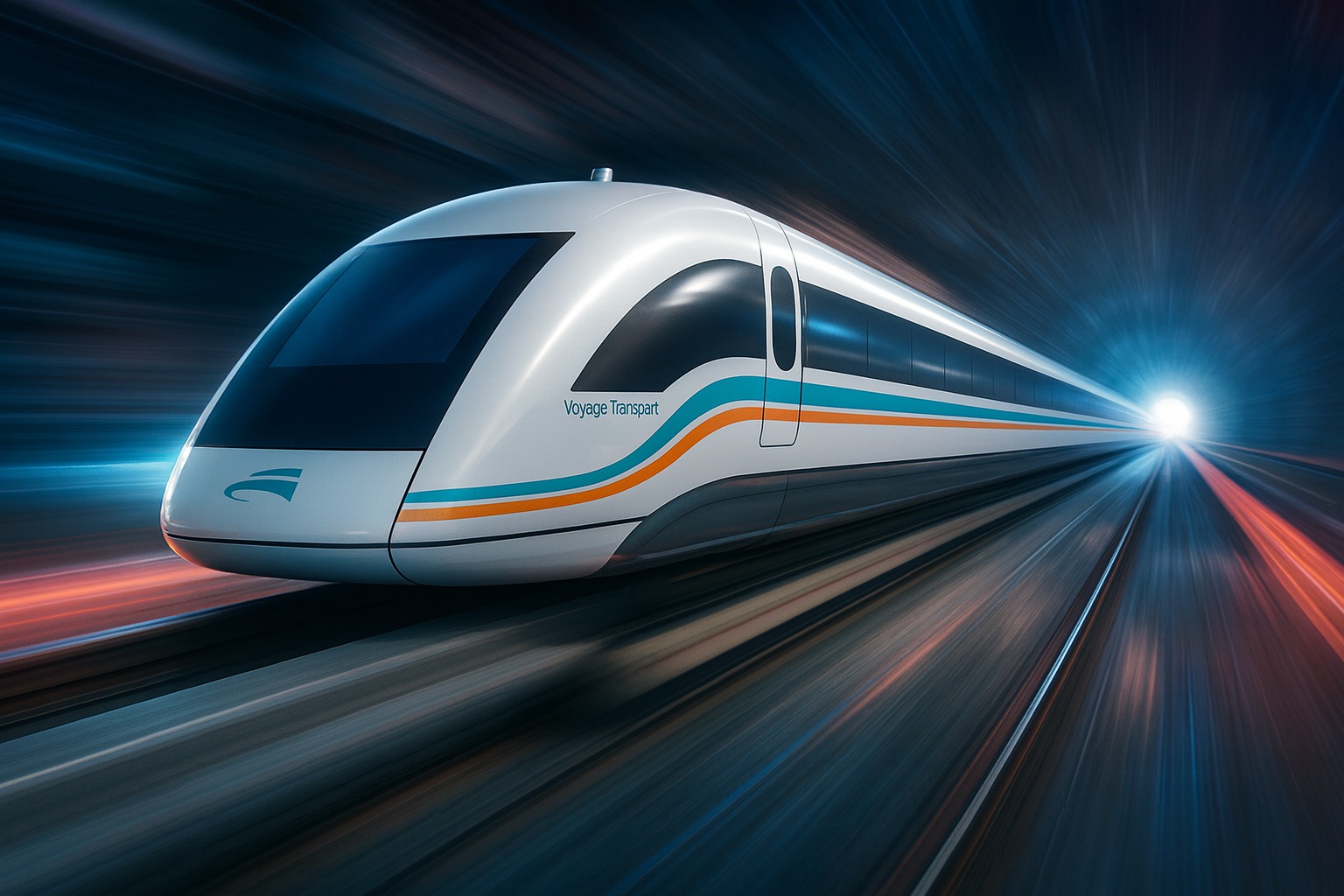


The Chinese T-Flight Uses Magnetic Levitation And Tests In Shanxi Confirm Stability, Efficiency And Potential To Shorten Routes Like Beijing-Shanghai To 1.5 Hours
The advancement of the maglev train has been changing the logic of transportation because it combines magnetic levitation with operation in a low-vacuum environment. The T-Flight, designed in China, already shows potential to reach speeds similar to those of commercial aircraft, even reducing international trips to something close to 60 minutes.
Recent tests in the province of Shanxi showed that the system operates with stability. This demonstration reinforces expectations for the next step of the project, thus keeping global focus on Chinese development.
The absence of contact with tracks also reduces wear and ensures smooth operation.
-
China Develops Custom 140-Ton Electric Mining Truck with 770 kWh Swappable Battery, Deploys 290 Units in Xinjiang’s Largest Zinc Mine

-
Meta to Launch Arena, a New Prediction App Targeting 3.56 Billion Users, Competing with Polymarket and Kalshi

-
Scientist Challenges Famous Human Evolution Theory, Argues Homo Sapiens Evolved Gradually Over Thousands of Years
-
15-Year-Old American Builds Ocean Generator with PVC Pipe and 3D-Printed Propeller for $12, Wins National Prize, Presents at White House, and Makes Forbes 30 Under 30 List




The central question now is how this technology can transform transportation between major centers. The possibilities are vast.
Operation In Low Vacuum And Extreme Performance
The T-Flight is being developed by the Chinese aerospace industry and symbolizes what several experts classify as a turning point in ground transportation.
It operates in low vacuum tunnels and reaches speeds of up to 1000 km/h, which significantly surpasses the high-speed trains currently in circulation.
The test confirmed safety and efficiency. In addition, internal projections indicate that national routes will have travel times equivalent to those of domestic flights, something previously considered unfeasible for a train.
This point draws attention because it alters the balance between modes over long distances.
Immediate Benefits And Impact On Intense Routines
Among the cited advantages, travel time stands out as the most striking element. The forecast is that the journey between Beijing and Shanghai will drop to around 1.5 hours.
Today, variations between 4.5 and 6.5 hours are common on high-speed trains. A reduction of this magnitude improves tight schedules and frequent commuting routines.
Another highlight is the low mechanical wear. With no friction, there is almost no physical contact, so maintenance costs decrease over the years.
The system’s lifespan tends to increase, which eases some of the pressure on operational investments.
International studies also point to energy advantages. The consumption per kilometer is lower, which helps in the pursuit of efficiency.
There is also a reduction in noise and vibrations, which enhances the overall comfort of transportation and decreases the need for structural repairs.
The Technology That Allows Levitation
Maglev operates through electromagnetic fields. Electromagnets installed on the train interact with coils distributed along the tracks. This arrangement creates forces that lift the vehicle and eliminate friction.
The process intensifies when the train reaches approximately 150 km/h. The magnetic force increases, and the vehicle lifts.
This condition frees it to accelerate almost without air resistance within the controlled environment, ensuring high performance.
It is a mechanism that once seemed somewhat futuristic but now proves to be concrete.
International Expansion And Current Limits
Global adoption faces high barriers. The implementation of maglev requires specific infrastructure and robust investments, therefore countries with established railway networks tend to proceed with caution.
Even so, regions with extensive internal distances, such as parts of Latin America and the Middle East, may consider this solution in the future.
The expectation is that costs will decrease as the technology matures and new suppliers enter the market.
Needs involve integration with existing systems and studies on the potential for emissions reduction on long routes, factors that weigh in government planning.
A Possible New Chapter In Transportation
The evolution of maglev indicates that long trips may become faster, quieter, and more sustainable. The outlook points to agile connections between megacities and a significant impact on regional economies.
Experts highlight that this change could mark one of the most significant transformations in the sector this century.
However, it all depends on the ability to expand infrastructure and overcome initial costs, elements that remain at the center of discussions.
With information from O Antagonista.