






 Portuguese
  Spanish


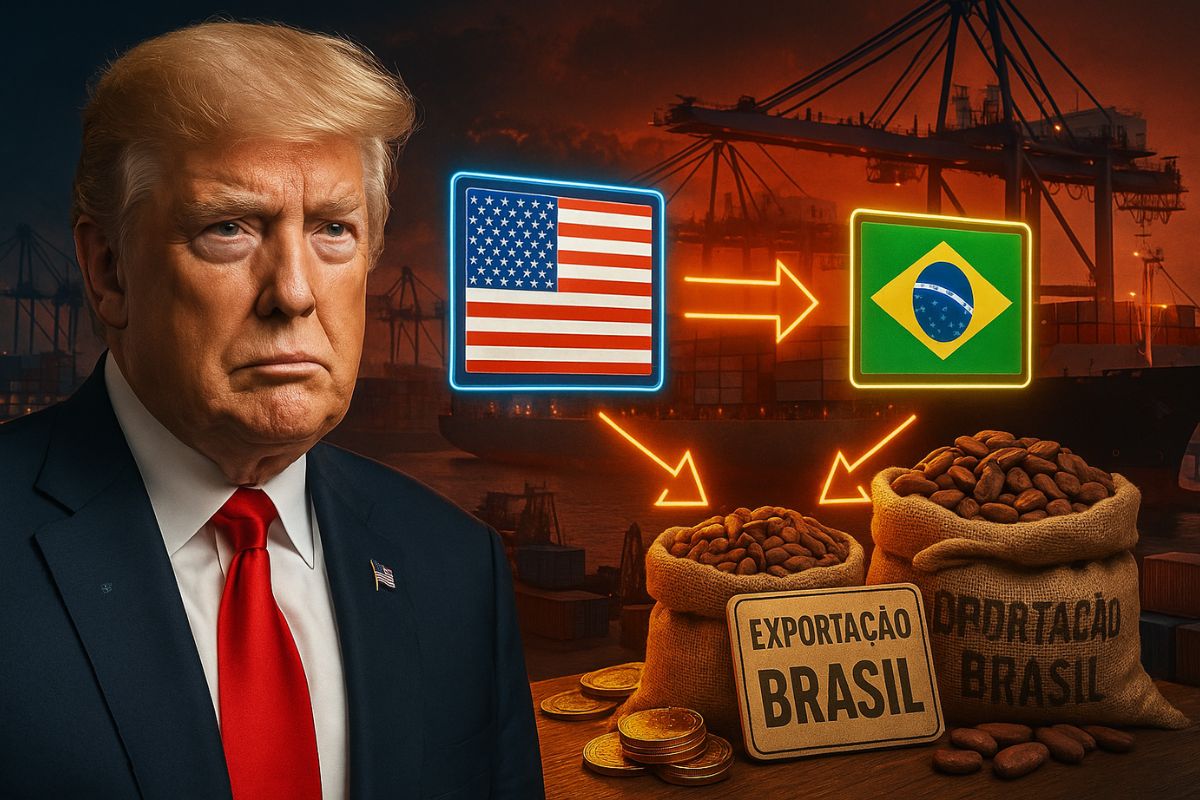


The 50% Tariffs on Coffee and Cocoa Imposed by Donald Trump in 2025 Expose Brazil to Commercial and Political Risks, Affecting Strategic Sectors of the Economy.
The dispute between Trump and global trade took a new turn in July 2025, when the United States opened a formal investigation against Brazil based on the 301 Section of the Trade Act of 1974. According to a report by Exame, the official justification was the adoption of practices deemed unfair, impacting sectors such as coffee, cocoa, and ethanol.
The process may last up to 12 months and has already resulted in the announcement of additional tariffs of up to 50% on Brazilian products, including essential agricultural commodities. The measure, in addition to being economic, carries a political component: Trump ties the progress of negotiations to the outcome of the trial of former president Jair Bolsonaro, increasing diplomatic pressure on Brasília.
Who Supports and Who Attacks Brazilian Coffee and Cocoa
At the hearing held on September 3, 2025, in Washington, about 40 companies and entities from both countries presented their positions.
-
Half of Brazilians Prefer Lower Taxes with Private Health and Education, While 44% Opt for Higher Taxes for State-Provided Services, Datafolha Survey Reveals

-
Brazil’s Most Expensive Toll Rises to R$ 40.60 on Route from São Paulo to the Coast, Nearly Matching Bus Fare to Santos

-
As Brazil Expands Social Welfare, Survey Reveals 40% Blame Poverty on Laziness, While 58% Cite Lack of Opportunities

-
China Tightens Control on Antimony, Driving Prices from $22,000 to Nearly $40,000 per Ton as U.S. Rushes to Bolster Strategic Reserves



On the Brazilian side, representatives from Embraer, WEG, Portobello America, CNI, Amcham, and Fiesp sought to debunk accusations, such as alleged uncontrolled deforestation and distortions caused by Pix.
In the United States, the division became evident.
The National Coffee Association (NCA) and the US Chamber of Commerce defended Brazil, arguing that there is no large-scale alternative to Brazilian coffee, the largest in the world.
On the other hand, entities like the National Pork Producers Council and the National Corn Growers Association called for heavy sanctions, stating that the devalued Brazilian currency allows for absorbing tariffs without losing competitiveness.
The 4 Decisions of 2025 That Change the Game
According to Exame, four central points define the current American offensive:
Tariffs of 50% on coffee and cocoa, products that sustain entire export chains in Brazil.
301 Section Investigation, which could expand barriers to meat, ethanol, timber, and cotton.
Political Conditioning, with Trump linking tariffs to the progress of Jair Bolsonaro’s trial.
Geopolitical Pressure, which turns trade into a tool for electoral and diplomatic bargaining in the US.
These decisions increase the risk of losing markets, not only for agribusiness but also for strategic industrial sectors such as aviation and energy.
Why the Dispute Goes Beyond the Economy
The most explosive element is the mix of trade and politics.
Trump indicated that the Brazilian justice system will play a role in the future of tariffs, creating a dangerous precedent: trade sanctions used as bargaining chips in international political negotiations.
This movement recalls the trade war that began in 2018 between the US and China, also based on Section 301.
However, now the target is Brazil, the main supplier of agricultural commodities to the American market, which increases unpredictability for producers and exporters.
Is It Worth It for Brazil to Resist?
The consequences are already worrying analysts.
Agribusiness, responsible for the trade surplus, could lose billions in exports.
The industrial sector, in turn, fears that the crisis will exceed the agricultural boundaries and affect companies such as Embraer and WEG, mentioned in the hearings.
Still, there is room for negotiation.
The 258 submissions sent to the USTR so far show a divide within the American market itself. While some sectors request sanctions, others warn of the risk of supply shortages.
The future of Brazilian exports will depend on Brasília’s ability to maintain technical dialogue and prevent the dispute from turning into a prolonged impasse.
The tariffs on coffee and cocoa show that Brazil has fully entered the geopolitical arena of global trade.
Do you believe that the country should resist Trump’s pressures or negotiate concessions to preserve the market? Have you felt the effects of these measures in your sector or region? Leave your opinion in the comments — we want to hear from those who live this reality every day.





Sim, devem respeitar nossa soberania.