Portuguese
  Spanish


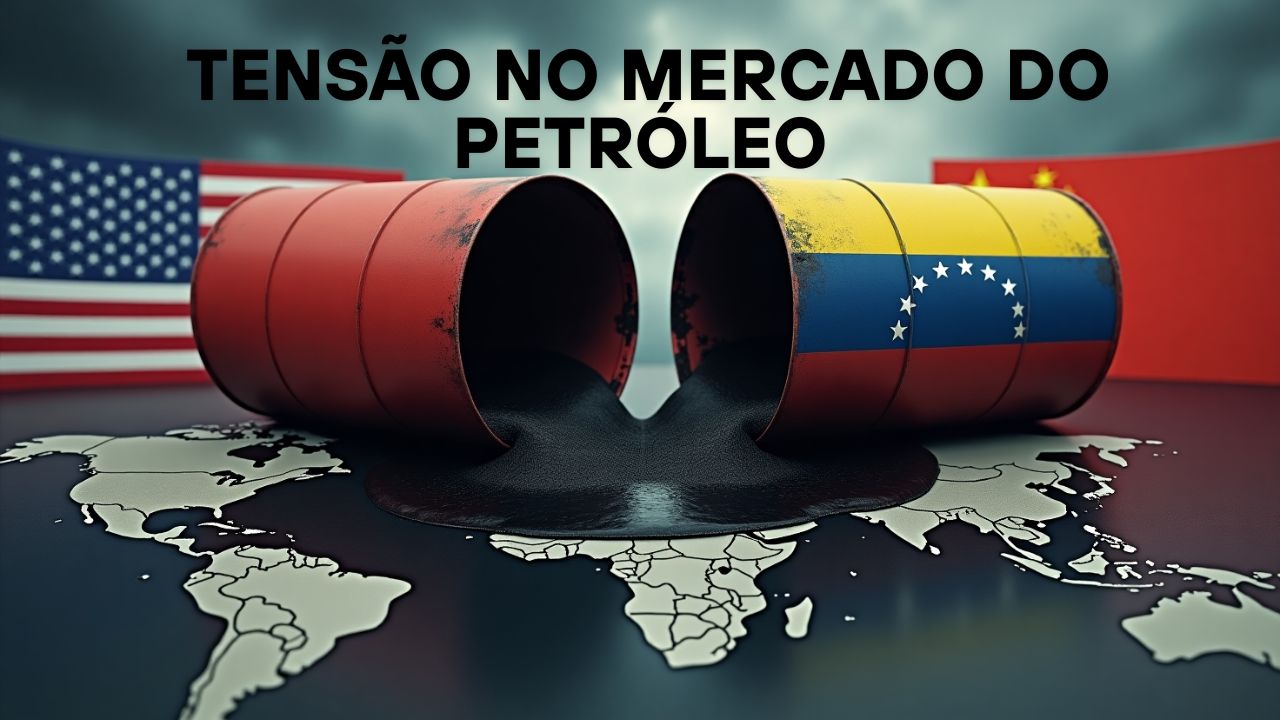


U.S. President Targets Countries Buying Venezuelan Oil With 25% Tariff, Heightening Trade Disputes and Pressuring Allies
The international oil market is experiencing moments of uncertainty after U.S. President Donald Trump announced a 25% tariff on imported goods from countries that purchase oil or gas from Venezuela.
The measure, which takes effect on April 2, 2025, aims to financially suffocate the government of Nicolás Maduro, whom Trump accuses of maintaining ties with criminal organizations and threatening U.S. security. According to the White House, the new policy applies to any country that conducts business with the Venezuelan state oil company PDVSA.
Measure Directly Affects Global Oil Trade
According to Reuters, the tariff imposed by Trump directly impacts China, the largest buyer of Venezuelan oil, as well as various countries in Europe and Latin America. The concern is that U.S. actions may lead to a spike in barrel prices, as some Venezuelan oil may be pulled from the market due to fears of sanctions. Experts warn that the move could disrupt logistical chains and create supply bottlenecks for countries that rely on fuel imports.
-
Oil production grows in Rio, but reserve replacement raises a warning sign

-
Petrobras is expected to complete the drilling of the Morpho well in the Foz do Amazonas in August 2026, the first well in the Equatorial Margin, an oil frontier that the ANP estimates at more than 30 billion barrels and could redraw the map of Brazil.

-
Oil returns to the center of concerns with tension between the US and Iran

-
IEA reduces forecast for global oil demand in 2026 after impacts of the Middle East crisis


Venezuela Reacts With Outrage and Accuses U.S. of “Economic Terrorism”
In an official statement, Nicolás Maduro’s government classified the decision as “arbitrary, illegal, and desperate.” Venezuela, which is already facing a severe trade blockade, relies on oil sales as its main source of revenue. The new tariff is seen by Caracas as an attempt to destabilize the country economically and politically. According to an analysis published by CNN Brasil, the impact could be severe, especially since buyers will have to choose between continuing to buy Venezuelan oil and facing sanctions or severing ties with Caracas.
Spain and China Criticize Tariff and Consider Response
In Europe, the Spanish government expressed “deep concern” over the measure, as companies in the country have ongoing contracts with Venezuelan suppliers. Cadena SER reported that Madrid may seek support from the European Union to respond diplomatically to the U.S. Meanwhile, China, according to MarketWatch, is exploring ways to circumvent the tariff or restructure its oil purchasing policy from Latin America. Beijing views the measure as a direct provocation and, according to analysts, may retaliate with trade actions against the U.S. itself.
Tension in the Energy Sector and Risk of New Oil Crisis
Trump’s measure rekindles fears of a new crisis in the global oil market. With increased pressure on countries buying from Venezuela, the global volume of the commodity may experience declines, pushing prices upward. Furthermore, the diplomatic instability generated by U.S. policy may hinder bilateral agreements and compromise the stability of emerging markets. Energy sector sources interviewed by Reuters indicate that the reaction of major buyers will be crucial in the coming months and may force a redesign of global oil export routes.