Portuguese
  Spanish


Created by Luiz Eduardo Rocha, Hugo Galindo, and friends, still design students at PUC-Rio, Zerezes started with wooden frames and today bets on recycled plastic glasses made of acetate and a line of straws. The brand became a fashion item and grossed R$ 55 million in one year in Brazil.
In Rio de Janeiro, a brand proved that it is possible to transform plastic and wood that would go to waste into coveted glasses. Zerezes, created by design students from PUC-Rio, bets on recycled plastic glasses, made from recycled acetate and a line of straws, and turned sustainability into a consumer desire. The journey was recounted by the magazine Exame.
The company was born in 2012, when a group of friends, including Luiz Eduardo Rocha and Hugo Galindo, were still studying design at PUC-Rio, in Rio de Janeiro. What started as a project by young creation enthusiasts turned into one of the most talked-about optical fashion brands in the country.
The numbers are impressive. According to Exame, Zerezes closed 2023 with a revenue of R$ 55 million, a growth of 57% compared to 2022, and produced more than 90,000 glasses in the year. All this by selling the frame as a fashion item, and not just as a necessity.
-
Self-Taught Brazilian Innovator Brings Solar Power to Shantytowns Using Scrap, Solar Panels, and Phone Batteries

-
Brazil Pioneers Innovative Project to Transform Used Baby Diapers into Sustainable Solutions for Schools and Cities
-
Cargo Ship Completes Historic Nighttime Voyage to Porto Alegre, Revolutionizing Large-Scale Navigation in Brazil After 42 Years
-
Say Goodbye to Round Drains: Linear Models Improve Water Drainage, Simplify Cleaning, and Offer Sleeker Finishes for Bathrooms and Balconies



The secret lies in combining original design, sustainability, and reused materials. Next, see who is behind the brand, how acetate and straws become recycled plastic glasses, and why this success story has everything to do with Brazil.
Who are the founders of Zerezes, the eyewear brand created at PUC-Rio

The story begins within the university. Zerezes was created in 2012 by then design students from the Pontifical Catholic University of Rio de Janeiro, PUC-Rio. Among the founders are Luiz Eduardo Rocha and Hugo Galindo, who decided to venture into something they believed in.
The group combined friendship and technical training. Coming from design, the partners saw glasses as an object that is both functional and expressive, a piece of fashion that stays on the face all day. This vision of product design has guided the brand since the first model.
Over time, the structure became more professional. Today, according to Exame, Zerezes has Rodrigo Latini as CEO, leading an operation much larger than that college project. The base, however, remains in Rio de Janeiro, a city that has become part of the brand’s identity.
The academic starting point is not just any detail. It shows how a design course can generate not only a beautiful product but a real business. PUC-Rio enters this story as the cradle of an idea that, years later, would move tens of millions of reais.
From College Project to Desired Fashion Brand
The great insight of Zerezes was to treat glasses as fashion. Instead of just selling frames, the brand started encouraging consumers to have more than one pair and to change glasses as they change clothes, following the style of the day. This completely changed the business logic.
This idea targets a specific behavior. Zerezes‘s bet is to make people see prescription glasses as a fashion accessory, which matches the clothes and the moment, rather than an item bought every few years. With this, each customer tends to return more often to the store and build a collection of frames.
The growth came at an accelerated pace. The company jumped from a revenue of about R$ 7 million in 2019 to R$ 55 million in 2023. In November of that year alone, boosted by Black Friday, Zerezes sold R$ 6 million, a sign that it became a consumer desire.
The stores helped spread the brand. Zerezes ended 2023 with 14 operations, present in cities like Rio de Janeiro, São Paulo, Porto Alegre, and Belo Horizonte. The proposal is to bring Brazilian design to physical locations, not just the internet.
Behind the appeal of fashion, there is a clear positioning. The brand insists on presenting itself as Brazilian and sustainable, combining aesthetics and purpose. It is this combination that has transformed recycled plastic glasses into an object of desire, and not just a conscious consumption option.
How acetate and straws become recycled plastic glasses
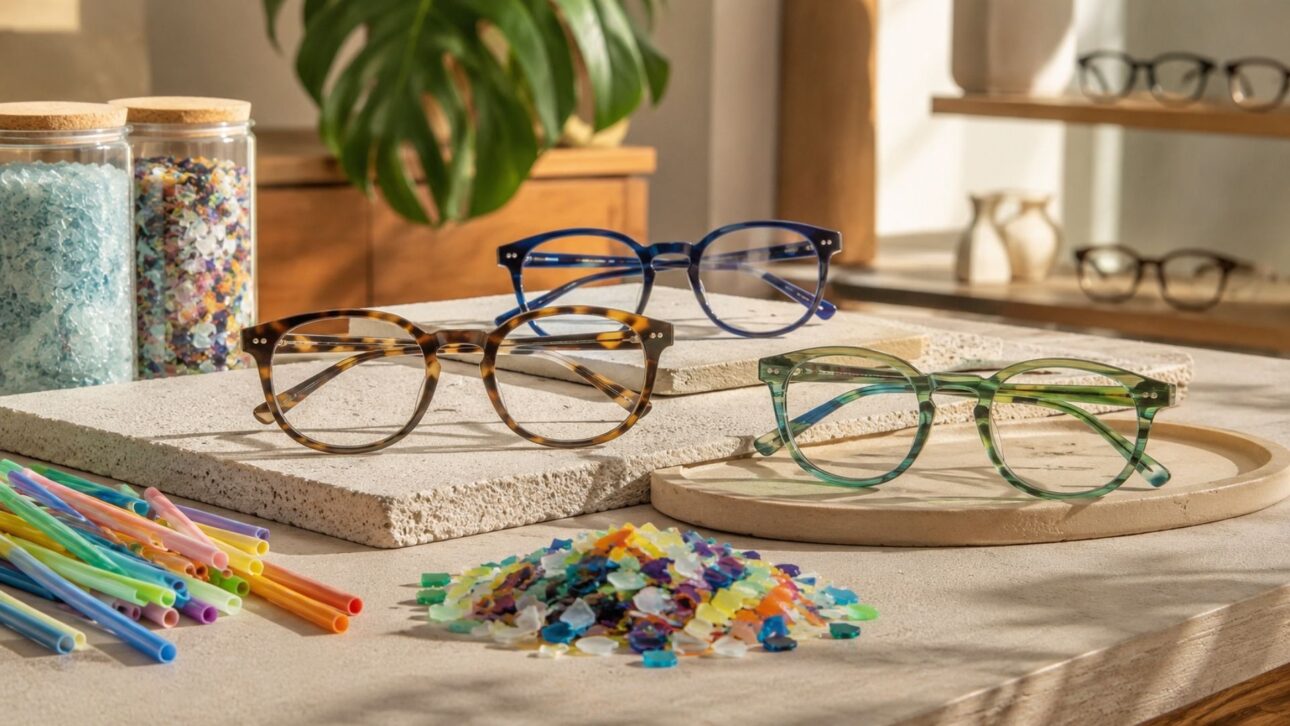
The heart of the proposal lies in the materials. According to the portal Recicla Sampa, Zerezes works with reclaimed wood, recycled acetate, sawdust, and plastic straws, transforming what would be waste into frames. This is where the brand’s recycled plastic glasses are born.
It’s worth understanding the right framing. The initial collection of Zerezes was made of wood, crafted from discarded woods collected from construction sites, dumpsters, and carpentries. Over time, recycled acetate, which is a type of plastic, became the main material for the frames, alongside special lines.
One of these lines is the most striking. The brand created a collection of glasses made from recycled plastic straws, a material that often becomes waste within minutes of use. Thus, the same straw that pollutes the sea can become part of a fashion frame.
It’s important not to overemphasize the plastic from the straws. It appears in a specific line, while the bulk of the production uses recycled acetate and wood. Still, the combination forms the identity of recycled plastic glasses that made Zerezes known for combining style and reuse.
Why recycled acetate is the main material for the frames
Acetate is a well-known material in the eyewear world. It is a plastic of generally vegetable origin, widely used in frames for being lightweight, durable, and easy to mold into various colors and shapes. It’s no wonder it became the base of a large part of the market.
The difference with Zerezes is in recycling this material. According to Recicla Sampa, the brand uses recycled acetate, taking advantage of leftovers and scraps that would be discarded in eyewear production. Thus, acetate stops being just another plastic and gains a longer life cycle.
This care has an effect on the final product. With recycled acetate and even sawdust, Zerezes manages to create frames with a premium brand finish, showing that reused material does not mean inferior quality. On the contrary, it becomes an argument for design and value.
For this reason, calling the product recycled plastic glasses makes sense. Acetate is technically a plastic, and the recycled version used by the brand reinforces the sustainable proposal. It’s a way to show that plastic, when well utilized, can become a desired item, not a villain.
The eyewear industry generates a lot of acetate waste when cutting frames. By recovering this residue, Zerezes reduces the waste of a material that would otherwise become factory trash. It’s an example of how recycling can start within the production chain itself, even before the product reaches stores.
The eyewear line made from recycled plastic straws
The straw line is the most symbolic of the brand. According to reports about the collection, each pair of glasses is made with about 35 recycled plastic straws, which are shredded and then injected into molds to form the frame. The result is a new object from old waste.
The environmental appeal is strong. Straws are among the most criticized plastic items for polluting oceans and beaches, and have been banned in cities like Rio de Janeiro. Transforming this material into recycled plastic glasses is a way to give a second life to something seen as disposable.
There is also an awareness effort. According to Recicla Sampa, the proposal is to draw attention to the plastic problem and provoke a change in consumer behavior. Each frame carries a message, besides serving as a fashion accessory.
The artisanal character completes the charm. Since the recycled material varies, not all pieces are the same, giving each pair a unique appearance. This exclusivity, typical of authorial design, helps turn sustainability into desire, one of Zerezes‘s greatest assets.
The size of the problem helps to understand the proposal. Billions of plastic straws are used and discarded every year worldwide, often after just a few minutes of use. Transforming part of this into recycled plastic glasses doesn’t solve pollution alone, but it shows, in a concrete way, that there is a path to reuse what would be thrown away.
What makes Zerezes’ recycled plastic glasses different?
The answer lies in three words: design, sustainability, and Brazilian identity. Zerezes doesn’t just sell a frame, but a story of reuse conceived by designers trained at PUC-Rio. This is what sets the brand apart from a common shelf pair of glasses.
The authorial design is the first differentiator. Each model is conceived as a fashion piece, with shapes and colors that aim to stand out on the face. The brand’s recycled plastic glasses compete in style with traditional brands, not just in ecological discourse.
Sustainability is the second pillar. By using recycled acetate, discarded wood, and straws, Zerezes transforms consumption into a gesture of lower impact. The customer takes home not just an accessory, but the feeling of participating in a more circular economy.
The third point is national origin. The brand makes a point of asserting itself as Brazilian, valuing the design made in the country. In a market dominated by imported names, seeing a national company earn millions with recycled plastic glasses is a powerful message about the strength of local creation.
R$ 55 million in one year: the numbers of Zerezes
The strongest data is the revenue. Zerezes closed 2023 with R$ 55 million, a growth of 57% compared to the previous year, which had already advanced 71%. It is a fast expansion rate for a brand born from a design project.
Production matches the size of the business. According to Exame, more than 90,000 glasses were manufactured in 2023 alone. The volume shows that recycled plastic glasses have ceased to be a niche and have gained market scale in fashion.
Retail drives a good part of this result. The brand ended 2023 with 14 operations across the country and announced plans to open ten new units in 2024, five of them in the first semester. Each frame is sold for around R$ 450, according to Recicla Sampa, in a premium positioning.
For comparison, going from about R$ 7 million in 2019 to R$ 55 million in 2023 means multiplying the revenue by almost eight times in four years. Few fashion brands grow at this pace, especially betting on sustainability as a central part of the product, rather than a simple marketing detail.
These numbers tell a bigger story. They show that sustainability and profit can go hand in hand, and that the Brazilian public is willing to pay for design, purpose, and quality. Zerezes has become proof that recycled plastic glasses can be both ecological and profitable.
What this has to do with Brazil
Brazil produces mountains of discarded plastic every year. Much of it becomes waste in landfills, rivers, and beaches, especially items like straws and packaging. A brand that transforms this material into recycled plastic glasses shows, in practice, a path of reuse.
There is also a lesson in circular economy. Instead of treating waste as the end of the line, Zerezes uses recycled acetate, wood, and straws as raw materials. This model, where the waste of one process becomes the input for another, is precisely what the country needs to expand to reduce waste.
The movement also generates income and employment. Brands that reuse materials need people to collect, treat, and transform waste, which creates jobs related to recycling and design. When this type of business grows, as happened with Zerezes, the gain goes beyond the environmental and reaches the local economy.
The case values national design and entrepreneurship. Going from a college project at PUC-Rio to earning R$ 55 million is an example of the potential of Brazilian creativity. It shows that purposeful ideas can turn into solid businesses, generating jobs and income.
Finally, there’s a message about conscious consumption. Zerezes proved that Brazilians buy sustainability when it comes packaged in fashion, design, and quality. If more sectors follow this path, the reuse of plastic can stop being an exception and become a natural part of the economy.
And you, would you wear recycled plastic glasses made in Brazil?
The journey of Zerezes shows that it’s possible to unite wallet, style, and environment. Born from design students at PUC-Rio, the brand transformed recycled acetate, wood, and straws into desired recycled plastic glasses, earning R$ 55 million in a single year and producing over 90,000 pieces.
More than a successful business, the story is an example of how waste can become an opportunity. By treating sustainability as part of fashion, and not as a sacrifice, Zerezes won over customers and proved that Brazilian design has room to grow and profit.
And you, would you wear a pair of recycled plastic glasses made in Brazil, with reused acetate and straws that would go to waste? Do you think more brands should follow this path of uniting design, fashion, and sustainability? Share your opinion here in the comments and share with those who love glasses.