Portuguese
  Spanish


The recycling of pots in France creates a route for utensils of any brand, takes materials for reuse, helps remove scratched frying pans from aimless disposal, and maintains an industrial goal of up to 20 million pieces by 2027.
In 2025, France began to have a pot recycling route that receives utensils of any brand. The idea is to take used pieces for sorting, material separation, and transformation into new products.
The 2025 Activity Report of Groupe SEB, a French manufacturer of appliances and household utensils, records the goal of gathering up to 20 million pots in France by 2027 and using the collected items in the manufacture of new products.
A used frying pan can gather aluminum, coating, and handle. When these elements enter a reuse route, each material needs to receive a destination compatible with its composition.
-
Ancient Mines in Spain Reveal Tools and Metals That May Explain Bronze Age Trade with Scandinavia

-
Facing a housing shortage, Hong Kong uses prefabricated concrete modules to construct a 12-story public building with the help of massive cranes and trucks.
-
Brazilian City Innovates Waste Collection with Underground Vacuum System
-
Amsterdam Repurposes Retired Boats and Plants to Restore Contaminated Industrial Land Instead of Removing All Polluted Soil


An out-of-use pot enters a collection chain, not a common pile of trash
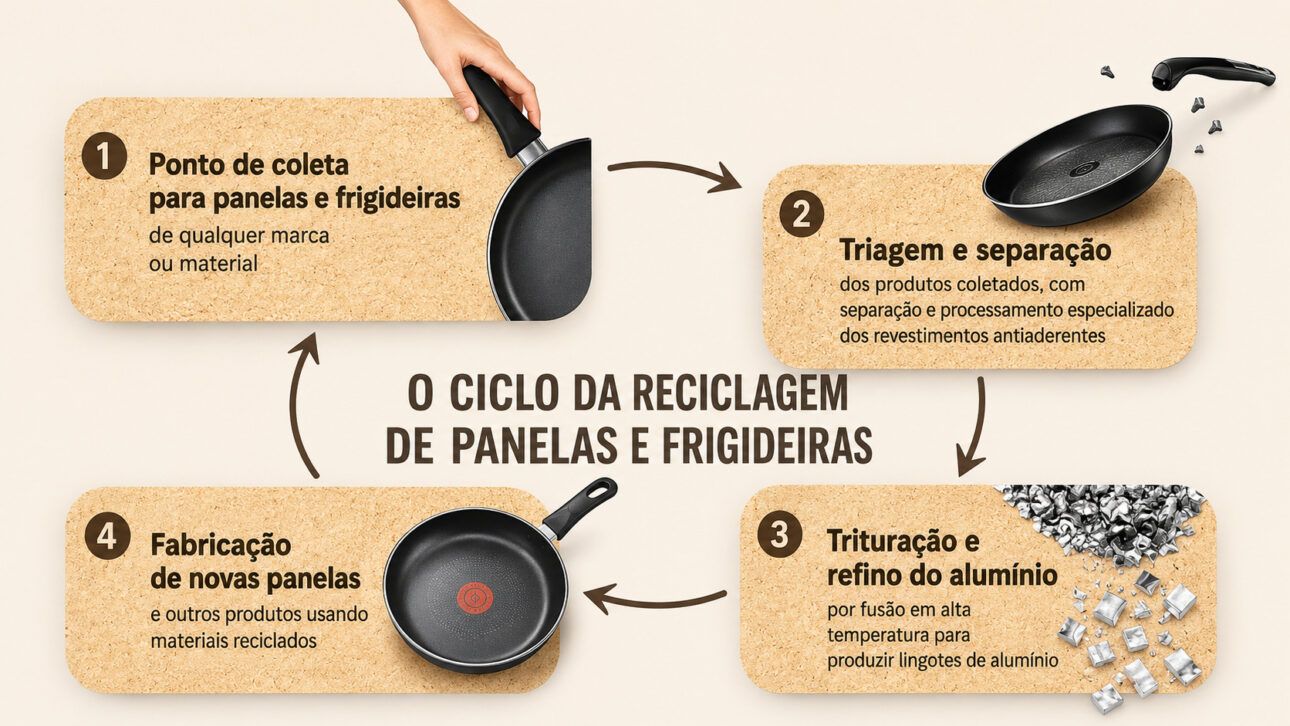
In the French network, used pots and frying pans of any brand can follow the same path. The object leaves the house, reaches a collection point, and enters a sorting stage, the name given to separation by type of material.
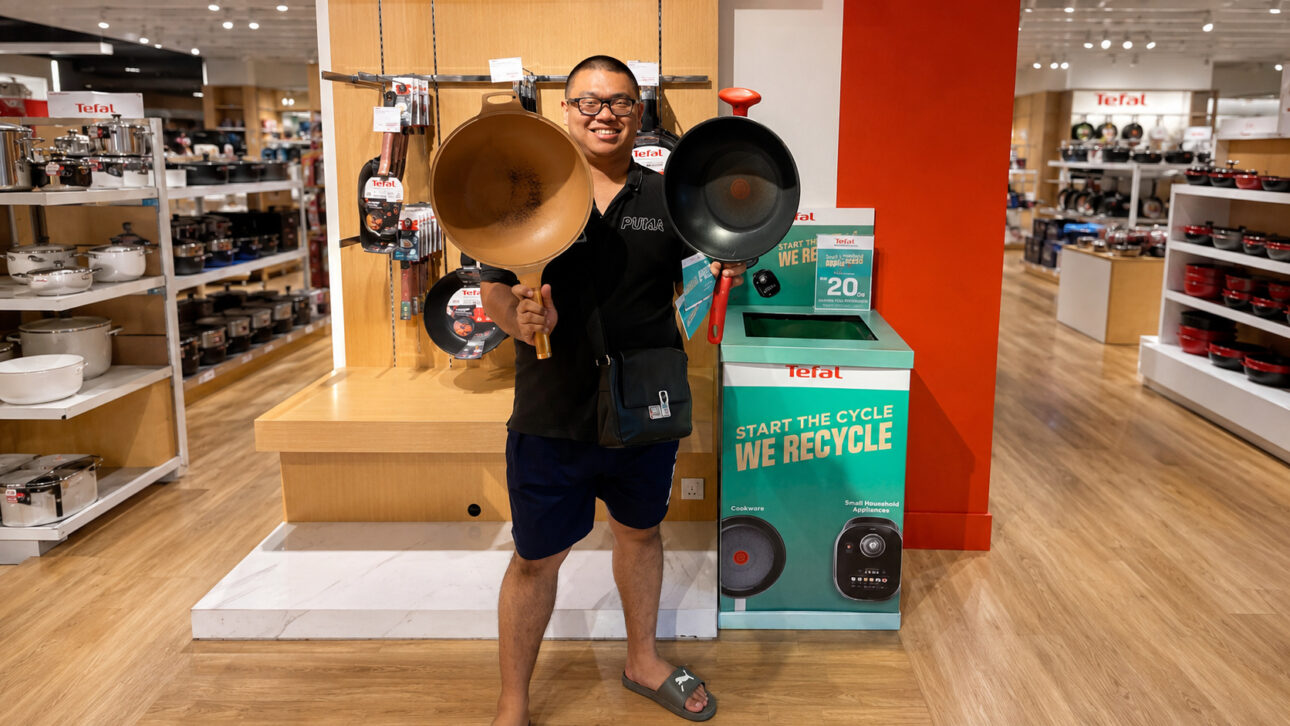
Afterwards, the destination is no longer just the elimination of the item. The goal is to recover materials so that they can participate in the production of other products.
For the consumer, this opens an alternative for a scratched frying pan that is no longer suitable for the kitchen. The piece stops being seen only as trash and starts to enter a reuse route.
Aluminum and coating require care before returning to the industry
In a frying pan with an aluminum body, metal and coating do not perform the same function. The aluminum provides structure to the piece, while the coating is on the surface used during food preparation.
Therefore, sorting does not treat the frying pan as a single block. The goal is to separate the elements that can be reused from those that require a different treatment.
Groupe SEB, a French manufacturer of appliances and household utensils, describes that the collected utensils go through sorting and recycling, with aluminum among the materials sent for reuse by industrial partners in France.
This does not mean that any pan becomes a new frying pan without steps. Recovery depends on the composition and treatment each part receives.
Repair, refurbish, and recycle are three very different choices
Repair keeps the same pan in use. A part is adjusted or replaced so that the utensil continues to serve in the kitchen.
Refurbishing is reviewing a used product so that it can be used again. Recycling changes the focus, as the utensil may cease to exist as it was, but the material goes on to produce another item.
This difference avoids a common confusion: a recycled pan is not necessarily a repaired pan. Each path addresses a different problem.
The goal of up to 20 million pieces shows the weight of reverse logistics
Reverse logistics is the return path of a product after use. Instead of ending in a disposal without separation, it returns to a network that collects, organizes, and directs the materials.
In France, the goal reaches up to 20 million pieces by 2027. The number does not speak only of frying pans; it measures the capacity needed to receive, separate, and direct utensils in large volume.
The deadline shows that it is not a one-time action. There is a structure designed to maintain collection and give industrial destination to what was used.
The French example leaves an important question for those who discard pans in Brazil
A very worn-out pan doesn’t need to be forgotten in the cupboard or go straight to the trash without evaluation. Before disposal, it’s worth asking if the collection point accepts kitchen utensils and which materials it can process.
The French experience shows that aluminum, coating, and handle do not form a simple piece to recycle. When there is a specific route, it becomes easier to return the material to the industry.
In France, the network accepts pans of any brand and works with the goal of gathering up to 20 million pieces by 2027. The operation brings domestic disposal closer to the industry and gives another destination to the materials present in used utensils.
For those who have a scratched frying pan at home, the message is clear: the correct destination depends on the type of material and the available collection route. Throwing it away seems easier, but it may end the life of something that could still be utilized.
In your city, would it make a difference to have specific points to deliver used pans, or should this material be included in the common metal collection? Tell us in the comments and share this post.