Portuguese
  Spanish


At USP in São Carlos, researcher Ana Carolina Hidalgo-Araújo developed a thermochromic tile that changes color with heat: on hot days, it reflects more sun and cools the roof. The material can reduce air conditioning use by up to 15% and help cut energy bills, without construction work.
Imagine a roof that lightens by itself when the sun gets intense. This is the proposal of the thermochromic tile studied at the University of São Paulo (USP), a material that changes color according to temperature and reflects more solar radiation precisely on the hottest days. The research was published by the Jornal da USP in March 2026.
The person responsible for the study is researcher Ana Carolina Hidalgo-Araújo, from the Institute of Architecture and Urbanism (IAU) at USP, on the São Carlos campus, in the interior of São Paulo. The work was part of her doctorate and resulted in articles in international scientific journals, providing technical support for the idea.
The proposal is simple to understand and ambitious in effect. Instead of spending energy on air conditioning to beat the heat, the thermochromic tile acts passively: when it heats up, it reflects more sun and reduces internal heating; when it cools down, it does the opposite and helps retain the heat inside the house.
-
21-Year-Old Moves Back to Parents’ Home in Arizona, Finds New Private Apartment in Converted Garage as Families Tackle U.S. Housing Pressures

-
Innovative Container Studio in Brazilian Beach Town Thrives with High Demand and Plans for Expansion
-
30-Square-Meter Container Home with 2 Bedrooms, Living Room, Kitchen, and Bathroom Sold for $12,000 in Brazil, Tour Reveals Project Details

-
Brazilian Couple Builds Eco-Friendly Brick House, Saves 41%, and Shares Simple Test to Check Soil Suitability


According to Jornal da USP, the intelligent use of these adaptive materials can reduce the demand for air conditioning by up to 15%, depending on the climate and building configuration. Next, see who the researcher is, how the thermochromic tile works, and why it can make a difference in the Brazilian’s wallet and comfort.
Who is the USP researcher behind the thermochromic tile

The protagonist of this story is a Brazilian researcher. Ana Carolina Hidalgo-Araújo developed the study at the Institute of Architecture and Urbanism (IAU) of the USP, in São Carlos, one of the main research centers in architecture and materials in the country. The work was part of her doctorate at the university.
The guidance was significant. According to the Jornal da USP, the study was supervised by Professor Rafael Salomão, from the School of Engineering of São Carlos (EESC) of the USP, combining architecture and materials engineering in the same project. This combination helps explain why the thermochromic tile was designed both to function and to last.
The results did not just stay on the shelf. The research resulted in articles published in three international scientific journals: Solar Energy, Solar Energy Materials and Solar Cells, and Building and Environment. These are journals focused on solar energy and building performance, which reinforces the solidity of the findings.
It’s important to clarify the stage of the project. It is a scientific research, not a product already available in stores. Even so, the thermochromic tile shows a concrete path to reduce heat inside the house and the cost of air conditioning, a topic that is increasingly urgent in a Brazil with severe summers.
How the thermochromic tile that changes color with heat works
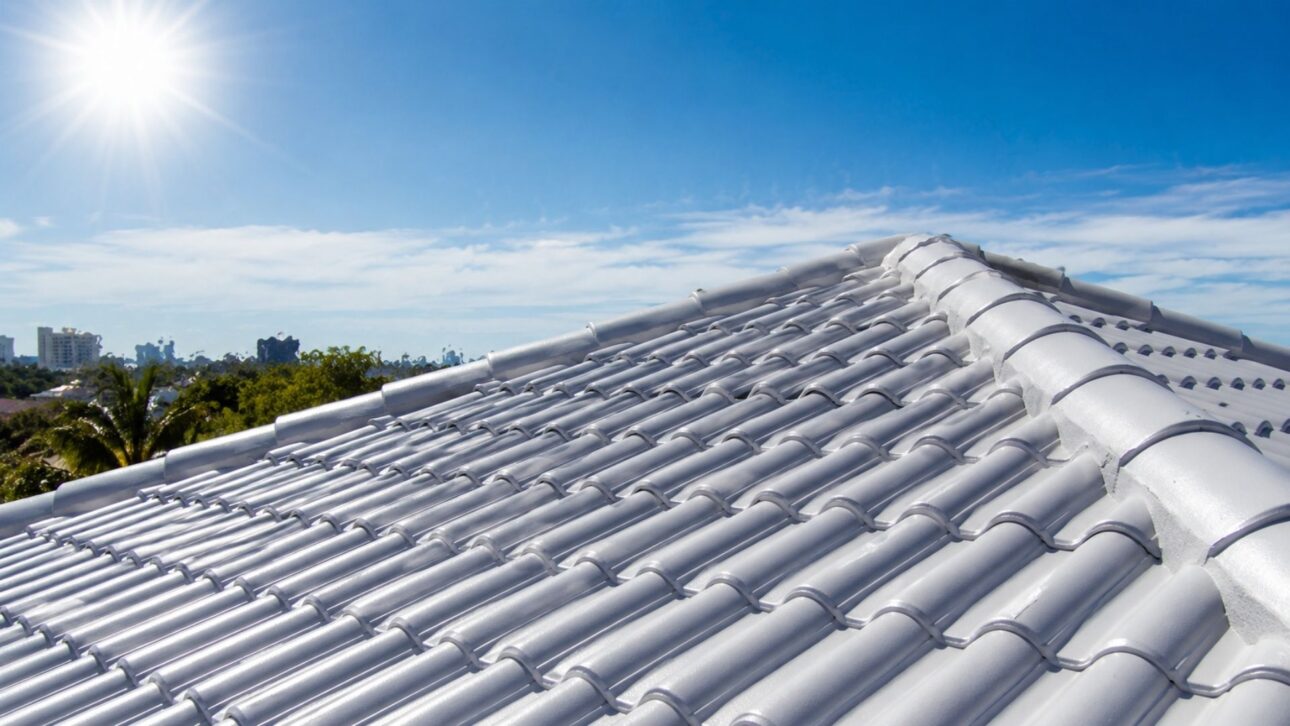
The secret lies in one word: thermochromism. Thermochromic materials change color according to temperature, and it is this effect that the thermochromic tile takes advantage of. When the surface heats up, the material tends to lighten and reflect more light; when it cools down, it darkens and returns to absorbing heat.
In practice, the roof adapts to the weather. On a hot summer day, the tile reflects more solar radiation and reduces the internal heating of the house. On cooler days, it does the opposite, absorbing heat to help keep the environment warm. All this without pressing any button.
The great advantage is being a passive system. Unlike air conditioning, which consumes energy all the time, the thermochromic tile works on its own, reacting to its own temperature. There is no motor, no electricity consumption, and no remote control: the response is automatic and continuous throughout the day.
Another interesting point is that the effect is reversible and repeats every day. With each cycle of heating and cooling, the thermochromic tile changes color again, following the rise and fall of temperature. It is not a one-time adjustment: it is a continuous response to heat, morning after morning, without consuming energy.
This changes the logic of thermal comfort. Instead of spending more and more energy to combat the heat, the proposal is to have the building itself collaborate. The roof, which is usually the part of the house most affected by the sun, stops being a problem and becomes an ally in controlling the temperature.
Why reflecting more sun on hot days cools the house
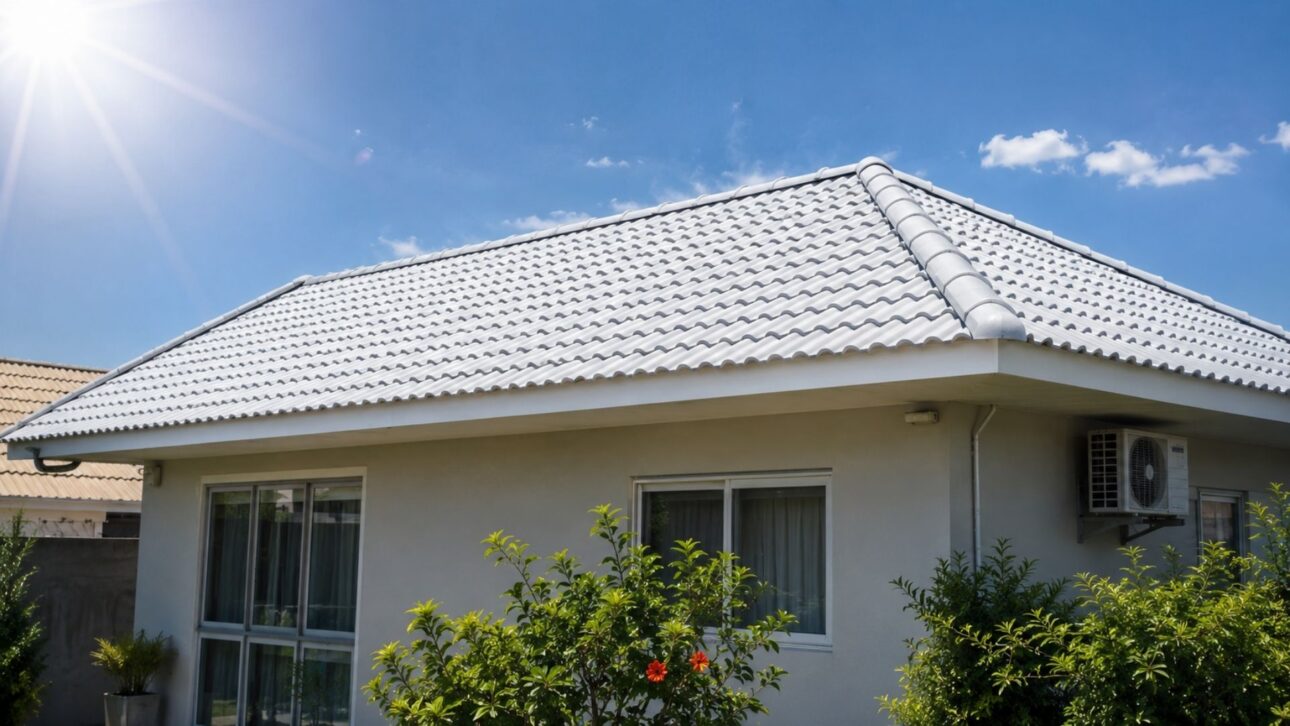
To understand the effect, you need to look at the roof. It is the surface of the house that receives the most sun throughout the day and, therefore, one of the main entry points for heat. A dark roof absorbs much of this radiation and transfers the heat inside the rooms.
Light color reflects, dark color absorbs. Light surfaces return more solar radiation to the environment, while dark ones retain more. The thermochromic tile uses this principle intelligently: it becomes lighter when it’s hot, increasing reflection just when it’s most needed.
The gain appears in the internal temperature. By reflecting more sun during peak hours, the tile reduces how much heat reaches the interior of the house. With less heat entering through the roof, the environment heats up less and the need to turn on the air conditioning decreases, along with energy consumption.
This is where the study’s differential comes in. According to the researcher, the main novelty was applying this behavior to opaque surfaces, such as tiles, and not just to glass and translucent materials, more common in previous research. This greatly expands the practical use of the technology.
The two types of material: leuco dyes and vanadium dioxide
The research analyzed two major groups of thermochromic materials. On one side, the organic; on the other, the inorganic. Each changes color in its own way and within a temperature range, which directly influences where the thermochromic tile can be best utilized.
Organics use the so-called leuco dyes. These are microcapsules that change color within a temperature range between 30 °C and 35 °C. Since these values are close to the temperatures of a common hot day, these materials respond well to the heat of everyday Brazilian life.
Inorganics have another star: vanadium dioxide, or VO₂. This compound undergoes a phase transition around 68 °C and changes the way it interacts with infrared radiation, which is associated with heat. It is a more sophisticated mechanism, linked to the physics of the material itself.
Each group has pros and cons. Leuco dyes react at lower temperatures and are more useful for the country’s climate, but they are more sensitive over time. Vanadium dioxide is more stable, but it operates in a much higher heat range. Understanding this difference is essential to consider the right thermochromic tile for each use.
Up to 15% less air conditioning: what the numbers say
The most striking data is the savings. The intelligent use of these adaptive materials can reduce the demand for cooling via air conditioning by up to 15%, depending on the climate and building configuration. This is significant, considering the impact of air conditioning on the electricity bill.
There is also a number regarding energy more broadly. According to the research, thermochromic coatings can reduce annual energy consumption by around 3% to 11%, depending on the climate and application. These ranges vary from case to case but point to real savings over the year.
It is important to read these numbers carefully. They depend on factors such as the region of the country, the type of construction, and the use of the property. The potential for up to 15% reduction in air conditioning appears under specific conditions and is not an automatic guarantee for every house.
It’s worth remembering the impact of air conditioning on the bill. On days of intense heat, the device is often the main reason for the spike in the electricity bill of many homes. Therefore, each percentage point saved on air conditioning represents money saved and less pressure on the energy grid.
Even so, the path is promising. In a time of high electricity bills and increasingly hot summers, cutting part of the energy consumption just by choosing the right roofing material is a significant gain. The thermochromic tile becomes another piece in the quest for efficiency at home.
The big novelty: using the effect on opaque surfaces
The most original point of the study is where the effect was applied. According to the researcher, materials that change color with temperature were already studied, but mainly on translucent surfaces, like glass. Bringing this behavior to opaque surfaces, such as tiles and walls, is the great differential of the USP research.
This change has a practical reason. Most Brazilian houses are not made of glass, but rather of opaque walls and roofs. By targeting these surfaces, the thermochromic tile directly addresses the reality of the country’s constructions, and not just exceptional glazed buildings.
The researcher herself reinforces this point. “The study of opaque materials can have a more significant effect on the Brazilian reality,” stated Ana Carolina Hidalgo-Araújo, according to the Jornal da USP, in a text also reproduced by the site Vida Mais Sustentável. The phrase summarizes why the work was conceived with Brazil in mind.
It’s important to be cautious not to confuse. There are already paints that change color with temperature on the market and in other research, but here the focus is on the tile as a product and the logic of applying the effect on the opaque surface of the roof. It is this combination, along with the Brazilian context, that gives identity to the USP study.
How long does the thermochromic tile last? The challenges before reaching the market
Not everything is resolved, and the research is honest about this. One of the main challenges of the thermochromic tile is durability, especially of organic materials. Exposed to the sun and heat all the time, the pigments can degrade and lose their effect over time.
There are attempts to circumvent the problem. According to the Jornal da USP, the use of protective coatings managed to reduce the degradation of pigments by about 30% to 50% compared to unprotected materials. It’s an important advance, but still not a definitive solution for the tiles’ lifespan.
Therefore, reaching stores is not for tomorrow. The research itself acknowledges that commercial-scale application is still distant. What exists today is a solid scientific base, with numbers and tests, showing that the concept works and deserves to continue being developed.
This type of transparency is important. Instead of promising an immediate revolution, the USP study points to a realistic path: the thermochromic tile is promising and has potential for energy savings, but still needs to overcome durability and cost obstacles before becoming a common construction item.
What does this have to do with Brazil
Brazil is practically tailor-made for this technology. With a hot climate in most of the territory and increasingly intense summers, the country deals with heavy use of air conditioning and electricity bills that spike precisely in the hottest months.
The roof is a silent villain in this scenario. In many popular houses, the covering heats up a lot and throws heat inside, leaving the rooms stuffy. A thermochromic tile that reflects more sun on hot days would tackle the problem right at the source, before the heat invades the house.
The technology also doesn’t need to act alone. The thermochromic tile can be combined with other well-known passive solutions, such as good ventilation, ceiling, insulation, and eaves that provide shade. Combined, these strategies reduce the internal heat and the dependence on air conditioning, further cutting down on energy costs at the end of the month.
There is also the effect on the electrical grid. When millions of air conditioning units turn on at the same time on a hot day, energy consumption skyrockets and pressures the entire system. Reducing this demand passively, through the roof material itself, would help families’ budgets and the country as a whole.
It’s no wonder the researcher highlights the national context. A solution that works on opaque surfaces, like common tiles, has everything to engage with Brazilian construction, from the interior to the outskirts. If it overcomes challenges of durability and cost, the thermochromic tile could become an ally for comfort without renovation or extra energy expense.
And you, would you replace your roof with a tile that changes color with the heat?
The research from USP shows that it’s possible to lower the heat at home without relying solely on air conditioning. The thermochromic tile studied by Ana Carolina Hidalgo-Araújo, in São Carlos, bets on an elegant idea: letting the roof itself adjust to the weather, reflecting more sun when it heats up and saving energy throughout the year.
There is still a way to go before the technology reaches stores, with challenges of durability and cost to solve. But the concept has already been tested, published in international journals, and designed for the Brazilian reality, making the thermochromic tile a concrete promise, not just a beautiful idea on paper.
And you, would you replace your roof with a thermochromic tile that changes color with the heat to spend less on air conditioning? Do you think this type of solution should be encouraged to reach Brazilian homes faster? Share your opinion here in the comments and share with those who suffer from the heat inside their homes.