






 Portuguese
  Spanish
  6 min of reading
  0 comments


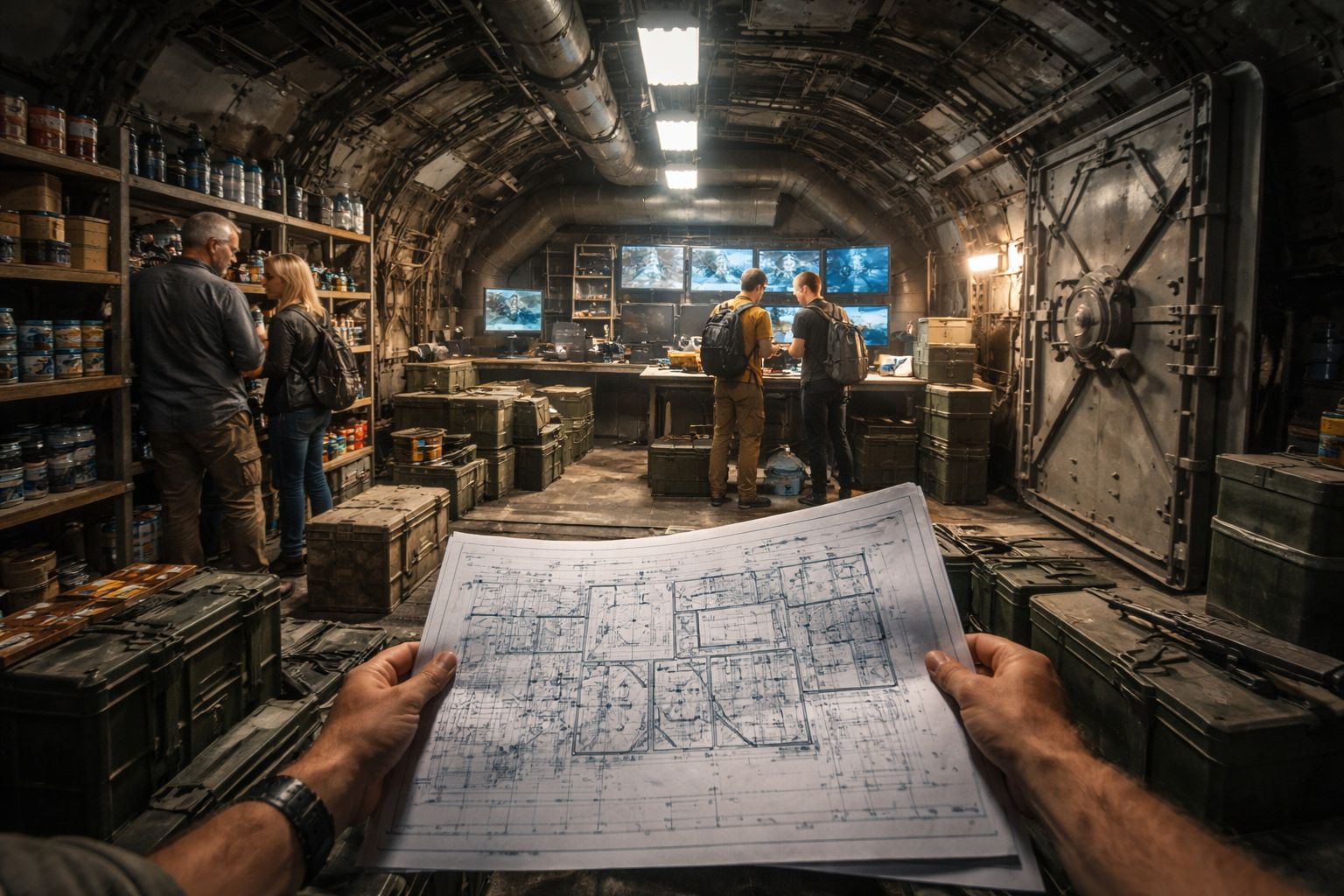
Research shows that 63% of Americans believe that a world war will erupt in the next four years. Cold War nuclear silos are being renovated for millions of dollars to house AI data centers and survival shelters. In Texas, fortified ranches with weapons, cattle, and bunkers are selling spots for $11,000 for those who want to prepare for the collapse.
Two-thirds of Americans believe that a world war is imminent, and this belief is driving millions of dollars into a market that is growing at the speed of fear. Cold War missile silos, decommissioned for decades, are being purchased and renovated by investors who are turning them into survival shelters and underground data centers. Nick Hik, a cosmonaut trained in Russia and venture capitalist, acquired a Titan I missile silo near Denver for over $10 million and plans to invest $30 million in renovations, creating a space that combines a museum, data center for artificial intelligence, and infrastructure capable of withstanding a nuclear war. The silo, built in 1959 for $47 million (equivalent to $350 million today), is 165 feet deep, has 200,000 square feet, and concrete walls that can withstand 15,000 pounds of pressure per square inch.
The phenomenon is not limited to eccentric investors. In Texas, a retired Air Force colonel named Drew Miller manages fortified ranches where members pay $11,000 to reserve a room for ten years, with access to bunkers, weapons, crops, cattle, and military training to survive collapse scenarios, including nuclear war, civil war, and power grid failure. Since 2015, thousands of people have signed up for Miller’s eight camps across the United States, and demand continues to rise as tensions with Iran, Russia, China, and North Korea fuel fears of a war that 63% of Americans consider likely.
The $350 million nuclear silo that becomes a shelter against war

The Titan I missile silo that Nick Hik purchased near Denver is one of 18 built by the United States during the Cold War. The underground complex has 17 rooms connected by 4,500 feet of tunnels and was originally designed to hide, feed, and launch three nuclear weapons. The doors weigh as much as a small SUV and can protect against nuclear radiation. The government decommissioned the missiles in 1965 and used the complex for national security research before permanently closing it.
-
Survivor of 1966 SS Daniel J. Morrell Shipwreck in Lake Huron Recounts 38-Hour Ordeal in Extreme Cold

-
The Greatest Hoax in World Cup History? The Film That Denied Brazil’s 1958 Victory and Exposed How Fake Evidence Can Seem Convincing on TV
-
Fake South Korean Online Stores Offer Shopping Thrill Without Spending Money or Receiving Products
-
The War of Jenkins’ Ear: How a Severed Ear Sparked One of the 18th Century’s Most Unusual Conflicts


The renovation of the silo to face the threats of a modern war will cost around $30 million. Nick plans to install existing diesel generators in the complex and, in the future, small nuclear reactors to provide energy independent of the power grid, a critical detail considering that reports from the U.S. government warn that blackouts could become 100 times more common by 2030. The underground temperature remains constant at 52°F (11°C), ideal for AI servers that spend a third of their energy on cooling, and the interest from major tech companies in the space already exists, although Nick cannot reveal which ones.
Why AI Data Centers Are Moving to War Bunkers
The race to move servers underground is not motivated solely by the fear of war. Data centers need secure environments, controlled temperature, and reliable power, and war bunkers offer all three at a cost that may be lower than building equivalent security structures above ground. In Sweden, a data center called Pionen operates in an old Cold War bunker near Stockholm and houses the servers of WikiLeaks. In Norway, an old gemstone mine inside a mountain houses a six-story data center that operates off the power grid.
According to the channel Business Insider and Insider, in the United States, the largest known underground facility belongs to Iron Mountain, inside an abandoned limestone mine in Pennsylvania. At 220 feet deep and covering 40 acres, the space is nine times larger than Nick’s silo, but still tiny compared to the data campuses that Amazon and Google are building above ground, which span 500 acres. Moving operations of this scale underground faces challenges such as large-scale ventilation, groundwater pressure, leaks, and costs that escalate quickly with depth.
The Fortified Ranch in Texas Where Americans Prepare for War
Drew Miller, a retired Air Force intelligence colonel who helped NATO with peacekeeping missions, manages Fortitude Ranch, a 20-acre property in a secret location in Texas. The ranch operates as a fortified community where members prepare for scenarios of nuclear war, civil war, and infrastructure collapse, with underground bunkers, weapons stored in safes throughout the property, crops, livestock, chickens, and medical supplies including an operating table and military stretchers.
Miller’s philosophy is that hiding underground is not enough. “If you think you can just hide underground, you’re crazy. In a collapse, there will be hungry people going everywhere”, he states, explaining why the ranch is built on top of a hill with defensive positions and open lines of fire. All members must arrive armed and undergo guard training with ex-military personnel. The team includes Maddie, a former U.S. Army intelligence officer, and the capacity for defense is treated with the same seriousness as food production.
Who are the Americans paying to prepare for war
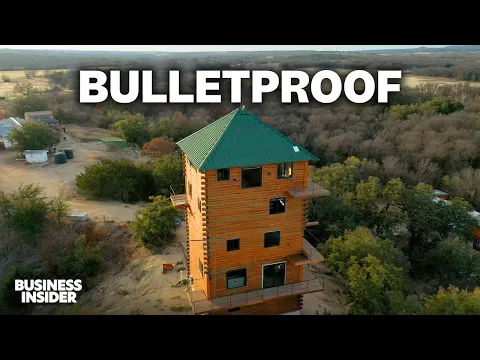

The profile of members of Fortitude Ranch and similar communities is more diverse than the stereotype suggests. Drew says that most tend to be conservative and libertarian, but there are liberal Democrat members, and the common motivation is the belief that the government will not be able to protect citizens in a war or collapse scenario. Demand surged during the Covid-19 pandemic, when the fragilities of the supply chain were exposed, and continued to rise with geopolitical tensions.
Members pay a quarterly fee of a few hundred dollars and $11,000 to reserve a room for ten years. Couples of doctors, large families renting entire floors, and professionals from various fields make up the member base, who in normal times can use the rooms as vacation spots. What unites them is a shared concern that ranges from internal civil war, fueled by the polarization between Trump supporters and opponents, to a nuclear war that would threaten the survival of civilization.
What the numbers say about war fear in the United States
The surveys supporting the growth of this market are consistent. 63% of Americans believe that a world war will break out in the next four years, according to recent polls. Concerns about a possible civil war also persist, fueled by the political polarization dividing the country into increasingly hostile camps. The American power grid is often cited as the country’s “Achilles’ heel,” and a prolonged power collapse could cause deaths, looting, and disorder on an unprecedented scale.
For Nick Hik, in the silo near Denver, the situation is clear. “This is not a simulation. This is real life now. We are at a very precarious point in history”, he states, explaining why underground spaces like his tend to become increasingly popular. The combination of tensions with Iran, Russia, China, and North Korea, along with the fragility of domestic infrastructure, creates a scenario where investing millions in war preparation has ceased to be the domain of the paranoid and has entered the radar of investors, doctors, engineers, and ordinary families.
63% of Americans believe that a world war is imminent and are investing in bunkers and fortified ranches. Would you prepare for the worst-case scenario? Do you think it’s an exaggeration or smart precaution? Leave your opinion in the comments.





Be the first to react!