






 Portuguese
  Spanish
  3 min of reading
  0 comments


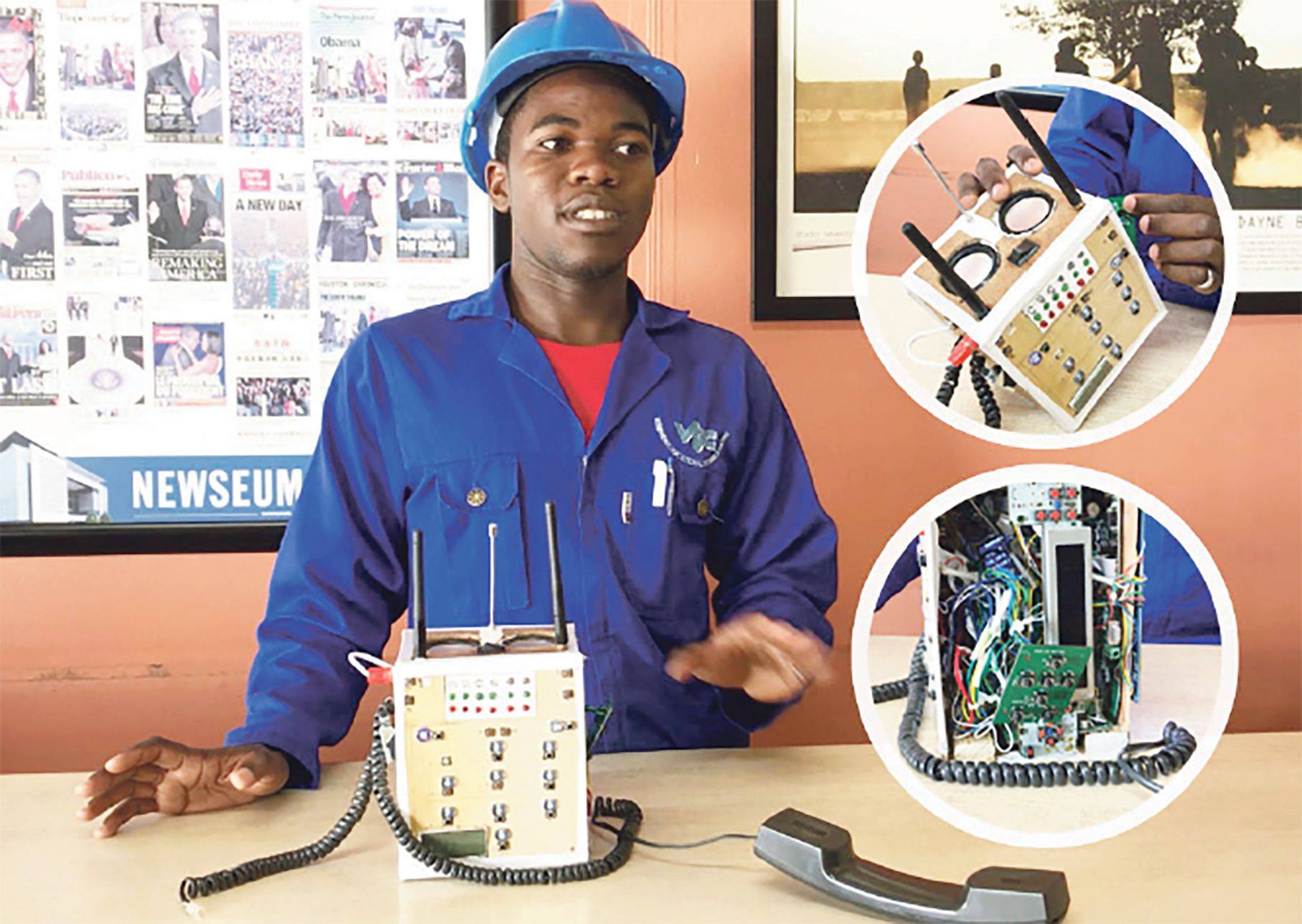
Simon Petrus Became Famous for Creating a Mobile Phone That Makes Calls Without a SIM Card or Credit, But Nearly a Decade Later, He Still Seeks Support to Innovate.
In 2015, a teenager from Namibia began to build something that would change his life. His name is Simon Petrus. At just 17 years old, he started working on an ambitious project: to build a mobile phone that would work without a SIM card, without credit, and without relying on any carrier.
All of this using repurposed parts from old televisions, radios, and broken cell phones.
His Story
For two years, Petrus worked alone on the project, without technical or financial support. His parents, even unemployed, helped as much as they could.
-
Mother Who Orchestrated Her Daughter’s Genius Education Enters History After Crime That Still Mystifies Spain

-
Brazil to Allocate 3% of Affordable Housing Program in 38 Cities for Homeless, Paving Way for First Property Transfers to Formerly Unhoused Residents

-
Man Builds Handcrafted Wooden Cabin in Canadian Forest Using Only Trees and No Construction Crew
-
Maria Marli, a 15-Year Veteran Bricklayer, Helps Build Bahia’s Tallest Building and Realizes Her Own Dreams




He assembled the device by hand and, in 2016, presented the prototype at a science fair in Namibia. The phone was an immediate success.
The device operated through radio waves. This allowed calls to be made for free, without needing a phone line.
In addition, the device included functions such as TV, FM radio, fan, flashlight, and USB charger. All in one structure.
The prototype won the national innovation contest that year and appeared in various African newspapers.
The Outcome of the Phone
Even with the media coverage, the project did not become a product. Petrus was unable to secure investment or support from the government or companies to move the idea forward.
He continued living with his parents and trying to develop new inventions, now with visibility but without resources.
In 2019, at 21 years old, Simon was still at home, unemployed, and looking for opportunities. In interviews, he stated that the biggest challenge was finding financial support to continue innovating. Nevertheless, he did not give up.
In 2020, he enrolled in the Windhoek Vocational Training Centre, a technical institution in the capital of Namibia. There, he studied Electronic Engineering for three years. Finally, in September 2023, he officially graduated. Another victory in his journey.
Even with the diploma, Simon Petrus continues to face obstacles. By 2025, nearly a decade after his first invention gained prominence, he remains unemployed, trying to make his projects viable independently.
Chronological Summary
- September 8, 2023: Simon completed his Electronic Engineering course.
- Since 2019: still looking for a job to support and develop his projects.
- 2025: various social media updates confirm that he continues without a fixed job.
His story has become a symbol of creativity and persistence, but also of how talent can be ignored when support is lacking.
Simon’s SIM-less phone is still a prototype, but his idea continues to inspire young Africans to believe in their own potential.






-

-

-

5 people reacted to this.