Portuguese
  Spanish


Archeologists In Israel Found An Impressive Treasure Of Gold And Silver Coins Dated From The 15th Century. Check Out The Details!
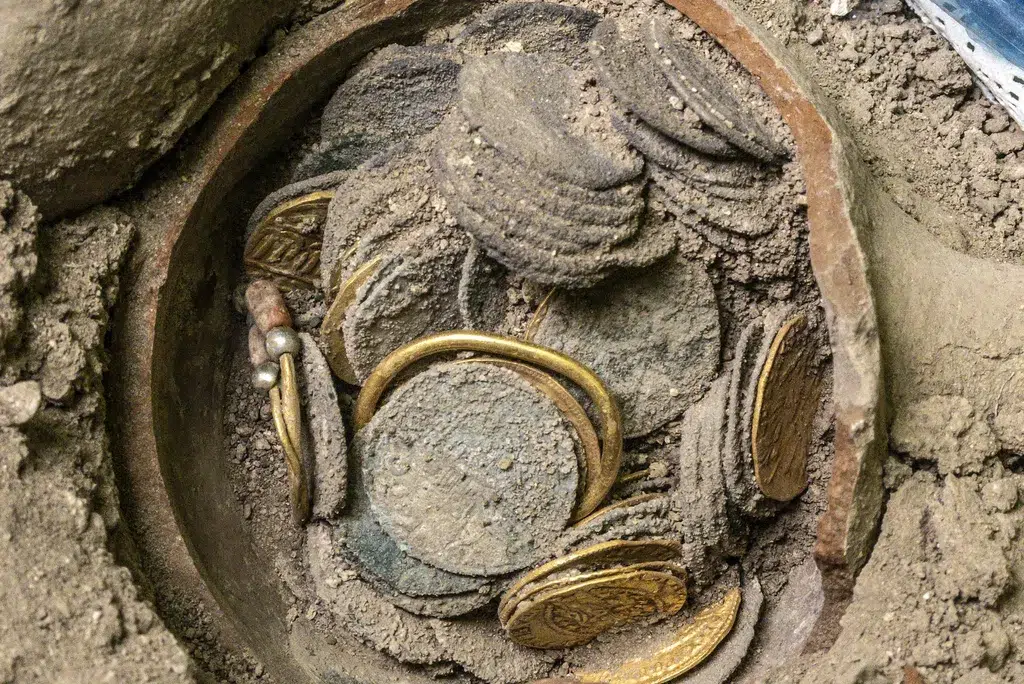
Archeologists in Israel made an impressive discovery in the ruins of an ancient synagogue located near the Sea of Galilee: a treasure of 364 gold and silver coins dated from the 15th century.
The discovery, made at the archaeological site of Huqoq, reveals fascinating details about trade and the economy of the region during the medieval period.
The Context Of The Discovery In Israel
The treasure was found inside two jars hidden under a collapsed wall of the synagogue.
-
15-Year-Old Entrepreneur Malu Lira Publishes 20 Children’s Books on Financial Education, Earns $500,000, and Expands Her Project to the Amazon Rainforest

-
Entrepreneur Turns Rio Cemetery Canteen into a Successful Snack Chain Generating $4.9 Million Annually and Expanding to Metro Stations

-
Rare fox feared “extinct” found alive on Caribbean island after over two decades without official sightings

-
21-Year-Old Brazilian Student Turns Homemade Popsicle Hobby into $100,000-a-Month Business





According to archaeologist Robert Kool, curator of the coin department at the Israel Antiquities Authority, the collection mainly contains coins from medieval Venice and the Mamluk sultanate, which ruled the region at the time.
The dating of the coins suggests they were deposited between 1438 and 1457, based on archaeological analyses and the chronology of the coins found.
The Origin Of The Coins
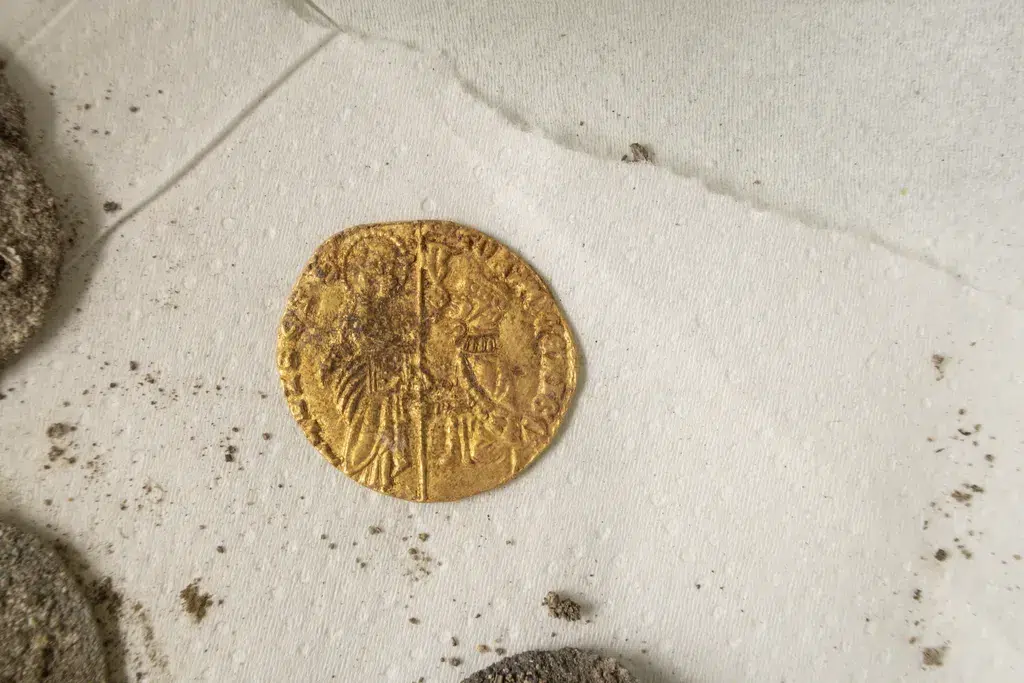
A large portion of the Venetian coins dates from the period when Francesco Dandolo was doge of Venice (1329-1339) until the reign of Francesco Foscari (1423-1457).
These coins bear the image of St. Mark the Evangelist, a biblical figure traditionally associated with the Gospel of Mark, and Latin inscriptions with religious messages, such as: “It Is You, Christ, To Whom This Ducat Is Entrusted, Which You Govern“.
In addition to the Venetian coins, the treasure from Israel includes coins minted during the reign of the Mamluk sultan al-Ashraf Barsbay (1422-1438), who ruled Egypt and Syria.
Coins from other regions were also found, such as a silver coin from Sicily, minted during the reign of James I (1285-1295), and even a coin from Serbia.
The Economic Importance Of Venetian Coins
During the Middle Ages, Venetian coins were widely accepted in the Eastern Mediterranean as a means of payment.
According to Kool, “by the end of the 14th century, Venetian ducats were the only European gold currency accepted in Mamluk Egypt and Syria“.
This demonstrates Venice’s economic influence in the region and the importance of its currency in international trade.
The Mysteries Surrounding The Treasure
It is still unknown who deposited the treasure or why it was left in the synagogue. Some hypotheses suggest that the money could have been raised for repairs to the religious building or belonged to a traveling merchant who never returned to retrieve it.
Another possibility is that the coins were donated by pilgrims visiting the tomb of Habakkuk, a biblical prophet mentioned in the Hebrew Bible, whose burial site is located near Huqoq.
The synagogue ceased to be used around the mid-15th century, and the structure collapsed over time.
As a result, the treasure remained hidden for centuries until its discovery in 2018. However, due to the risk of looting, its existence was only revealed publicly years later, as reported by Professor Jodi Magness from the University of North Carolina at Chapel Hill, who led the excavation.
With information from the American Journal of Numismatics.