





 Portuguese
  English
  Spanish
  3 min of reading
  0 comments



Experts Warn of a $50 Trillion Risk in Global Trade If Extreme Conflicts Disrupt Maritime Transport. Understand How This Crisis Could Harm Supply Chains Worldwide and the Impact on International Trade!
In recent years, the maritime transport sector has been adapting to serious geopolitical disruptions, which have been occurring with increasing frequency. From the invasion of Ukraine to Russian attacks on vessels, as well as the blockade imposed by the Houthis in the Red Sea, the possibility of a major conflict is already being considered in all projections from the industry.
However, there has been a lack of a clear metric regarding the financial impact that these conflicts could cause. The insurance company Lloyd’s provided a new perspective by releasing a report with surprising estimates.
The Economic Impact of a Geopolitical Conflict on Maritime Transport
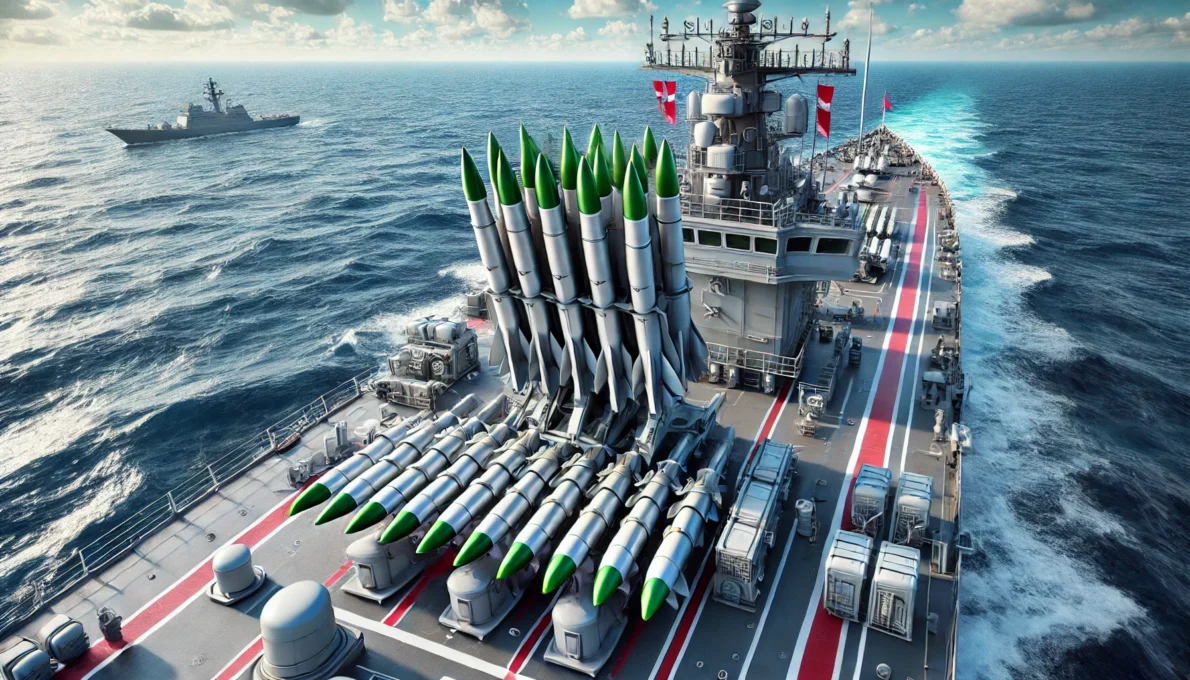
In its latest series on systemic risks, Lloyd’s examined a hypothetical scenario of regional conflict that would trigger enormous disruption in global trade chains. Considering that around 80% of global imports and exports are on ships at sea at any given time, the disruption of these routes poses one of the biggest potential economic risks.
-
UK intelligence issues strong warning: Russia may attack NATO soon amid escalation of drones on the eastern European flank and urges the alliance to invest in defense.

-
Brazil’s almost forgotten neighbor found oil at sea, attracted ExxonMobil and Chevron, became a billion-dollar bet in global energy, and now tries to answer if quick wealth also turns into real development.

-
The domino effect of US sanctions reaches cards in Cuba, bringing down Visa and Mastercard and exposing a new obstacle for the island’s economy.

-
US proposes extra tariff on Brazil for “forced labor” and raises alert about new commercial pressure against Brazilian exports




In the considered scenario, a superpower invades a large economy, disrupting global trade and supply patterns. This invasion would include attacks on military targets, as well as a physical blockade on trade routes, cyberattacks on critical infrastructure, and disruptions to transport, energy, and communications.
In response, another superpower and its allies intervene, supporting the invaded economy and initiating a regime of sanctions and confrontations that would close the maritime routes nearest to the conflict zone.
This confrontation would escalate into military action between opposing forces, affecting global supply chains for raw materials, microchips, food, and other products. According to Lloyd’s report, “industries reliant on critical materials, such as semiconductors and rare minerals – in the health, technology, and automotive sectors – would face chronic shortages and delays.”
The cascading effects of disruptions to maritime routes would generate inflation in various economies and even food shortages in some regions.
Economic Losses Not Only for the Maritime Transport Sector
Lloyd’s estimates of the economic losses arising from this type of conflict are staggering. The global impact over a five-year period could range from $8 to $50 trillion, representing a loss of up to 7% of the global GDP.
The most likely scenario projected by the insurer points to a loss of $15 trillion. In an extreme scenario, with an impact of $50 trillion, the likelihood of occurrence would be only 0.5%.
Among the most affected countries, China would lead the losses, given its significant integration with global trade. Europe and the Asia-Pacific would also suffer severe impacts, while North America, although less affected, could lose up to $5 trillion over five years, equivalent to 10% of the total global impact.
The conclusions of Lloyd’s study reveal how vulnerable the global trade system is to geopolitical tensions.
With increasing international instability, the maritime transport sector, as well as global supply chains, will need to develop new strategies to face these challenges and mitigate the potential economic damages that a major regional war could cause.






Be the first to react!