Portuguese
  Spanish


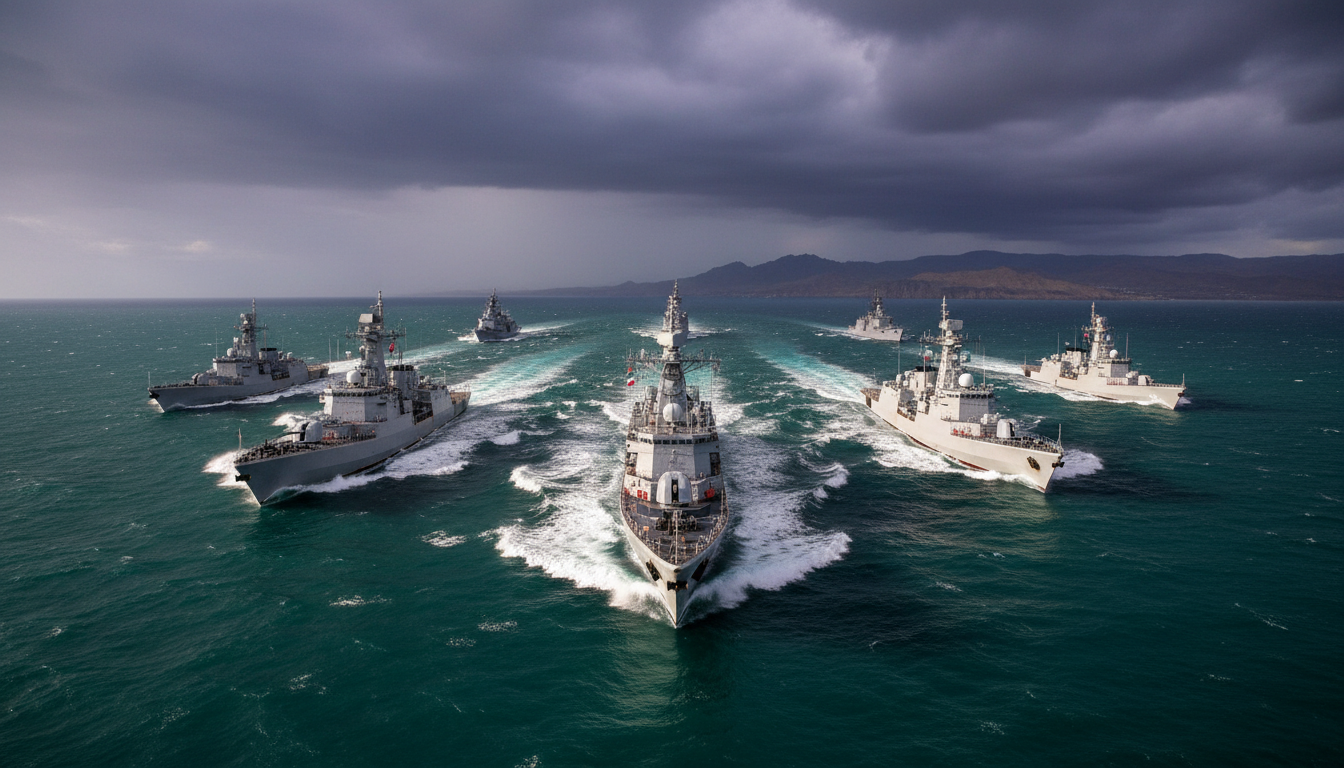


Iranian Armed Forces Promise Direct Retaliation Against Port Facilities After US Announces Total Blockade of the Strait of Hormuz — Oil Surpasses $100, Negotiations in Islamabad Collapse and Vice President Vance Leads American Delegation
The Iranian Armed Forces have threatened direct retaliation against ports in the Persian Gulf and the Sea of Oman. The statement came after the US announced a total naval blockade of the Strait of Hormuz.
Tehran declared that port security will be “for all or for none”. The phrase signals a willingness to escalate the conflict.
The Strait of Hormuz is only 33 km wide. It carries 20% of all the oil consumed in the world.
-
The Arctic is no longer just a frozen region and is becoming a new military board with the opening of maritime routes, expansion of bases, nuclear icebreakers, and competition among Russia, NATO, the United States, and China.

-
U.S. Dismisses Brazilian Foreign Ministry’s Military Risk Warning as “Absurd,” Cites Brazilian Criminal Gangs Operating in the U.S. Since May 2026
-
U.S. Military Intervention Risk in Brazil Raises Alarm, Highlights National Sovereignty Amid Tensions Over Washington’s Terrorist Designation of PCC and Comando Vermelho

-
Brazilian Air Force’s Sole KC-30 Aircraft Completes Strategic Mission to Spain for 105mm Anti-Tank Ammunition for Leopard 1A5 Tanks


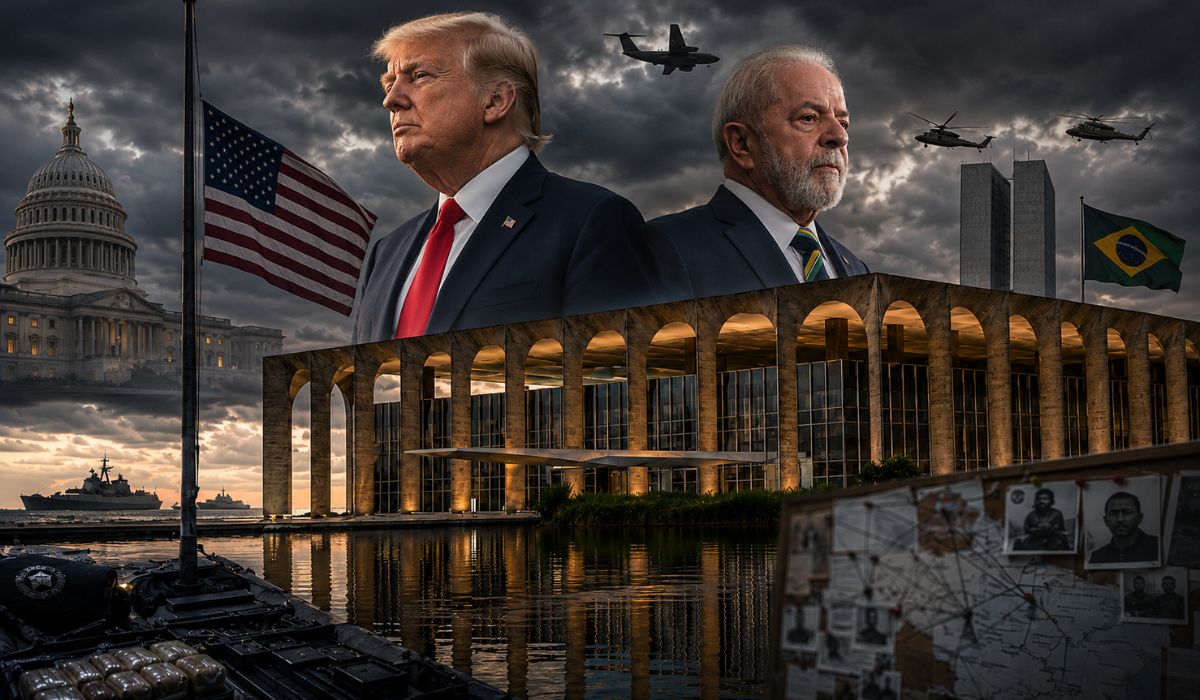

The blockade was announced by President Trump after the collapse of negotiations in Islamabad, Pakistan, on April 11, 2026.
Vice President J.D. Vance led the American delegation. The US demanded free navigation and the dismantling of the Iranian nuclear program.

The Collapse in Islamabad
The negotiations in Islamabad entered into strong diplomatic friction on April 11. The round was described as “exhaustive”.
The US wanted to include nuclear dismantlement in the truce package. Iran categorically refused.
The focus of the impasse is the control of the Strait of Hormuz. It is the main bargaining chip in the conflict that began in February 2026.
After the collapse, Trump announced that the US Navy had initiated a total blockade on the morning of Monday, April 13.
Iran immediately responded with threats to neighboring ports. The escalation was swift.
Oil Surpasses $100
The price of Brent crude oil rose by 6.5% on the day of the announcement. It surpassed the mark of $100.
Before the crisis, Brent was projected between $75 and $85 for 2026. Now, revisions point to $85 to $95.
Experts warn of the need for alternatives to dependence on the Persian Gulf.
The impact has already reached the pump in Brazil: gasoline R$ 6.77 and diesel R$ 7.43.

What Iran threatens to do
- Direct retaliation against ports in the Persian Gulf
- Permanent control of the Strait of Hormuz
- Threat to neighboring countries that support the blockade
- Position that security is “for all or for none”
The threat to ports of neighboring countries is particularly serious. Saudi Arabia, the UAE, and Oman depend on these facilities.
An attack on port infrastructure would paralyze global supply chains far beyond oil.
Plastics, automobiles, fertilizers, electronics, and chemicals also pass through the strait.
Italy has already refused to participate in the blockade and broke with Trump. The American coalition is losing European support.

Extremely volatile and unpredictable scenario
Analysts describe a potential ceasefire as “temporary relief amid uncertainties”. Structural tensions remain.
Statements from both sides change the scenario daily. A diplomatic agreement could emerge as quickly as the crisis.
Global dependence on the Strait of Hormuz is the Achilles’ heel of the world energy economy.
Information from News Rondônia, Military Society Magazine, and Commerce Journal. Data from April 15, 2026.