Portuguese
  Spanish


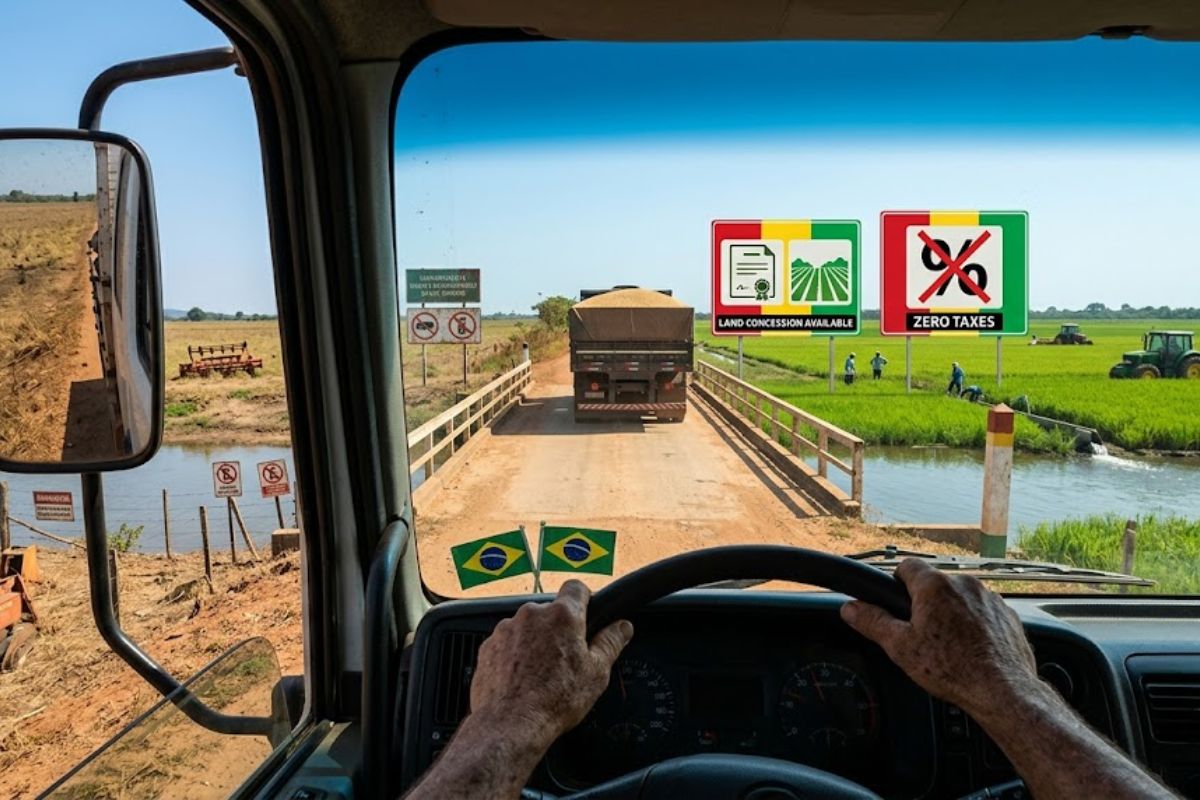


Farmers producing soybeans and grains in Roraima are crossing the border with Guyana and finding on the other side what they cannot find in Brazil: land granted by the government, tax exemption, a fluvial terminal within the farm, and a $1 billion highway being paved with oil money to connect the crops directly to the port of Georgetown.
Guyana, a former British colony with 800,000 inhabitants that borders Roraima, has become one of the fastest-growing countries in the world after discovering giant oil reserves starting in 2015. With petrodollars, the Guyanese government is investing about R$ 5 billion in paving 500 km of highway between Georgetown and Lethem, on the border with Brazil, including about 50 bridges. One-third is already paved. The project promises to reduce the transportation of goods from up to 21 days to 48 hours.
For Brazilian producers who crossed the border, the difference is brutal. In a special report by Band, farmer Emílio summarizes: “Here you are respected. The government sees us as partners, it does not impose any difficulties.” The Guyanese government grants land for cultivation, does not charge taxes on agricultural production, and keeps more than 80% of the territory preserved.
What Guyana offers that Brazil cannot deliver

The list starts with land and tax, but it doesn’t stop there. One of the farms shown in the report has a fluvial loading terminal within the property.
-
Producer receives news and had to cull almost the entire herd, bounced back with the help of compensation, and is now producing 450 liters of milk per day in SC.

-
Quail Eggs Reveal a “Secret Code” on Their Shells Explaining Unique Patterns and Colors

-
Rare Tropical Fruit Canistel, with Egg Yolk Color and Caramel Flavor, Gains Interest from Researchers and Small Producers in Brazil
-
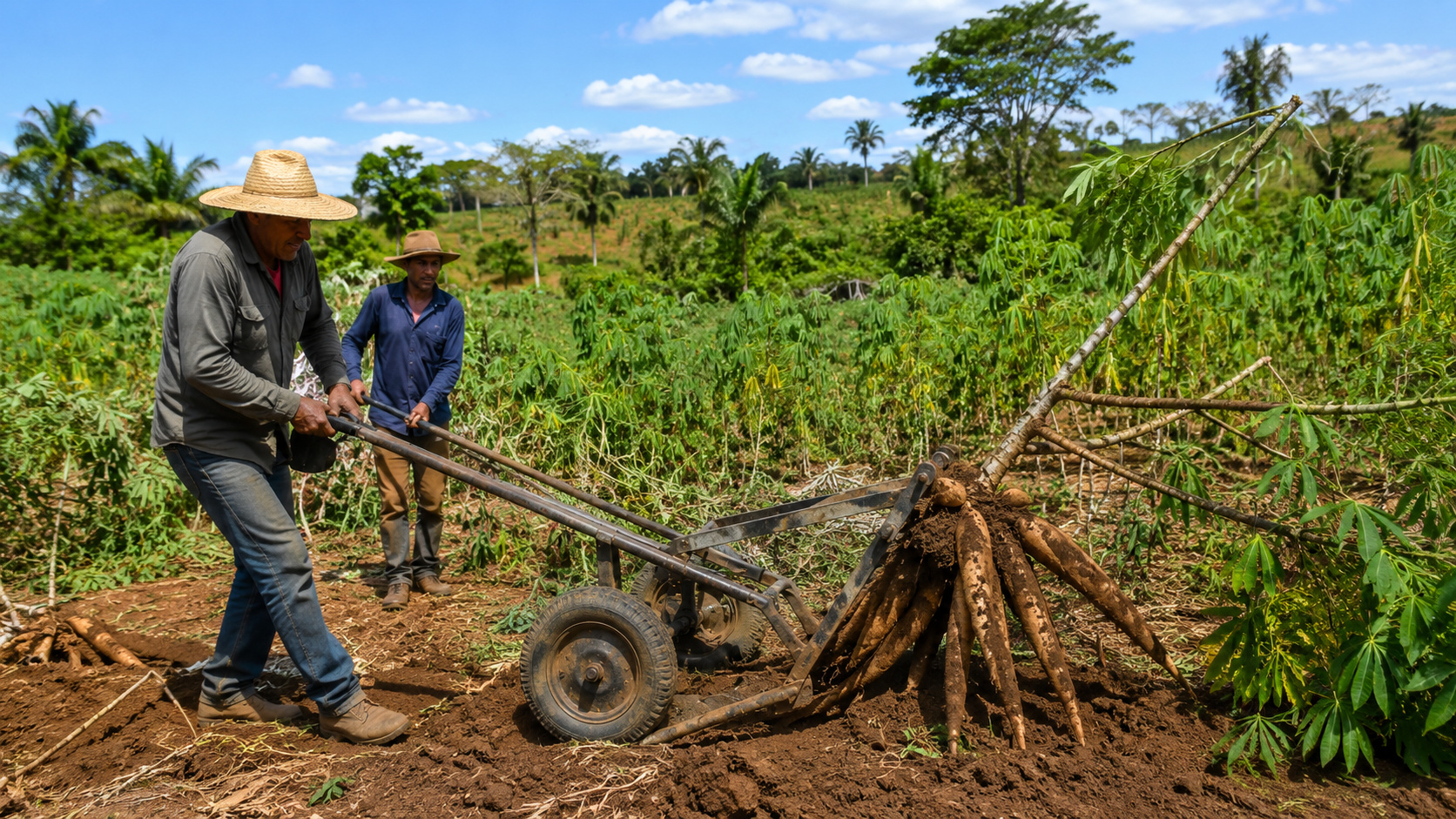
Brazilian Farmers Develop Wheeled Metal Lever to Ease Cassava Harvesting Without Heavy Machinery


The grain harvest goes directly from the field to the river and from there to the port, without needing trucks crossing hundreds of kilometers of poor roads.
The president of Aprosoja of Roraima, Murilo Ferrari, compares: from Boa Vista to Georgetown is 680 km, and from Georgetown to the Panama Canal is only 4.5 days by ship, compared to 8.5 days from Manaus and 15 days from Santos.
While Guyana is already using waterways to transport production, Brazil has just published a decree to study the use of rivers like Tapajós and Araguaia.
The difference in speed between the two countries is what is pushing producers out.
In February 2026, Roraima signed a Memorandum of Understanding with the Guyanese government and the company TriStar, which manages the new Port of Georgetown, inaugurated with capacity for Panamax ships and a draft of 9 meters.
How much has trade between Roraima and Guyana grown in recent years

The numbers show an explosion. Exports from Roraima to Guyana jumped from US$ 1.6 million in 2018 to US$ 36.4 million in 2024, a growth of more than 22 times in six years.
In just the first half of 2025, the volume has already reached US$ 21.7 million, almost 60% of the entire previous year.
Soybeans, corn, meat, and machinery are the main exported products. Fertilizers lead imports.
Roraima produces about 430 thousand tons of soybeans per harvest on 130 thousand hectares, and the trend is for growth.
But logistics within Brazil continues to be the bottleneck. Today, most of the cargo is transported by barge down the Branco River to Manaus and from there continues through the Amazon.
It is expensive, slow, and vulnerable to droughts. The route through Guyana shortens the path and eliminates dependence on the Amazon rivers.
Why can Guyana do what Brazil cannot


Oil. Guyana produces 900 thousand barrels per day with only 800 thousand inhabitants, the highest per capita production in the world, surpassing Kuwait, Qatar, and the United Arab Emirates.
The royalties fund a sovereign fund that finances roads, bridges, and ports without needing tax on agriculture.
The model attracts Brazilian producers who are tired of high interest rates, legal insecurity over land demarcation, and bureaucracy that can hold up a load of fertilizers at the border for 15 days.
There is still a need for a bridge over the Tacutu River to complete road integration and a treaty that allows Brazilian trucks to operate on Guyanese soil without transshipment.
But the pace of construction suggests that Guyana will resolve the infrastructure before Brazil resolves the bureaucracy.
And you, do you think Brazil is losing rural producers to Guyana due to lack of incentives or excessive bureaucracy? Comment below.