Portuguese
  Spanish


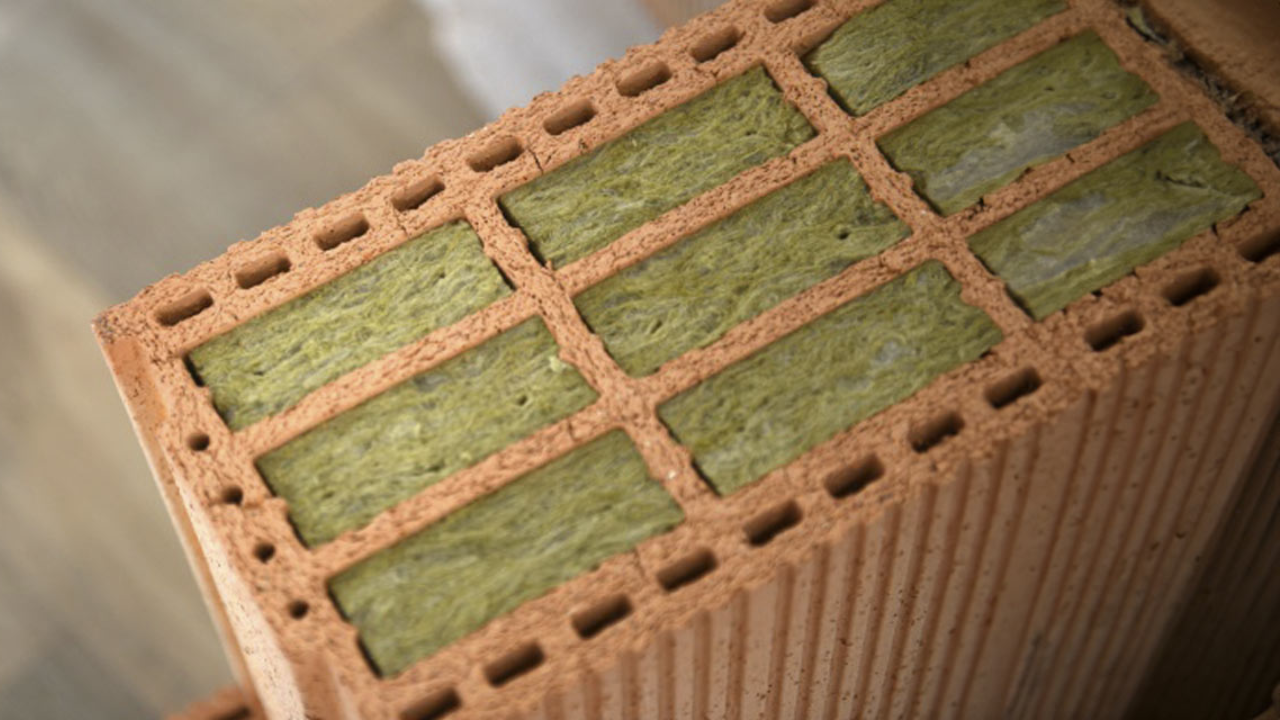

ISObric is the first terracotta brick with an insulating cover, providing high-performance thermal insulation and meeting the RE2020 regulation.
The ISObric is the first terracotta brick with an insulating cover, designed to offer superior performance in thermal insulation. Manufactured by Wienerberger, a specialist in terracotta products, ISObric is an innovation that brings significant benefits for both sustainability and energy efficiency, meeting the new requirements of the RE2020 regulation.
A Promising Innovation in Thermal Insulation
The ISObric is not just another brick on the market. This innovative terracotta brick is designed to significantly improve the thermal insulation of any construction, whether residential or commercial.
The insulating cover present in ISObric offers an advanced solution for thermal insulation, helping to keep the indoor temperature of environments more stable throughout the year.
-
China Develops Custom 140-Ton Electric Mining Truck with 770 kWh Swappable Battery, Deploys 290 Units in Xinjiang’s Largest Zinc Mine

-
Meta to Launch Arena, a New Prediction App Targeting 3.56 Billion Users, Competing with Polymarket and Kalshi

-
Scientist Challenges Famous Human Evolution Theory, Argues Homo Sapiens Evolved Gradually Over Thousands of Years
-
15-Year-Old American Builds Ocean Generator with PVC Pipe and 3D-Printed Propeller for $12, Wins National Prize, Presents at White House, and Makes Forbes 30 Under 30 List




This superior thermal performance is a major advance, meeting the requirements of the RE2020 environmental regulation, which aims to promote more sustainable and energy-efficient buildings.
The thermal insulation provided by ISObric is a practical solution to reduce energy consumption and increase thermal comfort within buildings.
Wienerberger, with over 25 years of experience in the terracotta sector, launched ISObric with the goal of making buildings more efficient, sustainable, and safe.
The company is committed to innovation and a positive impact on the environment.
With ISObric, Wienerberger offers a solution that not only improves thermal insulation but also contributes to reducing the ecological footprint of construction.
Adaptability for Various Types of Construction and Insulation with ISObric
ISObric is ideal for all types of construction. Its main advantage is improving the comfort of buildings, providing high-quality thermal insulation.
However, it also meets the needs of construction professionals, offering a practical and efficient brick for use in various projects.
With standard dimensions of 500 × 200 × 299 mm, ISObric is easily adaptable to different types of constructions.
This brick can be used in both small and large works, meeting the demand for efficiency and thermal comfort.
Additionally, its weight of only 18.5 kg facilitates handling and transportation on the construction site, making the construction process faster and more practical.
The unique design of ISObric, with its three rows of cavities filled with hydrophobic rock wool, gives it a thermal insulation capacity that stands out in the market.
The brick achieves a thermal performance of R = 2 m².K/W, surpassing many other traditional materials in terms of energy efficiency.
Another positive point is its fire resistance. Since ISObric is made of non-combustible materials, it offers an extra layer of safety for constructions.
This factor is essential in a market where fire safety is a priority.
Furthermore, ISObric has the additional benefit of being compliant with the RE2020 regulation, an important environmental standard that aims to reduce the impact of construction on the environment.
The brick was designed to meet the thermal performance requirements established by the standard, ensuring that buildings are more sustainable and efficient.

With information from Portal Energia.