Portuguese
  Spanish


TikTok Data Center in Caucaia May Use as Much Water as the Entire City Population — in a Region Already Facing Severe Droughts.
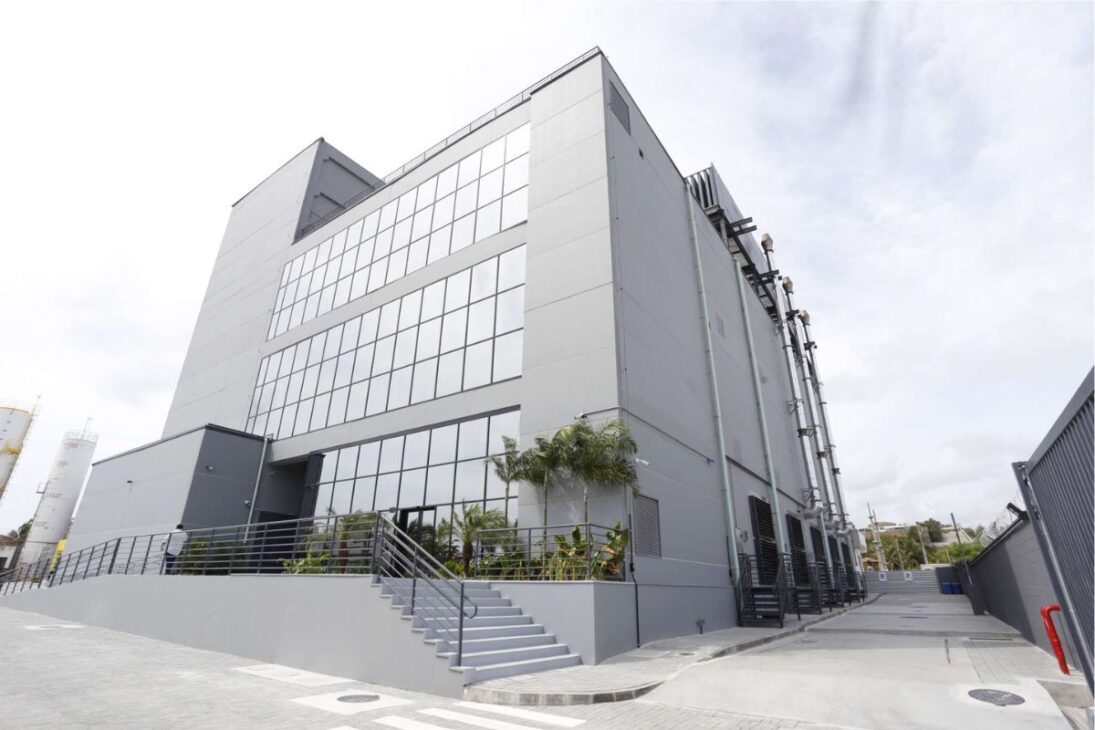
Ceará is about to receive one of the largest data centers in Latin America, with an estimated capacity to consume up to 1 gigawatt of energy. Behind the project is the Chinese giant ByteDance, owner of TikTok, which is evaluating the construction of the unit in the Pecém industrial and port complex. The goal? To transform the northeastern state into a global hub for data processing, artificial intelligence, and cloud computing.
The investment is estimated at over R$ 50 billion, according to sources close to the negotiations. The initial structure will have 300 megawatts of power but could triple in size. It is an infrastructure comparable to the energy consumption of entire cities. According to a study obtained by Intercept Brasil, the anticipated consumption will be equivalent to that of 2.2 million people — and could reach the mark of 3.2 million if the center reaches its maximum capacity.
A Grandiose Project Born in the Backlands
The proposal is being led by Casa dos Ventos, a Brazilian company specializing in renewable energy, focusing on wind and solar projects. It has already obtained preliminary licensing from the Ceará Environment Secretary and is awaiting final authorizations from the Ministry of Mines and Energy and the National Electric System Operator (ONS). The choice of location is not casual: the port of Pecém offers international logistics and is connected to nearby wind farms, facilitating the use of 100% clean energy to supply the data center.
-
Volvo’s New Loaders Feature Obstacle Detection, Automatic Braking, and 360-Degree Operator View

-
Chinese Manager Accused of Whipping Worker Sparks Protest by 1,200 Employees at Major Brazilian Factory

-
France Revamps 530 Social Housing Units with Large Balconies and Glass Facades Without Demolishing Existing Buildings

-
10-Year-Old Max Makes History with Paris Fashion Show, Launches Own Brand, Hires Staff, and Sets World Record as Youngest Runway Designer




The cooling system of the structure will use a closed circuit, which means that the water used will not be discarded after use, but recirculated within the structure — an attempt to mitigate the impact in a region that historically suffers from water scarcity. Nevertheless, the numbers are concerning: the estimate is that water consumption will represent 0.045% of the residential demand of the entire municipality of Caucaia. It may seem small, but in an area with a history of prolonged droughts, any additional pressure on water resources is a cause for alarm.
Development or Silent Threat?
Behind the economic optimism — the project promises to generate thousands of jobs and establish Brazil as a global destination for cutting-edge technology — there is a silent debate gaining momentum. The massive energy consumption and demand for water raise concerns about the environmental and social impact of such enterprises in vulnerable regions. And there is an evident irony: the choice of a city like Caucaia, which has already faced severe water crises, to host one of the largest consumers of electricity and water in the country.
For the federal government, it is a strategic milestone. Vice President Geraldo Alckmin himself has been following the negotiations, seeing in the project a chance to position Brazil as a hub for artificial intelligence and big data processing. The expectation is that TikTok will use the structure to enhance its algorithms’ performance, develop products in real time, and store data locally, according to Brazilian legislation requirements.
The forecast is for construction to begin in 2025, with a partial completion expected by 2027. By then, other technology giants — such as Amazon, Google, and Microsoft — are also exploring similar projects in the country, all interested in leveraging Brazil’s comparative advantage: a clean and abundant energy matrix, based on hydroelectric, wind, and solar sources.
But experts warn: without proper planning, the race for data centers could result in a new energy crisis. There are already delays in transmission lines, bottlenecks in licensing, and failures in environmental regulation. The case of Ceará may serve as an example — or a warning.