






 Portuguese
  Spanish


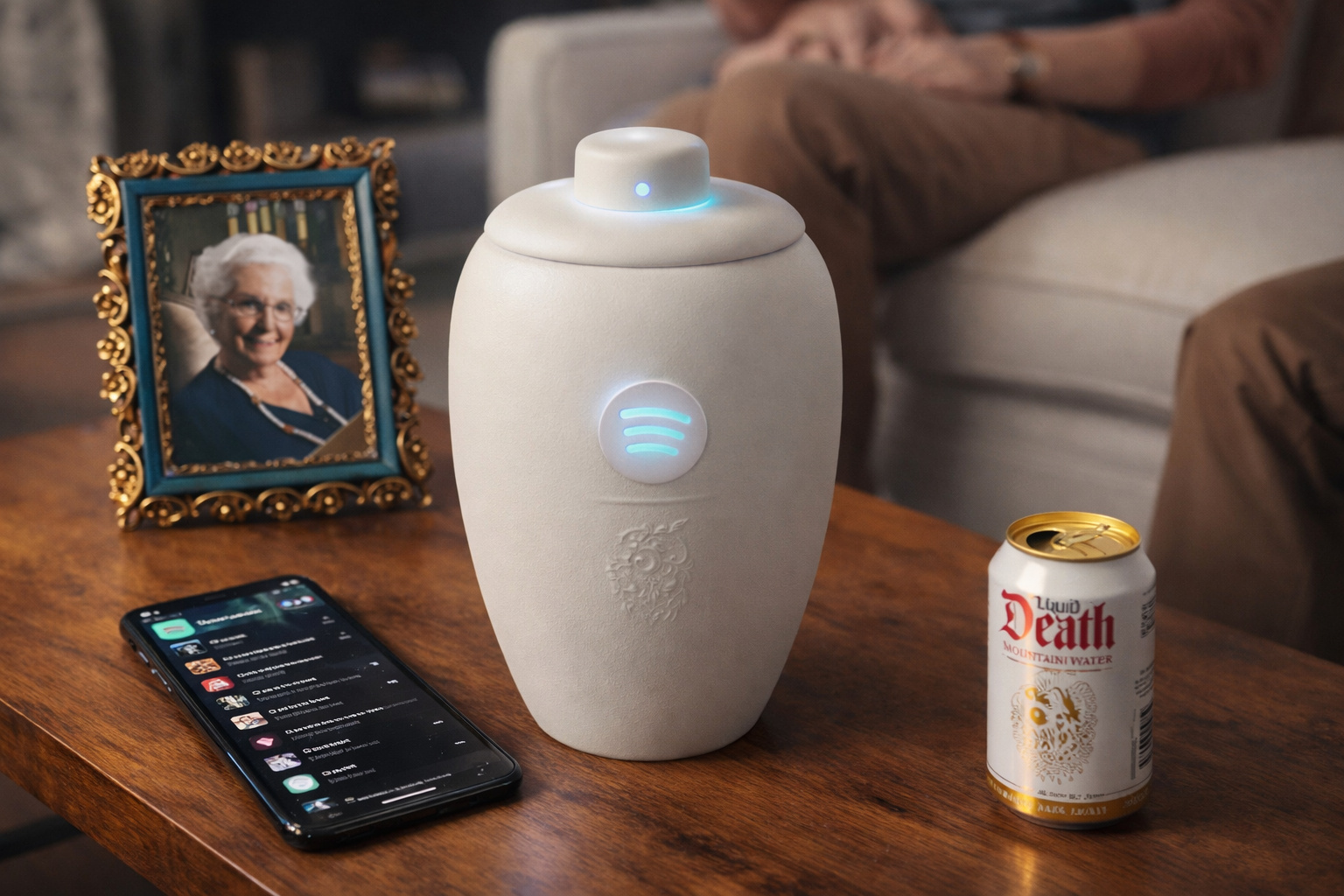


Spotify And Liquid Death Put A Speaker Inside A Casket For 495 Dollars, Sold In A Tiny Batch Of 150 Units In The United States And Also Create A Personalized Playlist Generator Forever Based On Your Musical Taste
Some people joke, “play this song at my funeral”. Now this has taken shape, price, and a play button. Spotify teamed up with Liquid Death to launch a casket with a built-in speaker.
It costs 495 dollars and appears in a limited edition, only 150 units in the United States.
The most curious part is that it’s not a project filled with screens and new apps. The play is simple, and that’s precisely why it draws attention.
-
Modular ‘Microhouse’ Arrives Ready to Install in Hours Without Deep Foundations or Construction Waste

-
UK Student Develops Solar Water Purification System Using Fresnel Lens, Wins Global Young Scientists Popular Vote
-
Giant Dredger “No Woman, No Cry” Arrived in Brazil in 2010 to Clear 1.8 Million m³ of Sand and Improve Port Logistics
-
UAE Installs 16 Giant Concrete Coffers in Abu Dhabi Waters to Build 600-Meter Quay for Mega-Yachts and Debut New Technique


A Market That Has Always Been Quiet Now Receives A Product Made To Play Music, And This Changes The Conversation About Memorials
On the outside, the casket looks like a standard memorial piece. The surprise comes when you open the lid.
Inside, there is a discreet, wireless speaker integrated into the body of the casket. It functions like a soundbox, just hidden.
The proposal is straightforward: connect a phone via Bluetooth and play music right there.
There is no built-in Wi-Fi. No voice assistant. There is also no subscription obligation. You pair the device and hit play.
The Technical Choice That Makes Sense, Bluetooth Instead Of Internet, Less Stuff To Go Wrong And More Impact On The Concept
When a brand puts internet in a device, it brings along a line of headaches.
Updates, support, service dependency, risk of becoming outdated. Here, they avoided that.
Bluetooth is a short path. It’s cheap, it’s common, and any phone can handle it.
This detail seems small, but it’s the heart of the product: the casket doesn’t try to be smart, it just tries to be touchable.
And this makes everything more “plug and play,” with fewer steps and less chance of getting stuck when someone just wants to listen to a song.
The Humor Behind The Product Is Not Free, It Is Part Of The Strategy To Sell Expensively And Sell Little
Liquid Death thrives on an irreverent identity and ideas that seem absurd. The casket follows this same logic.
Spotify brings another force: the relationship people have with playlists.
Today, many people use music as a diary. There are playlists for exercising, working, crying, traveling.
The casket takes this habit and transforms it into a physical object, almost like a collector’s item.
The price also follows this logic. 495 dollars is not the price of a common item. That’s why it’s priced as a product meant to spark conversation.
The Eternal Playlist Comes As A Layer Of Personalization, And Transforms Musical Taste Into A Playful “Legacy,” But With Real Effect
The partnership didn’t stop at hardware.
Spotify also launched a generator for eternal playlists, available for users in the United States.
It asks questions about your style, your “eternal vibe,” and even what song you would choose to prepare for “haunting.”
Then, it cross-references the answers with your listening history and creates a personalized playlist.
Those who have the casket can play this list directly on the built-in speaker. Those who don’t can still share the result with friends.
It’s a way to take the personalization that already exists on the platform and push it to an unexpected place: a tribute.
What This Reveals About Market And Consumption, When Technology Enters Grief And Becomes A Niche Product With A Domino Effect
This launch touches a sensitive point: how people deal with death and memory.
In the United States, cremation is on the rise, and thus many families seek more personalized ways to remember someone.
In this scenario, a product like this becomes a market test.
If a limited item of 150 units makes a buzz, other companies might try to replicate the formula in different formats.
And the competition becomes clear: on one side, the traditional, sober, and silent model. On the other, tech and consumer brands transforming memorials into experiences.
The Spotify casket grabs attention because it combines three things that rarely go together: death, music, and technology, and does it literally, with a speaker inside a casket.
Now tell me in the comments: if you could choose, what three songs would have to play to represent your story?


Piada pronta!!! Kkkkkkkk