Portuguese
  Spanish


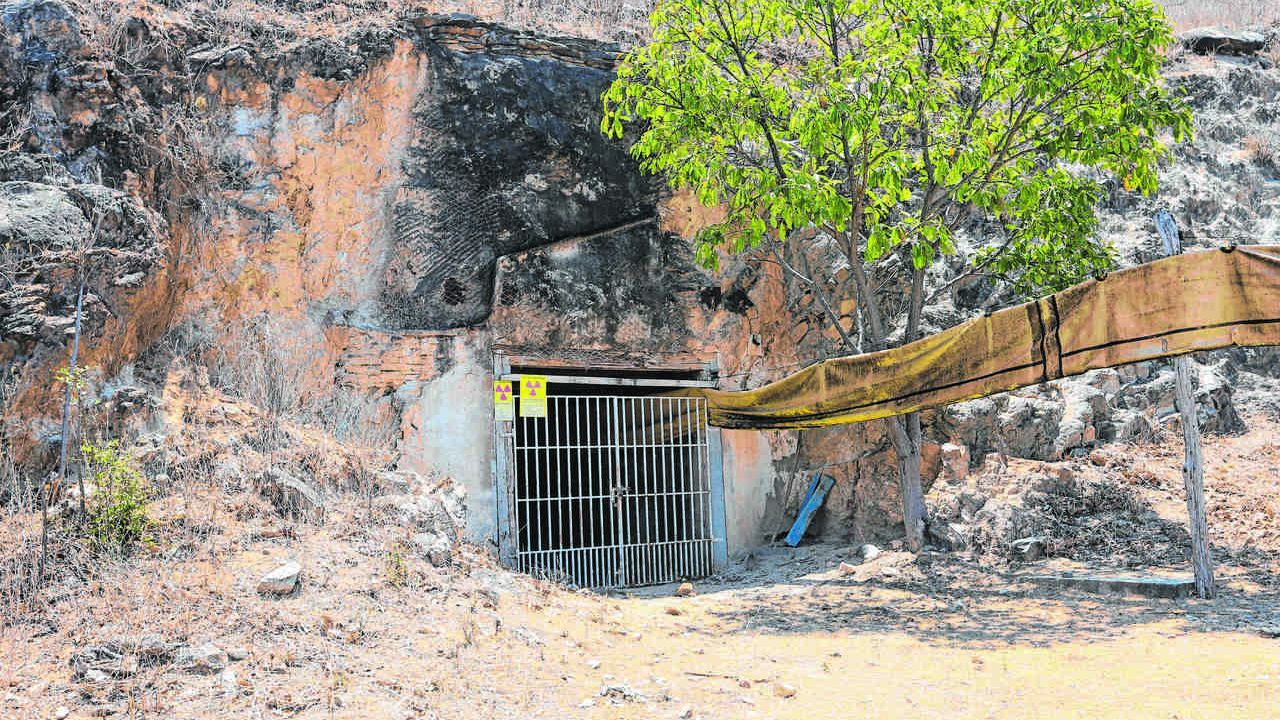

The Uranium and Phosphate Plant in Santa Quitéria, Interior of Ceará, Is One Step Closer to Becoming a Reality After Approval Granted by Ibama. The Unit Will Count on Investments of R$ 2.3 Billion
The project for the uranium and phosphate plant in Santa Quitéria, in the interior of Ceará, is taking another step after Ibama granted an approval for the venture this Friday (18). The approval ensures that the process will advance until the next licenses are obtained. Approval is a contractual act by which the drawee agrees to accept the order incorporated by the credit title.
After Ibama Approval, Project Will Undergo Public Hearings
According to Raphael Turri, manager of health, safety, and environment at Galvani, a company that is part of the Santa Quitéria consortium alongside INB, Ibama’s approval for the venture is formal and will be used to begin the analysis of the environmental impact study of the uranium plant and phosphate.
Now, the entity will verify if the report and the environmental impact study are meeting all the requirements set out in the terms of reference. The approval of the venture in Ceará does not mean approval of the license for the project, but it represents an important step for the preliminary environmental license to be analyzed.
-
U.S. City Builds Tiny Home Village on Water Company Land to House 136 Homeless People: Inside the Social Housing Units

-
Woman Turns Shipping Container into Home, Embraces Rural Life to Cut Monthly Expenses to Just Over $330
-
France Revamps 530 Social Housing Units with Large Balconies and Glass Facades Without Demolishing Existing Buildings

-
Facing high rent, couple transforms parents’ garage into a fully functional apartment, creating a complete home at a fraction of the market cost.




After the approval, there will be a period of about 2 months for public hearings regarding the project of the uranium and phosphate plant, to gather suggestions, criticisms, and questions from society. The expectation is that these hearings will be held as early as May. According to the manager, the company’s expectation is to start the construction of the venture in Ceará by the end of this year or the beginning of the next.
Venture Will Have an Investment of R$2.3 Billion
The projection is that the construction of the venture in Ceará will take about two years, provided it follows the schedule without any setbacks, and operations are expected to begin by the end of 2024 or the beginning of 2025.
The project estimates to receive R$ 2.3 billion in investments, generating jobs for more than 5,000 people. According to Alessandra Barreto, licensing and project coordinator at INB, the environmental licensing process with Ibama consists of three stages: the first, where the preliminary license is obtained; the second, which is the installation license; and the third, which comes after construction, where there is a process for the operation license. These stages must be aligned with nuclear licensing, as the venture in Ceará is for a uranium and phosphate plant.
Plant Will Produce One Million Tons of Phosphate Fertilizers Annually
The estimate is that one million tons of phosphate fertilizers will be produced annually, which can guarantee about 25% of what is consumed in the North and Northeast. Additionally, 200,000 tons of dicalcium asphalt will be produced each year, along with 2,300 tons of uranium concentrates, ensuring the country’s self-sufficiency.
The uranium and phosphate plant is very relevant in the Federal Government’s plans to mitigate Brazil’s dependence on fertilizer imports, as difficulties in obtaining such products have impacted agribusiness amid a crisis that has been affecting the country even before the war between Russia and Ukraine. The unit will require 855 m³ of water per hour, a volume that will come from a pipeline yet to be installed in the region by the State government. The pipeline is still in the licensing process and construction is expected to last up to a year and a half.
Materials produced at the unit will be transported along two routes. Uranium will be taken to the Port of Pecém, where it will be exported for enrichment and brought back to the country to be used in the plants in Angra, Rio de Janeiro. The other route will be to the Port of Mucuripe, where phosphates will be taken for fertilizer production.
This content was written based on information originally released by Victor Ximenes of Portal Diário do Nordeste.