






 Portuguese
  Spanish
  2 min of reading
  0 comments


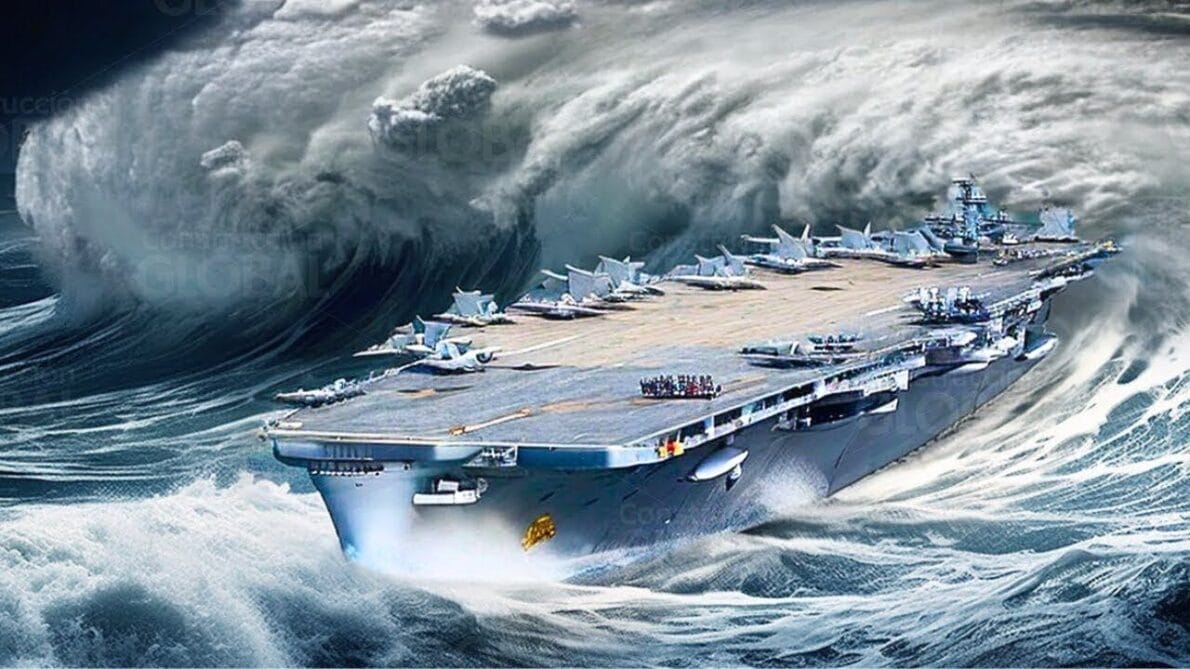
Imagine being aboard the American aircraft carrier USS Gerald R Ford, a true floating city. You are part of the crew and work efficiently when suddenly the sky darkens and the wind begins to howl. The waves rise, unleashing a hurricane with all its fury. Fear grips everyone on board as the storm threatens to destroy everything.
The sailors of the USS Gerald R Ford faced the harsh reality of the sea. Weather conditions change rapidly, transforming the serene surface into a battlefield against the elements. Strong winds and gigantic waves test the stability and safety of the aircraft carrier.
During a storm, winds can reach extremely high speeds, making navigation very difficult. The waves, in turn, can reach astonishing heights, reaching 90 meters, like a threatening wall of water over the ship. These waves exert enormous pressure on the structure of the aircraft carrier, jeopardizing its stability.
The USS Gerald R Ford is one of the largest and most advanced aircraft carriers in the United States Navy
Equipped with cutting-edge technology, it has systems to maintain stability even in the most adverse conditions. The ship’s hull is designed to displace a large volume of water, ensuring that it floats. Additionally, naval engineers carefully position the weight, such as machinery and fuel, in the lower parts of the ship to keep a low center of gravity and ensure greater stability.
-
Without a mansion, without high investment, and without a traditional classroom, a teacher living in a 22 m² house taught students to build a 9 m² studio apartment with the equivalent of R$10,000.

-
Without her own home and pressured by rent, a 25-year-old bought a small 15-meter boat, gradually renovated the interior by herself, transformed the interior with paint, new flooring, a larger bathroom, and started living on the canals, paying much less per month.
-
Long before sustainable construction became a trend, China built earthen fortresses with multiple floors, a central courtyard, and the capacity to house up to 800 people living in a community.
-
He got tired of renting, bought an old school bus, removed the seats, modified the roof, reinforced everything with steel, and created a two-story mobile home that looks small on the outside but houses two bedrooms inside.




The crew of the USS Gerald R Ford is highly trained to face adverse weather conditions. During the hurricane, they adjust the control and stability systems, using ballast tanks and stabilizers to maintain the ship’s balance.
These systems allow the aircraft carrier to withstand the movement of the waves, minimizing the roll and ensuring the safety of everyone on board
The incident of the USS Gerald R Ford recalls the tragedy of the USS El Faro, an amphibious transport ship that sank during Hurricane Joaquin in 2015. The loss of all 33 crew members highlighted the importance of proper preparation and robust systems for facing extreme storms.
The USS Gerald R Ford, even while facing a giant hurricane, demonstrated the resilience and skill of the United States Navy in protecting its ships and crews. The combination of advanced naval engineering, rigorous training, and cutting-edge technology ensured that the aircraft carrier overcame the fury of the sea. Each successful mission reinforces the importance of always being prepared for the unpredictable challenges of the ocean.






-

1 person reacted to this.