






 Portuguese
  Spanish
  3 min of reading
  0 comments


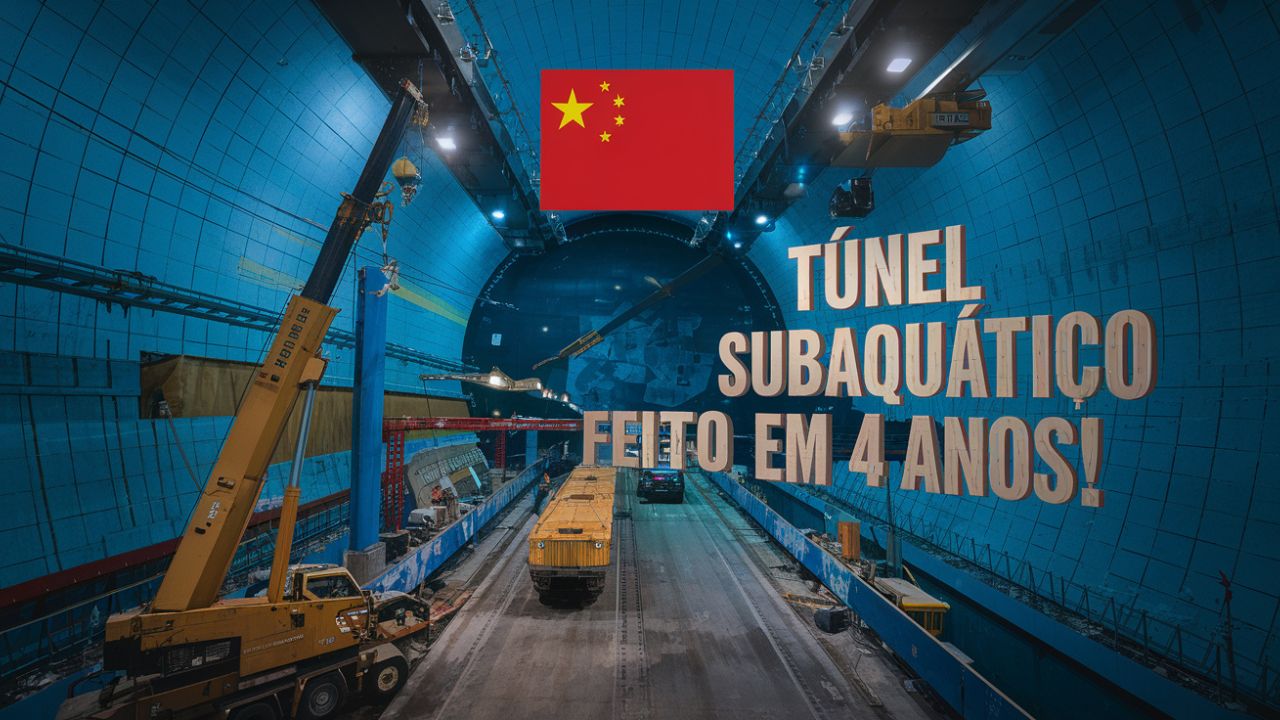
At 78 Meters Deep and Supporting Trains at 250 km/h, the Construction of the Underwater Tunnel Will Connect Zhoushan to Ningbo by 2028, Drastically Reducing Travel Time and Boosting the Local Economy.
The construction of an underwater railway tunnel connecting Zhoushan to Ningbo, China, is in full swing. The Jintang Submarine Tunnel, with an estimated cost of $3.3 billion, will be the third-largest underwater railway tunnel in the world, promising to significantly reduce travel time between the two cities. The project is a combination of cutting-edge engineering and strategic vision, with a completion forecast for 2028.
The current journey between these cities can take up to an hour and a half. With the new tunnel, this time will be reduced to just 30 minutes. Isn’t that impressive? Imagine saving an entire hour on each trip – it’s like time gains wings.
What Is the Jintang Submarine Tunnel and How Will the Underwater Tunnel Be Constructed?
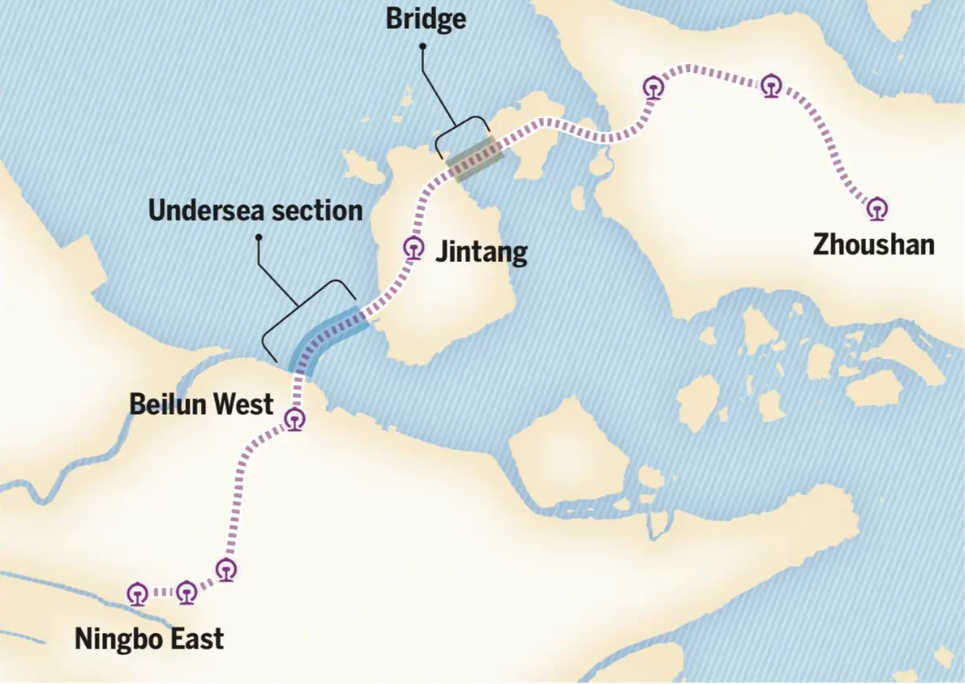
The construction of the Jintang Submarine Tunnel is part of a larger plan, the Ningbo-Zhoushan high-speed railway, which will connect islands in Zhejiang Province to the mainland. The tunnel will be 16 kilometers long and will reach a depth of 78 meters below sea level. The longest section, at 11 kilometers, will be shielded to withstand speeds of up to 250 km/h.
-
Bolivian Female Construction Workers Form Association to Combat Discrimination and 38% Pay Gap in the Industry

-
Near Amsterdam, residents buy land and discover they must also build streets, manage drainage, handle waste, and grow food on half their plot.
-
Brazil’s WEG to Open New Factory in China by 2027, Expanding Production of Large Rotating Electric Machines and Low to Medium Voltage Motors in Rugao

-
Chinese Shipyard Secures $1 Billion in Orders for Low-Carbon Container Ships Amid Global Fleet Renewal Efforts


The tunnel crosses the Jintang Channel, a crucial shipping route for the Port of Zhoushan, one of the busiest ports in the world. It is not just a tunnel; it is a work of modern engineering, designed to handle the challenging conditions of the marine environment.
Why Is the Jintang Tunnel So Important?
Currently, the two cities are connected by maritime bridges and ferries, which limits the speed and efficiency of travel. With the construction of the tunnel, mobility will be revolutionized. The project strengthens port logistics, allowing for the faster and safer transport of goods and passengers.
This project promises to be a driver for economic growth in the Yangtze River Delta region. With such advanced infrastructure, trade, tourism, and local industry will receive a significant boost. It’s like transforming a dirt road into a digital superhighway.
How Does the Project Address Challenges?
An ambitious project like this faces complex geological challenges. To overcome this, the 4,350-ton TBM Dinghai boring machine, equipped with 308 custom cutters, was designed to excavate at a depth of 42 meters under the sea. This machine faces 28 distinct geological transitions, showing that technology can triumph over even the forces of nature.
Once completed, the high-speed railway construction will enable faster and less polluting travel, aligning with China’s sustainability goals. This connection will strengthen regional integration, promoting economic and social development while reducing dependence on road vehicles.
The Jintang Submarine Tunnel is not just a major engineering undertaking, but also a bridge to the future. It promises to transform mobility in China, bringing efficiency, connectivity, and sustainability to the region.





-

-

5 people reacted to this.