






 Portuguese
  Spanish
  4 min of reading
  0 comments


Huawei And Vale Discuss Intelligent Mines Project In Brazil Using 5.5G, Remote Automation, And Autonomous Robots, In Initiative That Also Includes Mexico And Chile. The Proposal Involves Digitalization, Productivity, And Greater Safety In Operations.
A Huawei stated that it is in talks with Vale to develop a project for intelligent mines connected to Advanced 5G (5.5G) in Brazil.
According to Poder 362, the proposal includes pilots in Mexico and Chile, integrating vehicles, networks, and cloud computing for autonomous operations and remote control.
In response, the mining company stated that it is engaging with different suppliers, including the Chinese company, to expand the digitalization of its activities.
-
China could reduce iron ore imports from 80% to 50% of consumption by 2030, while its share in global steel production falls from 52% to 46%, in a shift that could reshape the global market, says CMRG.

-
Brazil is sitting on one of the largest lithium reserves in the world, in the Jequitinhonha Valley, but national mining has almost become an appendage of China: 97% of the metal’s export goes to a single country, which also dominates refining.
-
Iron ore falls to 762 yuan in China as real estate sales decline and steel production hits lowest level since 2018
-
Brazil has minerals, clean energy, and a waiting market, but it could miss a billion-dollar opportunity if it doesn’t speed up the race for green minerals, while the steel industry seeks to reduce emissions.


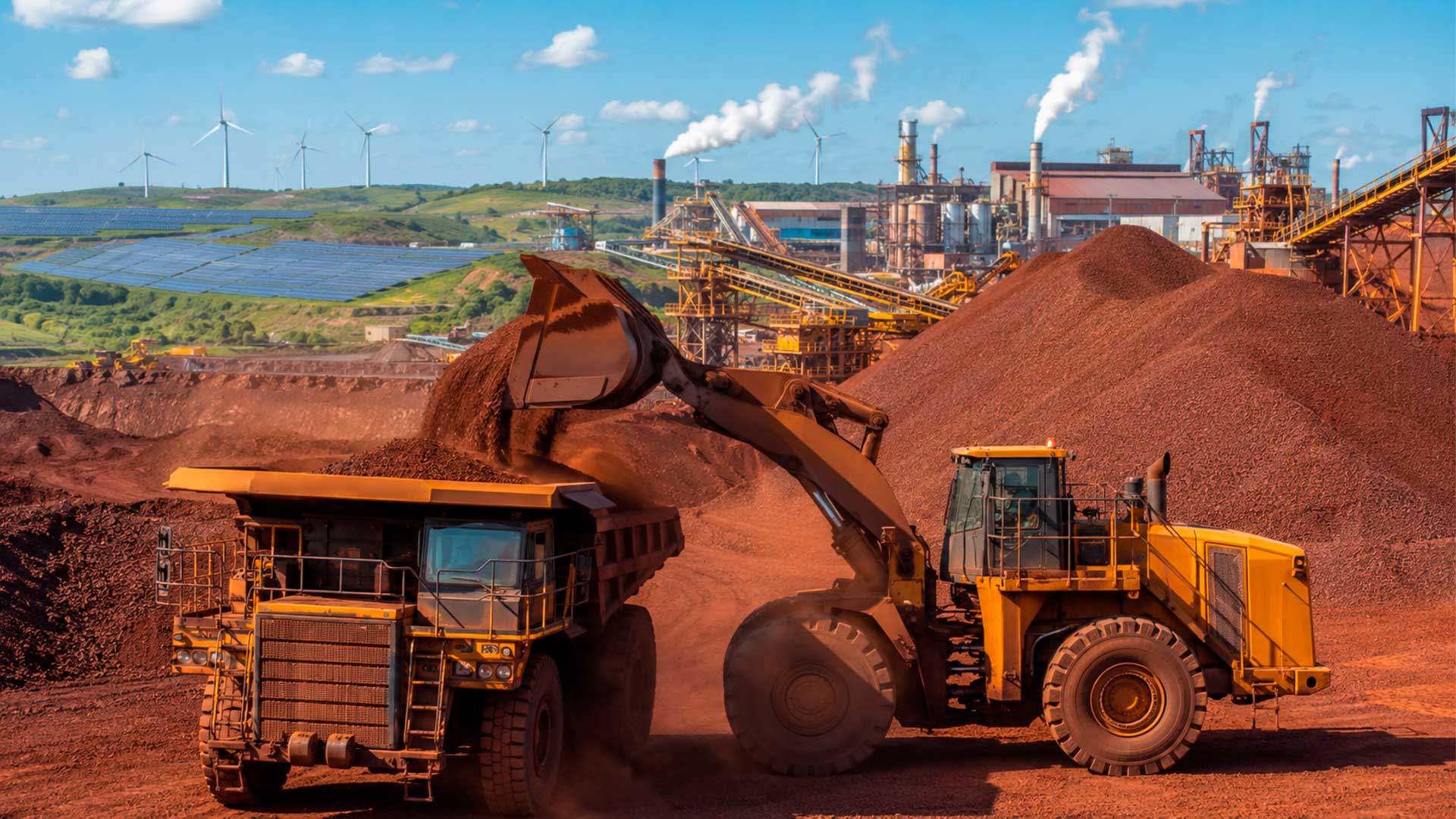
Negotiations On Intelligent Mines
According to Huawei, the intention is to select specific units in Latin America to validate the vehicle-network-cloud integration system in a real environment.
In an interview with Latin American journalists at the Yimin coal mine in the Inner Mongolia Autonomous Region in China, the general manager of the company’s oil, gas, and mining business unit, Shao Qi, stated: “Our intention is to select some mines in Mexico, Brazil, and Chile to test the vehicle, network, and cloud integration system. (…) We are also in talks with Vale, one of the largest iron ore miners.”
The Vale confirmed in a statement that “it is in discussions with various technology suppliers, including Huawei, to explore digitalization partnerships for its operations. The goal is to continuously enhance safety and increase productivity through the deployment of digital technologies.”
So far, there has been no public announcement regarding the timeline, detailed scope, or which Brazilian assets may participate in the pilots.
What Defines An Intelligent Mine
Intelligent mines combine continuous sensing, data platforms, and automation to enhance efficiency and safety.
Instead of constant human presence in high-risk areas, the operation connects excavators, drillers, and autonomous trucks to command and supervision systems remotely.
The collection and processing of data occur in real time, with alerts about ground conditions, maintenance, and occupational safety.
This arrangement reduces the exposure of teams to dangerous areas and allows decision-making based on objective indicators.
Additionally, the integration of environmental sensors with control panels enables ongoing monitoring of air quality, noise, vibration, and slope stability.
Importance Of 5.5G For Mining
The 5.5G promises higher transmission speeds, reduced latency, and support for a higher density of devices per cell.
In mining, such characteristics are crucial for autonomous robots and for the remote control of heavy machinery, which require fast and reliable communication.
With greater capacity, it becomes feasible to transmit high-definition video for inspections, synchronize fleets, and activate safety protocols without delays.
In Brazil, Claro, TIM, and Vivo have been testing 5.5G since 2024, but there is still no forecast for commercial operation.
In private environments, such as pits and processing plants, dedicated networks allow for critical applications to be validated with stricter availability and safety requirements.
Current Stage Of Talks
Huawei’s statements were made during a technical visit to the Yimin mine in Inner Mongolia, where the company demonstrates solutions for extractive sectors.
The Latin American focus includes Brazil, Mexico, and Chile as candidates for pilots of the vehicle-network-cloud system.
Although Vale has been mentioned by name, discussions are still exploratory, with no announcement of a signed contract or public definition of sites in Brazilian territory.
For now, the priority is to identify use cases with a direct impact on safety and productivity.
Among the most cited scenarios in the sector are remote drilling, autonomous truck navigation with communication redundancy, and robot inspections in areas with restricted ventilation.
High-resolution cameras with edge processing are also gaining ground for detecting people and obstacles, as well as predictive maintenance based on vibration and temperature data.
Vale’s History With Connectivity
The miner has maintained a project with Vivo since 2019 to monitor autonomous equipment through 4G.
The initiatives reach the Carajás (PA) and São Gonçalo do Rio Abaixo (MG) mines, connecting vehicles, sensors, and management systems.
This connectivity foundation can facilitate the adoption of more advanced architectures.
In the new networks, the lower latency and higher bandwidth of 5.5G enable real-time orchestration of multiple assets and more responsive teleoperation.
In addition to the network layer, evolution involves integration with data platforms, industrial cybersecurity, and redundancy policies.
Expected Impacts On Operation
Digitalization tends to influence indicators of work safety by reducing physical presence in critical fronts and increasing visibility over the operation.
At the same time, telemetry data helps optimize routes, fuel consumption, and maintenance schedules.
These factors contribute to gains in energy efficiency and reduced unplanned downtime.
From an environmental perspective, the continuous monitoring of variables such as dust, noise, and vibration feeds compliance panels and response protocols.
With robust connectivity, sensor networks can cover extensive areas of the pit and processing facilities. This allows for event traceability and support for environmental audits.



Be the first to react!