






 Portuguese
  Spanish


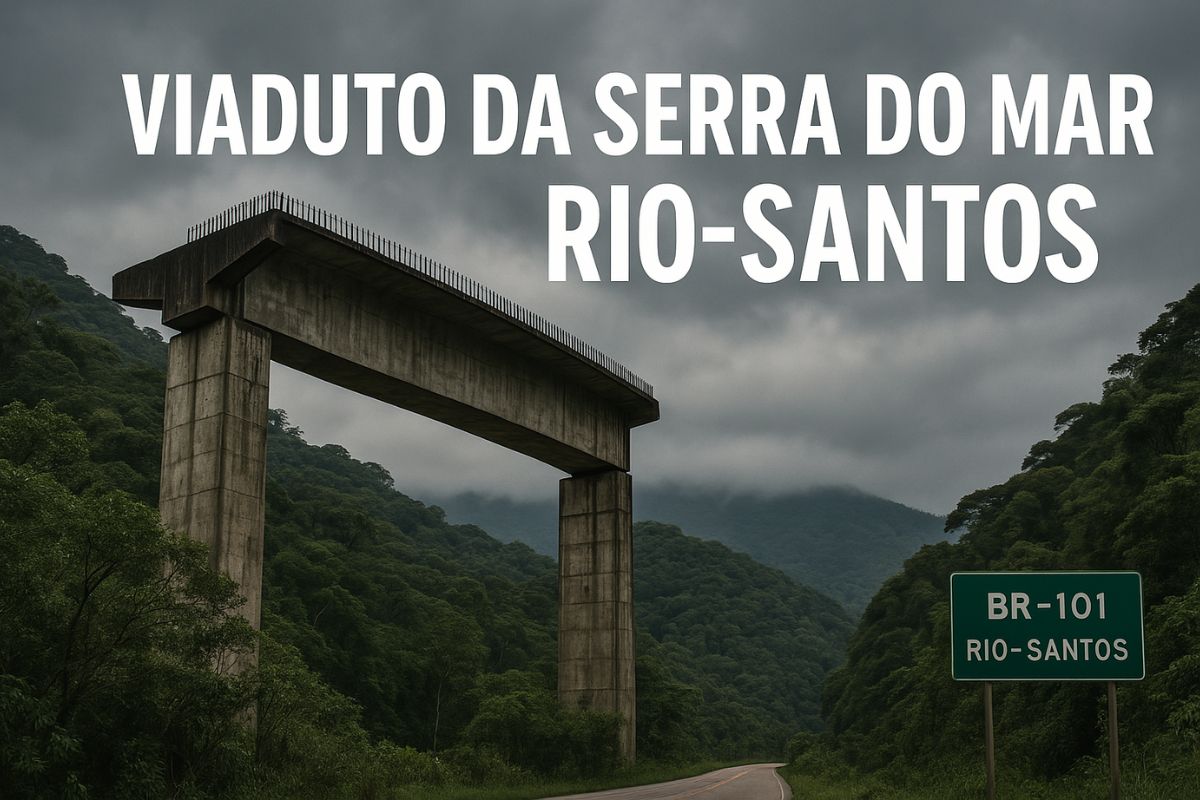

During The Economic Miracle, The Government Started A Project To Cut Through The Mountains With Viaducts And Tunnels. The Viaduct Of Serra Do Mar Rio-Santos Would Be A Direct Connection Between The North Coast Of SP And Cubatão, But It Has Been Abandoned Since The 70s.
If you have ever been stuck in traffic on BR-101, going down to the north coast of São Paulo, you might not even imagine that a solution for it was designed more than 50 years ago — and never completed. We are talking about the Viaduct of Serra do Mar Rio-Santos, part of an ambitious project initiated in the 1970s that promised to revolutionize the link between Caraguatatuba and Cubatão. The idea was clear: to cut through the mountains with a sequence of viaducts, tunnels, and retaining walls, drastically shortening travel time and reducing the risks of the current winding route.
The project emerged at the peak of the Brazilian “economic miracle,” between 1968 and 1973, when the country was heavily investing in infrastructure. The proposal, dubbed “Rio-Cubatão,” aimed to extend BR-101 directly, cutting through the Serra do Mar instead of going around it along the coast. This would make the connection between the Southeast and South of the country more efficient and faster, in addition to boosting tourism and commerce in the region.
The Viaduct Of Serra Do Mar Rio-Santos Was Abandoned With Half The Work Done
In practice, the project actually moved forward. Construction began in 1974, with participation from major national construction companies like Mendes Júnior and Queiróz Galvão. The largest viaduct of Serra do Mar Rio-Santos was to be 360 meters long and 29 meters high, crossing one of the most critical areas of the mountains between Caraguatatuba and São Sebastião. In total, the project also included small viaducts, long tunnels, and complex retaining walls.
-
U.S. City Builds Tiny Home Village on Water Company Land to House 136 Homeless People: Inside the Social Housing Units

-
Woman Turns Shipping Container into Home, Embraces Rural Life to Cut Monthly Expenses to Just Over $330
-
France Revamps 530 Social Housing Units with Large Balconies and Glass Facades Without Demolishing Existing Buildings

-
Facing high rent, couple transforms parents’ garage into a fully functional apartment, creating a complete home at a fraction of the market cost.




But the plans began to unravel with the oil crisis of 1973. The rising cost of materials, the lack of experience of DNER (now DNIT) in projects of this scale, and the pressure for quick results led to the project’s stoppage. About 50% of the work was completed, but instead of finishing the viaducts, the government opted for a cheaper route: completing BR-101 along the coast.
The result? One of the most promising infrastructure projects in the country became a silent ruin in the mountains. Some of the structures were completed, but time and overgrowth took over. It is estimated that the wasted investment exceeded US$ 150 million in values adjusted to 2015. In today’s currency, that amount would be even more impactful.
The Rio-Santos Project Advanced Along The Coast, But Traffic Jams Continue
The Rio-Santos road was completed, albeit in stages. The works extended from 1969 to 1975, without a major official inauguration. Today, it is considered essential for the São Paulo coastline, but it faces chronic problems such as narrow sections, sharp turns, and constant slowdowns, especially during holidays.
With the increase in tourist traffic, the Government of São Paulo announced in 2024 a project to duplicate 45 km between Caraguatatuba and Ubatuba, with a planned investment of R$ 3 billion. The construction is set to begin at the end of 2025 and promises to improve safety and travel time. But even this intervention does not resolve the long-standing issue that the viaducts aimed to eliminate: the challenge of crossing the Serra do Mar quickly and safely.
If it had been completed, the Viaduct of Serra do Mar Rio-Santos would have completely changed the regional logistics, avoiding the long coastal detour that is currently the only viable route. In engineering terms, the project was compared to major international works but ended up entering the unfortunate hall of Brazil’s “ghost projects.”








